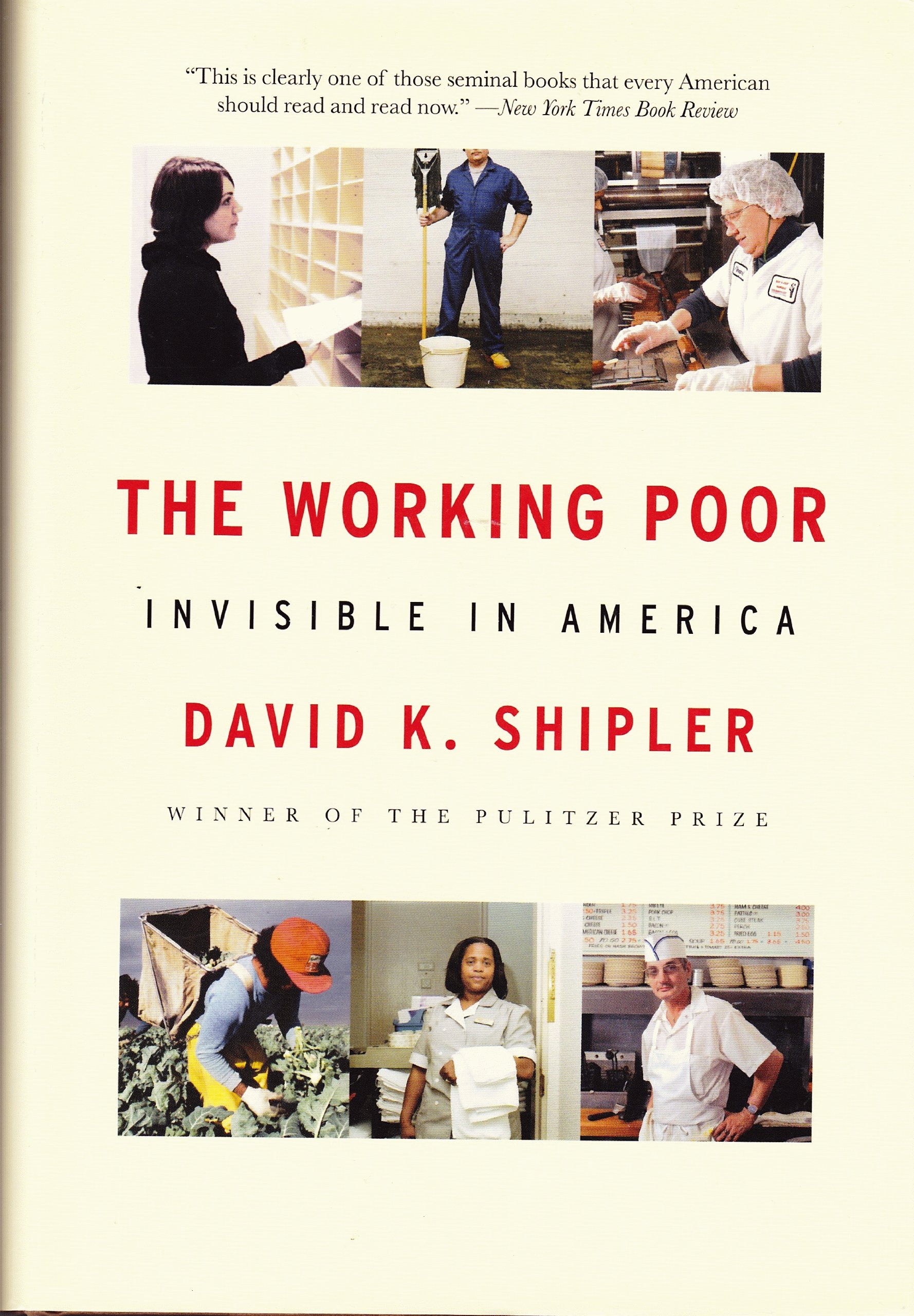



“Most of the people I write about in this book do not have the luxury of rage. They are caught in exhausting struggles. Their wages do not lift them far enough from poverty to improve their lives, and their lives, in turn, hold them back. The term by which they are usually described, ‘working poor,’ should be an oxymoron. Nobody who works hard should be poor in America.” —from the Introduction From the author of the Pulitzer Prize–winning Arab and Jew, a new book that presents a searing, intimate portrait of working American families struggling against insurmountable odds to escape poverty. As David K. Shipler makes clear in this powerful, humane study, the invisible poor are engaged in the activity most respected in American ideology—hard, honest work. But their version of the American Dream is a nightmare: low-paying, dead-end jobs; the profound failure of government to improve upon decaying housing, health care, and education; the failure of families to break the patterns of child abuse and substance abuse. Shipler exposes the interlocking problems by taking us into the sorrowful, infuriating, courageous lives of the poor—white and black, Asian and Latino, citizens and immigrants. We encounter them every day, for they do jobs essential to the American economy. We meet drifting farmworkers in North Carolina, exploited garment workers in New Hampshire, illegal immigrants trapped in the steaming kitchens of Los Angeles restaurants, addicts who struggle into productive work from the cruel streets of the nation’s capital—each life another aspect of a confounding, far-reaching urgent national crisis. And unlike most works on poverty, this one delves into the calculations of some employers as well—their razor-thin profits, their anxieties about competition from abroad, their frustrations in finding qualified workers. This impassioned book not only dissects the problems, but makes pointed, informed recommendations for change. It is a book that stands to make a difference. The Working Poor examines the "forgotten America" where "millions live in the shadow of prosperity, in the twilight between poverty and well-being." These are citizens for whom the American Dream is out of reach despite their willingness to work hard. Struggling to simply survive, they live so close to the edge of poverty that a minor obstacle, such as a car breakdown or a temporary illness, can lead to a downward financial spiral that can prove impossible to reverse. David Shipler interviewed many such working people for this book and his profiles offer an intimate look at what it is like to be trapped in a cycle of dead-end jobs without benefits or opportunities for advancement. He shows how some negotiate a broken welfare system that is designed to help yet often does not, while others proudly refuse any sort of government assistance, even to their detriment. Still others have no idea that help is available at all. "As a culture, the United States is not quite sure about the causes of poverty, and is therefore uncertain about the solutions," he writes. Though he details many ways in which current assistance programs could be more effective and rational, he does not believe that government alone, nor any other single variable, can solve the problem. Instead, a combination of things are required, beginning with the political will needed to create a relief system "that recognizes both the society's obligation through government and business, and the individual's obligation through labor and family." He does propose some specific steps in the right direction such as altering the current wage structure, creating more vocational programs (in both the public and private sectors), developing a fairer way to distribute school funding, and implementing basic national health care. Prepare to have any preconceived notions about those living in poverty in America challenged by this affecting book. -- Shawn Carkonen "Nobody who works hard should be poor in America," writes Pulitzer Prize-winning author Shipler. Few would disagree with that statement, yet even fewer would agree on how to reduce the factors that cause poverty in America. Presenting individual case studies, Shipler exposes the vicious social and economic injustices that define the working poor. (How can you buy false teeth if you don't have a job? But how can you get a job without teeth?) At times, he lets his frustration get the better of him, and makes sweeping judgements about single mothers, divorce, and race--even though the racially diverse cast we'd expect is largely absent. And since his reforms are convincing but uncontroversial, we're not left with much but despair. But if Working Poor lacks some long-range vision, it "begs our attention. Read it and be ashamed" ( San Diego Union-Tribune ). Copyright © 2004 Phillips & Nelson Media, Inc. Shipler, author of the Pulitzer Prize-winning Arab and Jew (1986), examines the complex issues behind poverty and changes in