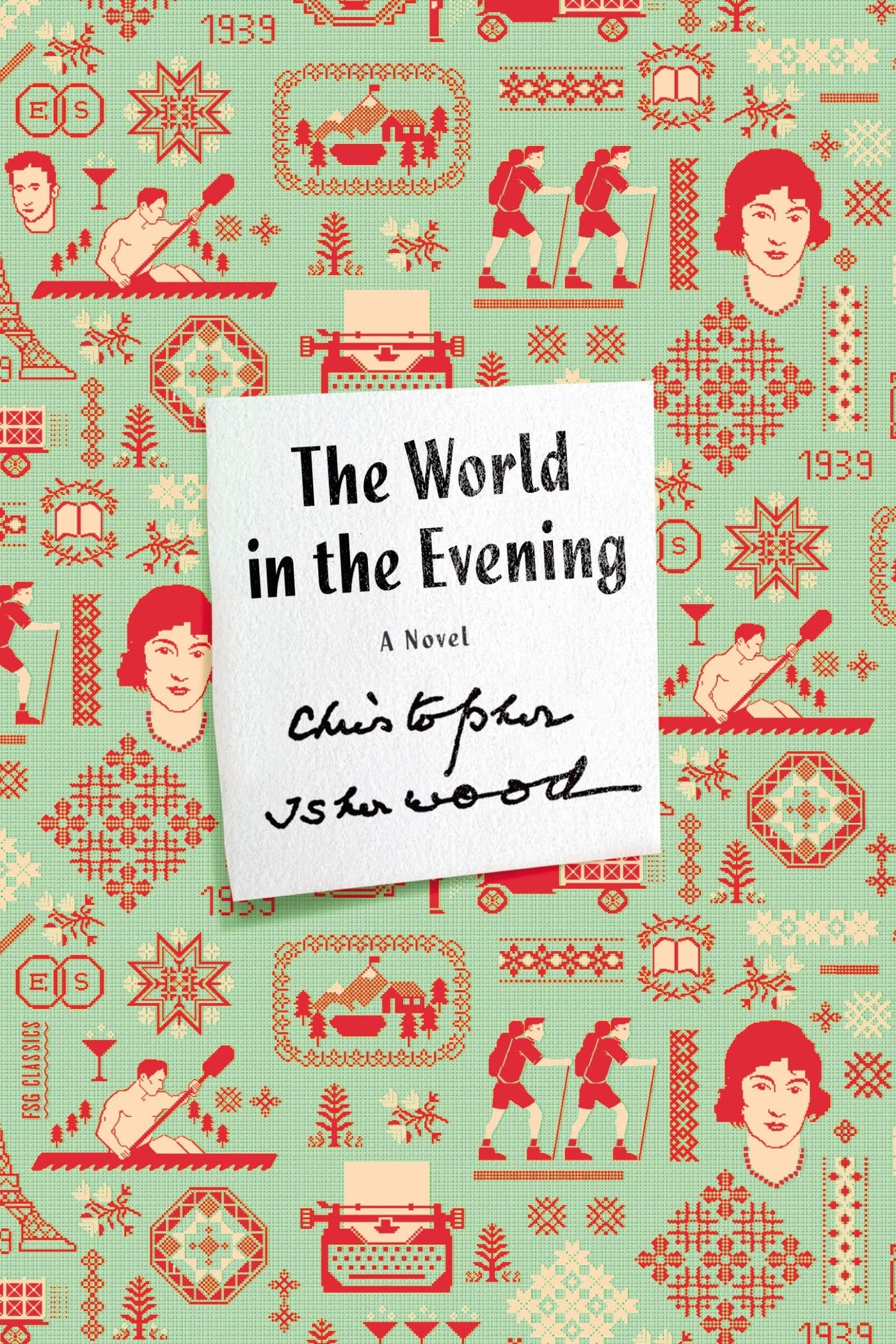



A deeply introspective book about war, religion, and sexuality Against the backdrop of World War II, The World in the Evening charts the emotional development of Stephen Monk, an aimless Englishman living in California. After his second marriage suddenly ends, Stephen finds himself living with a relative in a small Pennsylvania Quaker town, haunted by memories of his prewar affair with a younger man during a visit to the Canary Islands. The world traveler comes to a gradual understanding of himself and of his newly adopted homeland. When first published in 1953, The World in the Evening was notable for its clear-eyed depiction of European and American mores, sexuality, and religion. Today, readers herald Christopher Isherwood's frank portrayal of bisexuality and his early appreciation of low and high camp. "All of Isherwood’s books have a strong autobiographical element, so any one of them connects to the whole of his fascinating life, and no one should have to miss a moment of it." - Don Bachardy Christopher Isherwood (1904-1986) was born outside of Manchester, England. His life in Berlin from 1929 to 1933 inspired The Berlin Stories , which were adapted into a play, a film, and the musical Cabaret . Isherwood immigrated to the United States in 1939. A major figure in twentieth-century fiction and the gay rights movement, he wrote more than twenty books, including the novel A Single Man and his autobiography, Christopher and His Kind . The World in the Evening By Christopher Isherwood Farrar, Straus and Giroux Copyright © 1954 Christopher Isherwood All rights reserved. ISBN: 978-0-374-53381-6 Contents Title Page, Copyright Notice, Dedication, PART ONE: An End, PART TWO: Letters and Life, PART THREE: A Beginning, Also by Christopher Isherwood, Copyright, CHAPTER 1 PART ONE An End 1 The party, that evening, was at the Novotnys'. They lived high up on the slopes of the Hollywood hills, in a ranch-style home complete with Early American maple, nautical brasswork and muslin curtains; just too cute for words. It looked as if it had been delivered, already equipped, from a store; and you could imagine how, if the payments weren't kept up, some men might arrive one day and take the whole place back there on a truck, along with Mrs. Novotny, the three children, the two cars and the cocker spaniel. Most of the houses Jane and I visited were like that. It was quite late already and several people were drunk; not acting badly, just boastful and loud and thick-voiced. I was about halfway; which was the best way for me to be. As long as I was sober, I sulked. If I went on drinking, I was apt to turn nasty and say something embarrassing, or else fall asleep and snore. Jane was always worried about that, and yet she never could tear herself away until the end. "Why in hell don't you go on back home, if you're so bored," she sometimes whispered to me furiously, "instead of drooping around like a Goddam martyr? What's the matter? Afraid I might do something you wouldn't do?" I used to grin at her without answering. That was exactly how I wanted her to feel: unsure of me and uneasy and guiltily aggressive. It was the only way I knew of hitting back at her. I was alone, now, at the uncrowded end of the living room. A mirror on the opposite wall showed me how I appeared to the outside world: a tall, blond, youngish-oldish man with a weakly good-looking, anxious face and dark over-expressive eyes, standing in a corner between a cobbler's table and a fake spinning wheel, holding a highball glass in my hand. A miniature brass ship with a fern growing out of it was fastened to the wall beside my cheek. I looked as if I were trying to melt into the scenery and become invisible, like a giraffe standing motionless among sunlit leaves. I was wearing my usual crazy costume, the symbol of my protest against this life I was leading: a white tuxedo jacket, with a crimson bow tie and carnation to match my moiré cummerbund. Elizabeth, if she could have seen me, would have said, "Darling, what on earth are you supposed to be? No—don't tell me. Let me guess. ..." In a way, I think I did dress like this just because it would have amused Elizabeth. Certainly, no one here saw the joke, not even Jane; my masquerade as a musical-comedy Hollywood character passed entirely unnoticed. And why, after all, should any of these people notice it? This was the only way they knew me—as I appeared, night after night, at Jane's side, in the doorways of their homes. (We never stayed home alone together in the evenings, any more; it would have been unthinkable.) If you had asked who I was, almost every one of them would have answered "Jane Monk's husband," and let it go at that. It had been the same right from the start, when we'd first arrived in California, the previous year. Even the society columnists decided I was no fun and had better be ignored. They never mentioned me directly if they could av