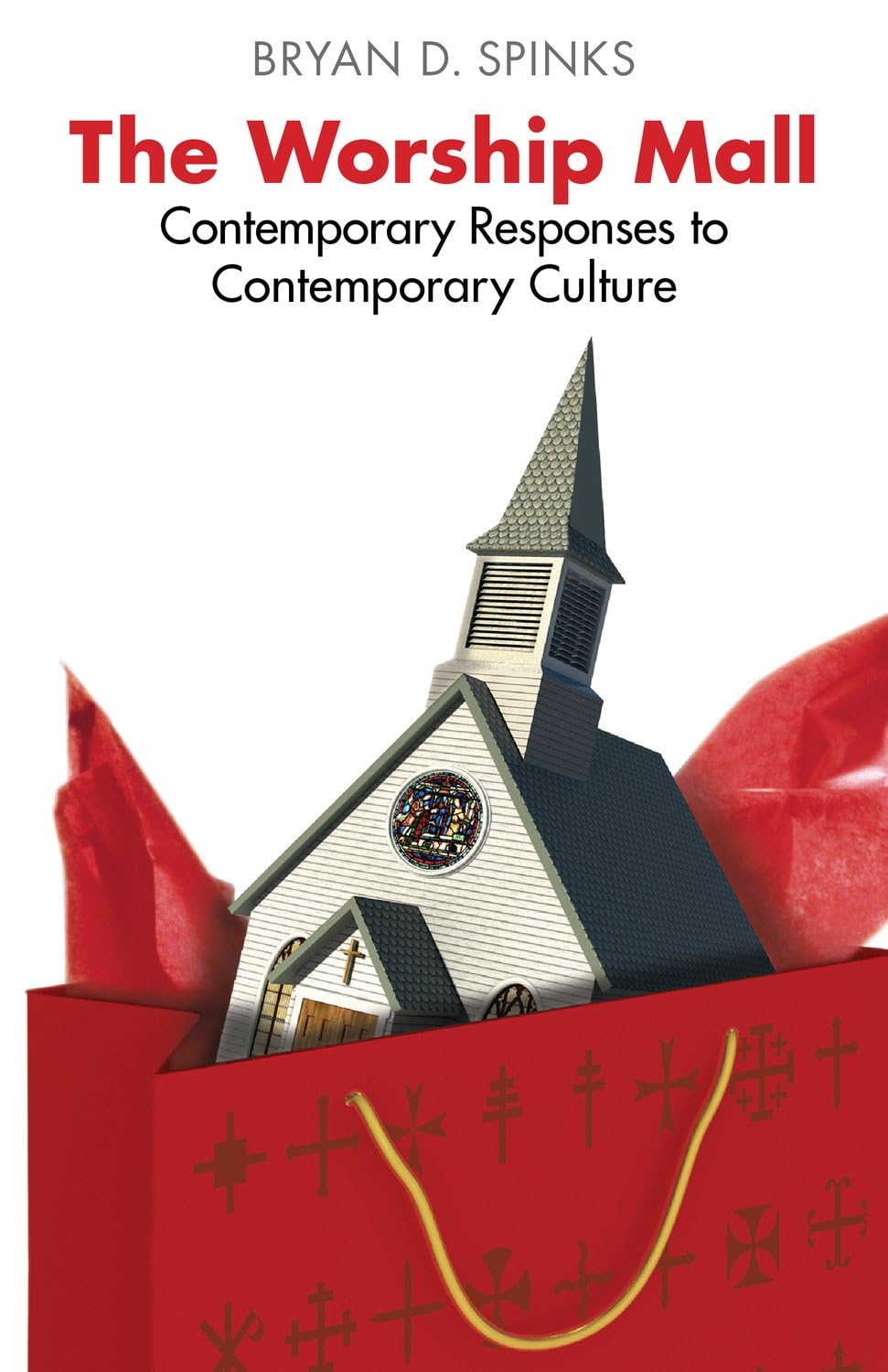
The Worship Mall: Contemporary Responses to Contemporary Culture (Alcuin Club Collections, 85)
$32.95
by Bryan D. Spinks



Religion today is in competition with the leisure and entertainment industries. Gen Y, the postmodern generation, is open to spirituality; but most of todays young adults have not been born into faith communities where they feel any lasting allegiance. Studies suggest that for the young, belief in God is an optional matter, a virtual consumer choice. As a result, different trends in worship and worship styles are offered by different churches to suit lifestyles, attitudes, and personal taste. Bryan D. Spinks is a priest in the Church of England and Goddard Professor of Liturgical Studies and Pastoral Theology at the Yale Institute of Sacred Music and Yale Divinity School. His numerous books on worship and liturgical history include Early and Medieval Rituals and Theologies of Baptism and Liturgy in the Age of Reason. The Worship Mall Contemporary responses to contemporary culture By Bryan D. Spinks Church Publishing Copyright © 2010 Bryan D. Spinks All right reserved. ISBN: 978-0-89869-675-2 Contents Preface.......................................................................................................................ixAcknowledgements..............................................................................................................xi1 Blended, fusion or synthesis worship........................................................................................1Appendix: Chanting the Gospel – the Gotland Organum, by Alan Murchie....................................................252 Consciously postmodern: alt., emerging and liquid worship...................................................................313 Entertaining worship or worship as entertainment? Megachurch, seeker services and multi-sensory worship.....................634 Praise and Worship songs and worship in the charismatic churches............................................................915 On the margins of corporate global postmodern culture.......................................................................1256 What is Celtic about contemporary Celtic worship?...........................................................................1597 Second-guessing post-Vatican II liturgies...................................................................................183Concluding remarks............................................................................................................213Bibliography..................................................................................................................217Index.........................................................................................................................235 Chapter One Blended, fusion or synthesis worship Exactly what may or may not constitute this form of contemporary worship is difficult to define with any precision. According to the late Robert Webber, he and Chuck Fromm, the CEO of Maranatha! Music, first coined the term 'blended' worship in 1987, and the style was initiated at a conference they subsequently organized at Irvine, California. They had discussed the idea that if traditional and contemporary (praise and worship music) styles of worship represented thesis and antithesis, the likelihood was that a synthesis between the two would occur – and so 'blended' worship was born. In response to Robert Webber, Sally Morgenthaler was of the opinion that the term 'blended' was too tame, and indicated that 'fusion' would be a better term. Synthesis is also appropriate; however, these terms themselves beg the question of what is being blended, fused or synthesized. In an earlier book Webber had set out in more detail what he meant by 'blended' worship, and how it might be achieved. The subtitle, 'The Creative Mixture of Old and New', provided a clue. Webber had migrated from an evangelical background to the Episcopal Church, though he never entirely abandoned his original constituency, and it was to the American evangelical constituency that he addressed much of his writings. He was convinced that in a postmodern culture, the older Billy Graham model was no longer working, and that the younger evangelicals (Gen Y) wanted something more traditional and more deeply mystical in worship. His view was that the classical structures of the eucharistic liturgy which had been reappropriated by the Liturgical Movement, and typified in the Episcopal Book of Common Prayer, were more appealing than revival style worship. He identified the ritual as a journey, moving from Gathering, to Word, to Thanksgiving, and on to Dismissal or Sending. Traditional or classical worship had the Trinity as its object of worship, and combined the language of mystery (Father) with the languages of story (Son) and symbol (Spirit). These needed to be blended carefully with contemporary praise and worship music, which, when used properly, also conveys a journey through the gates of the Temple, to the outer courts, inner courts and