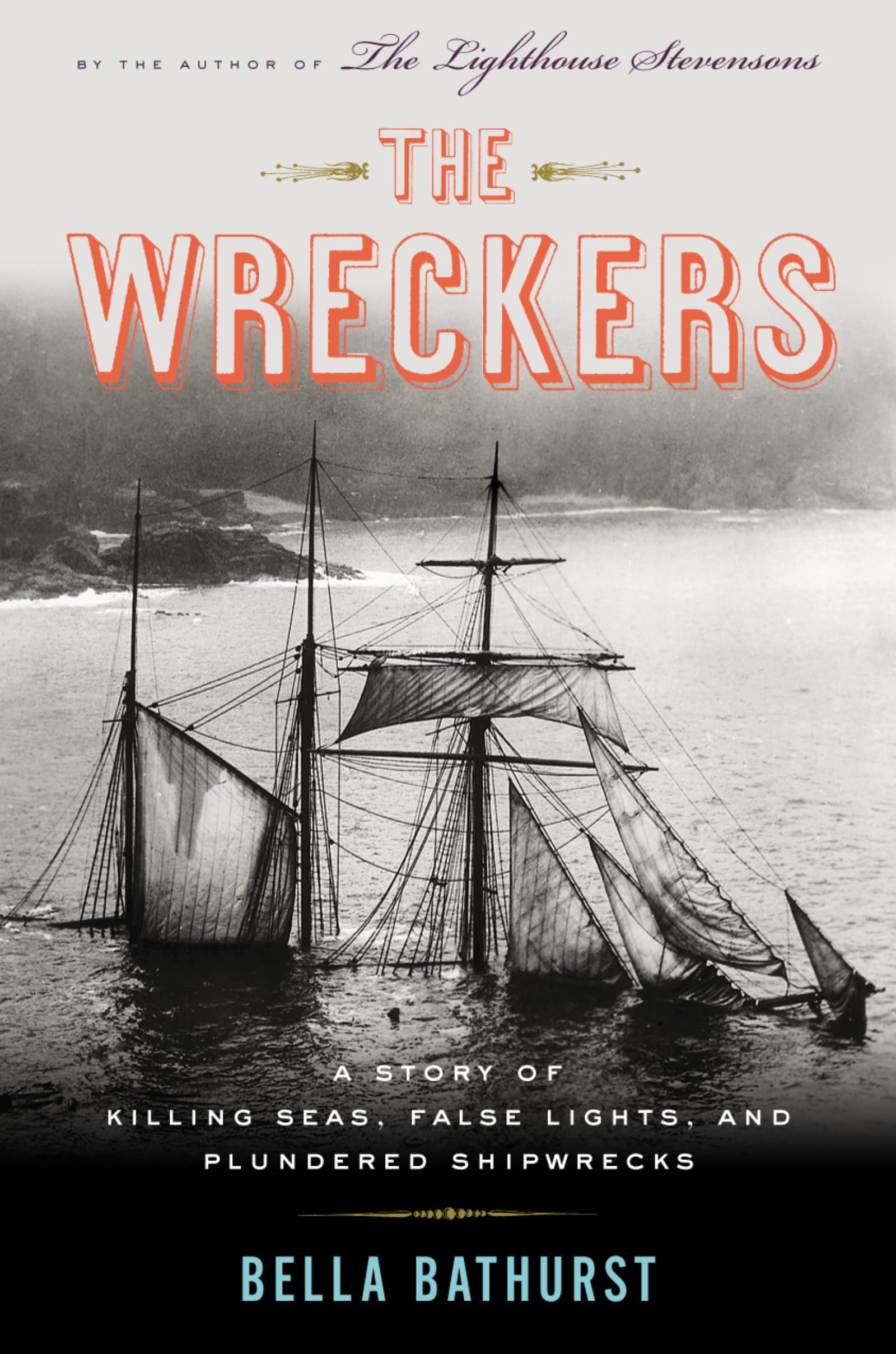
The Wreckers: A Story of Killing Seas and Plundered Shipwrecks, from the 18th-Century to the Present Day
$17.96
by Bella Bathurst



Bella Bathurst's first book, the acclaimed The Lighthouse Stevensons,told the story of Scottish lighthouse construction by the ancestors of Robert Louis Stevenson. Now she returns to the sea to search out the darker side of those lights, detailing the secret history of shipwrecks and the predatory scavengers who live off the spoils. Even today, Britain's coastline remains a dangerous place. An island soaked by four separate seas, with shifting sand banks to the east, veiled reefs to the west, powerful currents above, and the world's busiest shipping channel below, the country's offshore waters are strewn with shipwrecks. For villagers scratching out an existence along Britain's shores, those wrecks have been more than simply an act of God; in many cases, they have been the difference between living well and just getting by. Though Daphne Du Maurier made Cornwall Britain's most notorious region for wrecking, many other coastal communities regarded the "sea's bounty" as an impromptu way of providing themselves with everything from grapefruits to grand pianos. Some plunderers were held to be so skilled that they could strip a ship from stem to stern before the Coast Guard had even left port, some were rumored to lure ships onto the rocks with false lights, and some simply waited for winter gales to do their work. From all around Britain, Bathurst has uncovered the hidden history of ships and shipwreck victims, from shoreline orgies so Dionysian that few participants survived the morning to humble homes fitted with silver candelabra, from coastlines rigged like stage sets to villages where everyone owns identical tennis shoes. Spanning three hundred years of history, The Wreckers examines the myths, the realities, and the superstitions of shipwrecks and uncovers the darker side of life on Britain's shores. Its hard to write a nonfiction book with limited sources and no way to properly authenticate what you write. But award-winning Bathurst ( The Lighthouse Stevensons ) seems up to the task, impressing critics with the thoroughness of her research (she interviewed 200 people and read travelers journals and newspaper reports) and the spirited way she integrates surprising facts, entertaining anecdotes, and fictional accounts. They also credited her with striking the right tone between whimsy and sensitivity with respect to the tragedies she relates. She doesnt avoid the moral questions that wrecking asks, either. Although some reviewers felt the book lacks a little meat and could benefit from a stronger structure, they all agreed it makes for a captivating read. Copyright © 2004 Phillips & Nelson Media, Inc. Bathurst explains that "wreckers" were people who watched for a ship in distress and stole everything on board of any value, sometimes also drowning the crew and burning the boats. The Cornish were such accomplished wreckers that they regarded it not as a crime but as a profession. Bathurst traveled to eight wrecking "hot spots" in Britain in researching the history of wrecking over the last 300 years, its heyday occurring in the eighteenth and nineteenth centuries, when sea traffic was at its heaviest and captains relied on keen-eyed lookouts before the age of sophisticated technology. The sheer variety and range of natural hazards around the coastline make it seem astounding that anyone made safe landfall in Britain at all. During her three years of research, the author interviewed 200 people and read court proceedings, newspaper reports, travelers' journals, and customs correspondence, and the result is an exceptional chronicle of knavery. George Cohen Copyright © American Library Association. All rights reserved Bella Bathurst is the author of The Lighthouse Stevensons, which won the Somerset Maugham Award, and of the novel Special. Her journalism has appeared in the Washington Post, the London Sunday Times, and other major periodicals. Born in London, she lives in Scotland. Bella Bathurst quotes the dictionary definition of a "wrecker," in the nautical sense, as "one who tries from shore to bring about shipwreck with a view to profiting by wreckage," or one "who steals such wreckage; a person employed in demolition, or in recovering wrecked ship or its contents." Such an expansive meaning includes not only those who seek to lure ships to their doom and those who appropriate objects from a wrecked ship but even large industrial yards that purchase ships and demolish them for scrap. Bathurst attempts a similarly broad approach in her entertaining if hardly definitive history of British wrecking. Bathurst's well-received first book, The Lighthouse Stevensons, told the story of the construction of Scottish lighthouses by Robert Louis Stevenson's ancestors. She discovered that the Stevensons had "encountered strong local hostility to the construction of their lighthouses" and found stories of "people deliberately drowning shipwreck victims" and of "false lights and false foghorns, false harbors, false