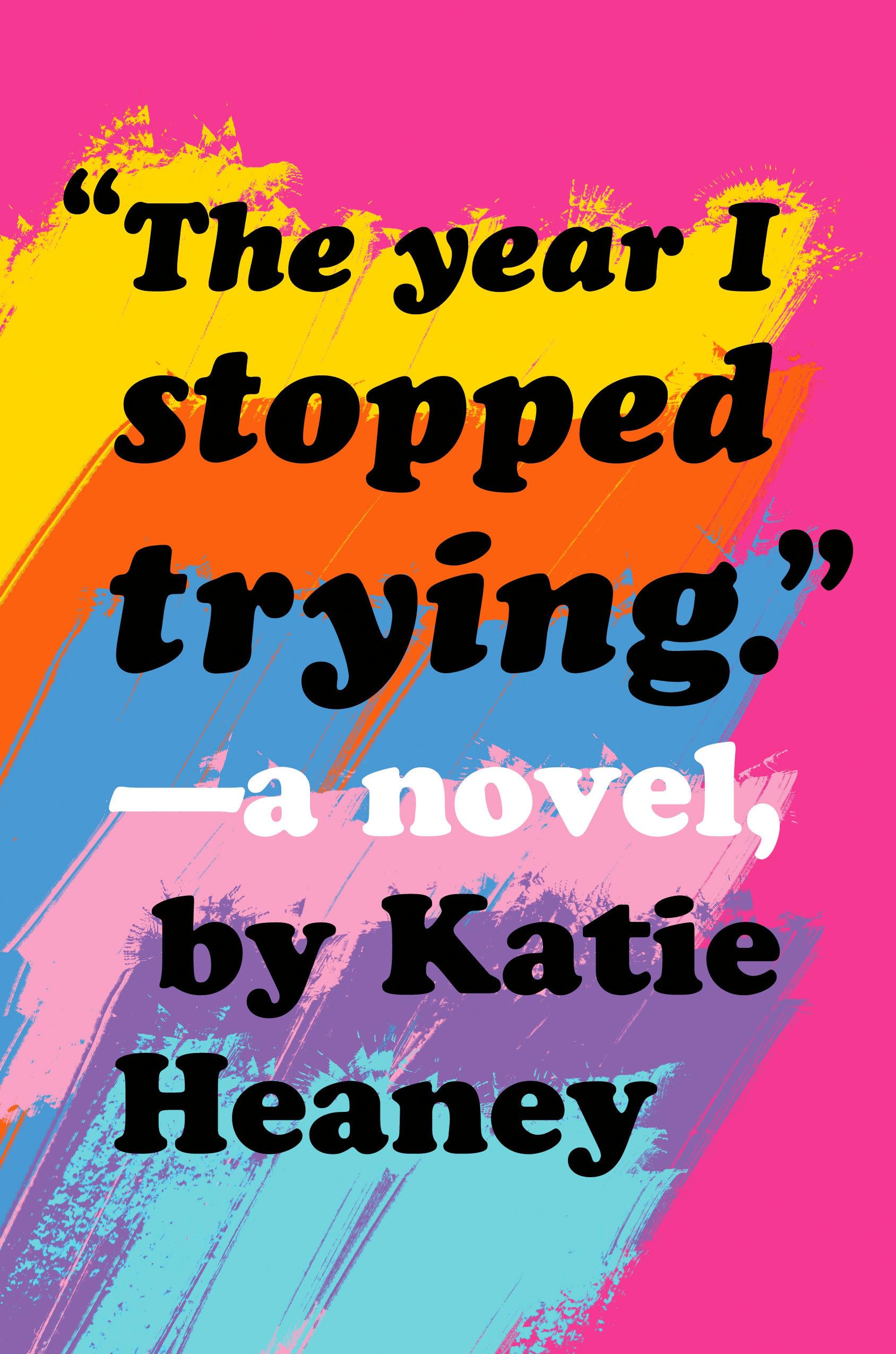



Mary never imagined spending her junior year with an existential crisis—but here she is, in this story of overachieving, growing up, and coming out, from the author of Girl Crushed and Never Have I Ever . Mary is having an existential crisis. She's a good student, she never gets in trouble, and she is searching for the meaning of life. She always thought she'd find it in a perfect score on the SATs. But by junior year, Mary isn't so sure anymore. The first time, it's an accident. She forgets to do a history assignment. She even crosses "history essay" off in her pristine planner. And then: Nothing happens. She doesn't burst into flames, the world doesn't end, the teacher doesn't even pull her aside after class. So she asks herself: Why am I trying so hard? What if I stop? With her signature wit and heaps of dark humor, Katie Heaney delivers a stunning YA novel the sprints full-force into the big questions our teen years beg--and adeptly unravels their web. "Focusing on the subtle metamorphosis of one funny, high-achieving teen who decides she’d rather know herself than please others, this book embraces coming of age and coming out with humor, candor, and grace. A must for all collections." — School Library Journal , starred Katie Heaney is the author of the memoirs Never Have I Ever and Would You Rather? , and the novels Girl Crushed , Dear Emma, and Public Relations . She is a senior health writer at the Cut, and you can find her on Twitter at @KTHeaney. The first time was a mistake. I don’t like to admit that, because I think this whole thing would be cooler if I’d meant to do it from the beginning for some good reason, or even a reason. But the truth is that one day, after ten years without incident, I just forgot. There wasn’t anything unusual going on that week. I worked my usual shift at La Baguette, got home, did what was left of my homework, watched a little TV, and went to sleep. The next morning I got up, ate the same breakfast, made the same peanut butter and jelly sandwich and put the same chips and carrots in little plastic bags, and drove my brother, Peter, and me the same way to school. I walked into first period three minutes before the bell, completely prepared for another normal day. Then class started, and the teacher asked us to hand in our homework . . . and my stomach fell into my feet. My face burned. I felt faint and dizzy and a little like I might throw up. Because I had not done my AP U.S. history homework. Somehow, in the list of things I had to do the night before, this one had gotten lost. As everyone around me dug through their bags for their short essays on Manifest Destiny, I flipped through my planner and scanned yesterday’s to-do items. And there it was, with a line drawn through it, like everything else on the page. But I had not written that essay. I looked through my folder, just in case, but I knew there was nothing to find. I sat there, sweating, for the rest of class, planning what I’d say to Mr. Delaney to let him know I knew I’d made a mistake and I’d never do it again if somehow he could find it in him to forgive me. I could offer to do a makeup assignment, a five- or ten-page paper on a topic of his choosing. Or I could pretend I had done the homework but had packed my bag wrong because of unspecified stressors at home. I could say I’d gotten home late from work and set a 4:00 a.m. alarm to finish, but then my phone died, and I was almost late for school. He might believe me and offer me half credit to bring it in tomorrow. I weighed whether the damage to my dignity would be worth it if he did. Maybe I would just run. Class ended. I hovered for a few moments over my desk, slowly gathering my belongings, waiting for Mr. Delaney to call me over to explain myself. He had his shirtsleeves rolled up just slightly, revealing powerful-looking wrists and the merest glimpse of a tattoo faded navy. He was a former marine, and the rumor was that under his shirt and slacks he was covered from neck to ankle in tattoos. He loved pop quizzes and had a particular knack for calling on people exactly when they’d decided it was safe to zone out. Once, allegedly, he’d even offered an open-book final, only to retract the open-book part on the day of the exam. Mr. Delaney was not a teacher who could be counted on for grace. Finally he looked up and saw me there, watching him as the next class’s students started filtering into the classroom. “Yes, Mary?” he said. “Did you have a question?” “No,” I said automatically. “Sorry.” “See you tomorrow,” he said firmly, and a little patronizingly. So I turned, and I walked out. And that was it. After fifty-two minutes of agony and anxiety, my heart rate up and my head woozy and hot, it was over? I wasn’t relieved; I was furious. I consoled myself by thinking he’d hold me after class the next day, after he’d had a chance to go through the essays, but he never handed them back. He just talked about the themes he’d seen, our