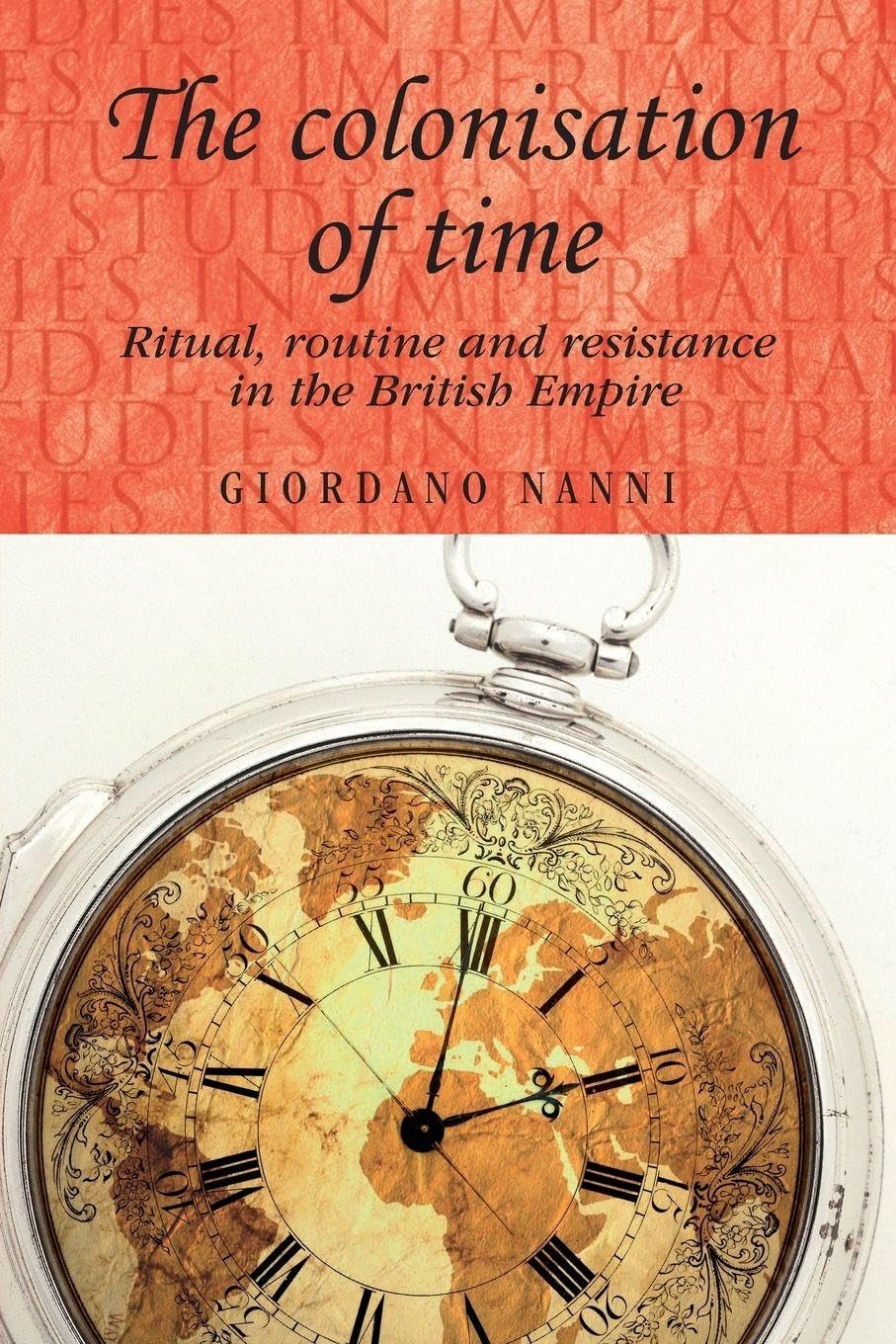
The colonisation of time: Ritual, routine and resistance in the British Empire (Studies in Imperialism, 94)
$24.10
by Giordano Nanni



The colonisation of time is a highly original and long overdue examination of the ways that western-European and specifically British concepts and rituals of time were imposed on other cultures as a fundamental component of colonisation during the nineteenth century. Based on a wealth of primary sources, it explores the intimate relationship between the colonisation of time and space in two British settler-colonies (Victoria, Australia and the Cape Colony, South Africa) and its instrumental role in the exportation of Christianity, capitalism and modernity, thus adding new depth to our understanding of imperial power and of the ways in which it was exercised and limited. All those intrigued by the concept of time will find this book of interest, for it illustrates how western-European time’s rise to a position of global dominance – from the clock to the seven-day week – is one of the most pervasive, enduring and taken-for-granted legacies of colonisation in today’s world. This impressive book is the first sustained treatment of the effective British colonisation of indigenous time practices. Analysing both the Cape Colony and Australia, Nanni deftly draws our attention to the enormous significance of the temporal as well as the spatial, for the making of the colonial world'. Alan Lester, Professor of Historical Geography at the University of Sussex 'A very fine study, one that has much to offer the broad range of scholars interested in understanding colonial struggles and their ongoing legacy.' Kirsten McKenzie, University of Sydney in American Historical Review (April 2013) [...] if the measure of a good book is that it should ignite the reader’s imagination and suggest all kinds of questions for future research, then this monograph delivers and is a welcome addition to the literature on colonial studies. Much has been written about time in Western society. But how did 'the rest' of the world come to share the West's dominant view of time? Who were the first emissaries of the culture of the clock? And, most importantly, by what means did they gain a following?The colonisation of time is a highly original and long overdue examination of the ways that western-European and specifically British concepts and rituals of time were imposed on other cultures as a fundamental component of colonisation during the nineteenth century. Based on a wealth of primary sources, and a comparative analysis of two British settler-colonies Victoria, Australia, and the Cape Colony, South Africa this book explores the intimate relationship between the colonisation of time and the conquest of land; time's instrumentality in the exportation of Christianity, capitalism, and modernity, and the role it played in forging European identities and civilities against an imaginary, 'time-less' and 'irregular' other. Both scholars and general readers will find this book valuable for its attentiveness to the tensions across and within colonial societies over teh reform of Indigenous temporalities; as well as to the range of responses that Indigenous societies adopted in order to resist, appropriate or integrate the colonisers' temporal culture. Adding new depth to our understanding of imperial power and the ways in which it was exercised and limited, The colonisation of time documents the remarkable story behind the rise to global dominance of western-time, from the clock to the seven-day week, revealing its status as one of the most enduring, pervasive and taken-for-granted legacies of colonisation in today's world. Much has been written about time in Western society. But how did 'the rest' of the world come to share the West's dominant view of time? Who were the first emissaries of the culture of the clock? And, most importantly, by what means did they gain a following? The colonisation of time is a highly original and long overdue examination of the ways that western-European and specifically British concepts and rituals of time were imposed on other cultures as a fundamental component of colonisation during the nineteenth century. Based on a wealth of primary sources, and a comparative analysis of two British settler-colonies – Victoria, Australia, and the Cape Colony, South Africa – this book explores the intimate relationship between the colonisation of time and the conquest of land; time's instrumentality in the exportation of Christianity, capitalism, and modernity, and the role it played in forging European identities and civilities against an imaginary, 'time-less' and 'irregular' other. Both scholars and general readers will find this book valuable for its attentiveness to the tensions across and within colonial societies over teh reform of Indigenous temporalities; as well as to the range of responses that Indigenous societies adopted in order to resist, appropriate or integrate the colonisers' temporal culture. Adding new depth to our understanding of imperial power and the ways in which it was exercised and limited, The colonis