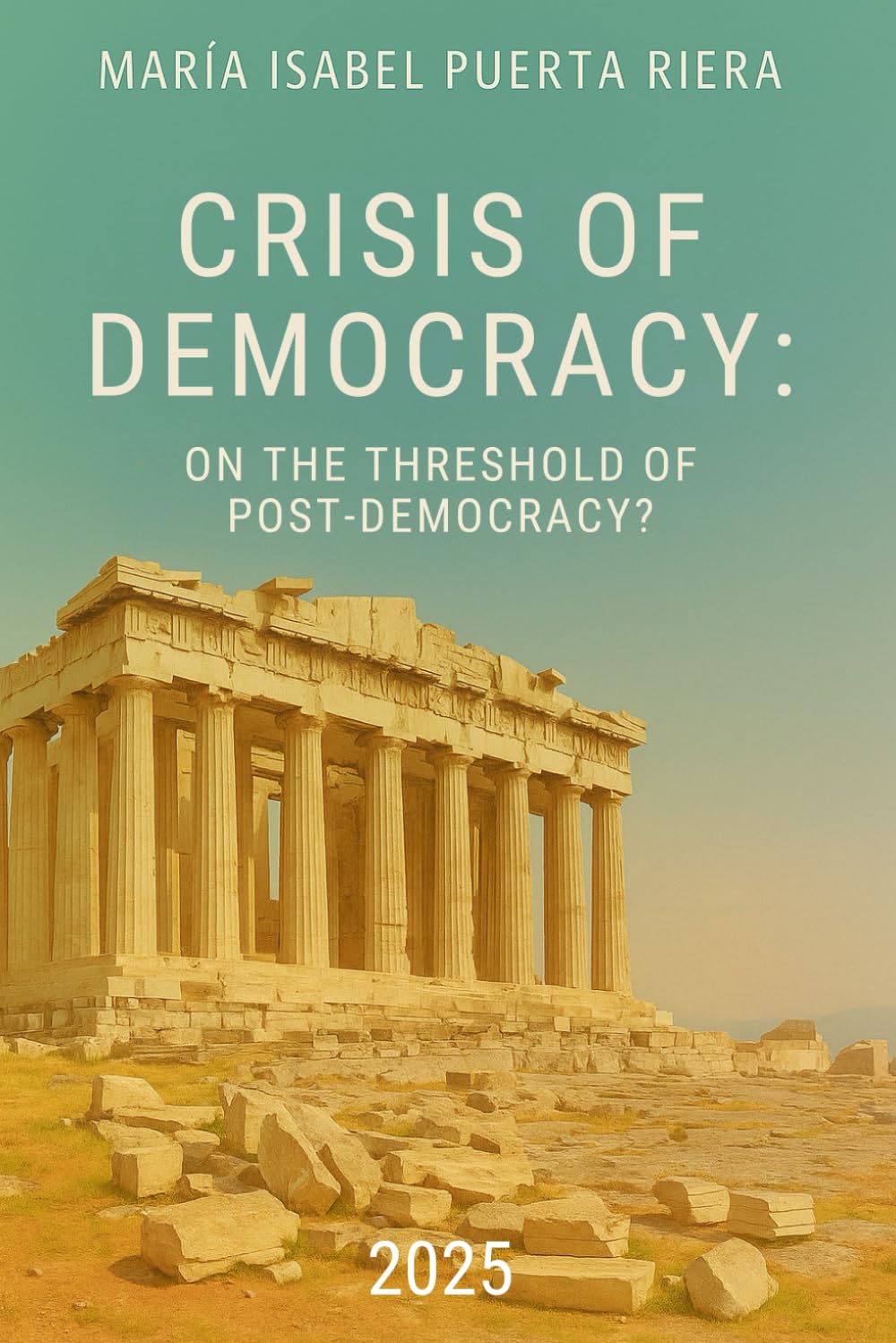
The crisis of democracy: On the threshold of post-democracy? (Crisis and Democracy)
$9.99
by Maria Isabel Puerta Riera



The book Crisis of Democracy: On the Threshold of Post-Democracy? presents a theoretical journey into the notion of democracies’ crises for those interested in understanding the nature of the challenge the system faces worldwide. It discusses the development of representative democracy and its contradictions with the capitalist model, providing the background to much of the modern dysfunction that democracy has experienced over the past century. The crisis of representation transferred its efficiency problems to the system itself, making it vulnerable to authoritarian threats, especially in societies with deep-seated inequities. The book contributes to the debate on democratic consolidation, followed by the populist promise as an alternative to the weaknesses of political systems, which in turn gives rise to a growing autocratization that strains the foundations of contemporary democracy. While the dominant perspective blames authoritarian leadership for the crisis of an over-idealized democracy, this book focuses on the structural deficits of the system. The purpose of the book is to connect diverse theoretical approaches to the crisis of democracy, contributing to the debate by deepening the elements that define the crisis and how it manifests. The argument is based on the idea of post-democracy as the result of overcoming the weaknesses of the modern democratic ideal. The historical and empirical context this book provides intends to deepen the discussion about the conditions under which democracy developed its core values and the seeds for its demise. This is an in-depth analysis of democracy, its models, and crises from a Latin Americanist perspective. Democracy, as an experience in Western civilization, has been largely explained as a success through Eurocentric lenses, while its crises are often viewed across experiences in the third world. This book examines the problem from a diverse theoretical perspective.