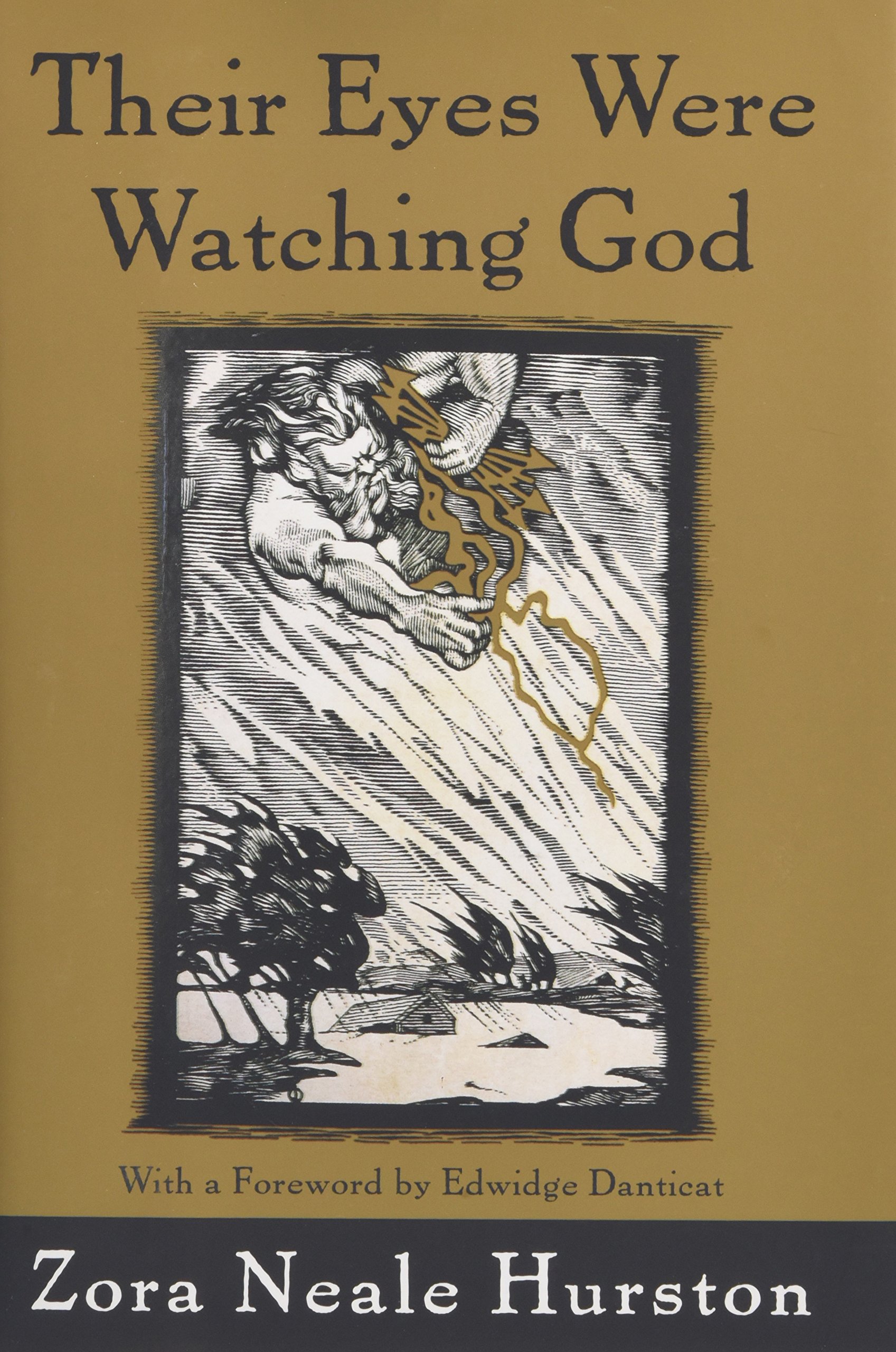



“A deeply soulful novel that comprehends love and cruelty, and separates the big people from the small of heart, without ever losing sympathy for those unfortunates who don’t know how to live properly.” —Zadie Smith One of the most important and enduring books of the twentieth century, Their Eyes Were Watching God brings to life a Southern love story with the wit and pathos found only in the writing of Zora Neale Hurston. Out of print for almost thirty years—due largely to initial audiences’ rejection of its strong black female protagonist—Hurston’s classic has since its 1978 reissue become perhaps the most widely read and highly acclaimed novel in the canon of African-American literature. Their Eyes Were Watching God, an American classic, is a luminous and haunting novel about Janie Crawford, a Southern black woman in the 1930s whose journey from a free-spirited girl to a woman of independence and substance has inspired writers and readers for close to seventy years. This poetic, graceful love story, rooted in black folk traditions and steeped in mythic realism, celebrates, boldly and brilliantly, African-American culture and heritage. And in a powerful, mesmerizing narrative, it pays quiet tribute to a black woman, who, though constricted by the times, still demanded to be heard. Originally published in 1937, Their Eyes Were Watching God met significant commercial but divided critical acclaim. Somewhat forgotten after her death, Zora Neale Hurston was rediscovered by a number of black authors in the late 1960s and early 1970s, and reintroduced to a greater readership by Alice Walker in her 1972 essay "In Search of Zora Neale Hurston," written for Ms. magazine. Long out of print, the book was reissued after a petition was circulated at the Modern Language Association Convention in 1975, and nearly three decades later Their Eyes Were Watching God is considered a seminal novel of American fiction. With a new foreword by the celebrated novelist Edwidge Danticat -- author of Eyes, Breath, Memory; The Farming of Bones; and Krik?Krak! -- this edition of Their Eyes Were Watching God commemorates the singular, inimitable voice in America's literary canon and highlights its unusual publication history. Zora Neale Hurston was a novelist, folklorist, and anthropologist. An author of four novels ( Jonah’s Gourd Vine , 1934; Their Eyes Were Watching God , 1937; Moses, Man of the Mountain , 1939; and Seraph on the Suwanee , 1948); two books of folklore ( Mules and Men , 1935, and Tell My Horse , 1938); an autobiography ( Dust Tracks on a Road , 1942); and over fifty short stories, essays, and plays. She attended Howard University, Barnard College and Columbia University, and was a graduate of Barnard College in 1927. She was born on January 7, 1891, in Notasulga, Alabama, and grew up in Eatonville, Florida. She died in Fort Pierce, in 1960. In 1973, Alice Walker had a headstone placed at her gravesite with this epitaph: “Zora Neale Hurston: A Genius of the South.” Excerpt Chapter One Ships at a distance have every man's wish on board. For some they come in with the tide. For others they sail forever on the horizon, never out of sight, never landing until the Watcher turns his eyes away in resignation, his dreams mocked to death by Time. That is the life of men. Now, women forget all those things they don't want to remember, and remember everything they don't want to forget. The dream is the truth. Then they act and do things accordingly. So the beginning of this was a woman and she had come back from burying the dead. Not the dead of sick and ailing with friends at the pillow and the feet. She had come back from the sodden and the bloated; the sudden dead, their eyes flung wide open in judgment. The people all saw her come because it was sundown. The sun was gone, but he had left his footprints in the sky. It was the time for sitting on porches beside the road. It was the time to hear things and talk. These sitters had been tongueless, earless, eyeless conveniences all day long. Mules and other brutes had occupied their skins. But now, the sun and the bossman were gone, so the skins felt powerful and human. They became lords of sounds and lesser things. They passed nations through their mouths. They sat in judgment. Seeing the woman as she was made them remember the envy they had stored up from other times. So they chewed up the back parts of their minds and swallowed with relish. They made burning statements with questions, and killing tools out of laughs. It was mass cruelty. A mood come alive, Words walking without masters; walking altogether like harmony in a song. "What she doin coming back here in dem overhalls? Can't she find no dress to put on? - Where's dat blue satin dress she left here in? - Where all dat money her husband took and died and left her? - What dat ole forty year ole 'oman doin' wid her hair swingin' down her back lak some young gal? Where she left dat young lad of