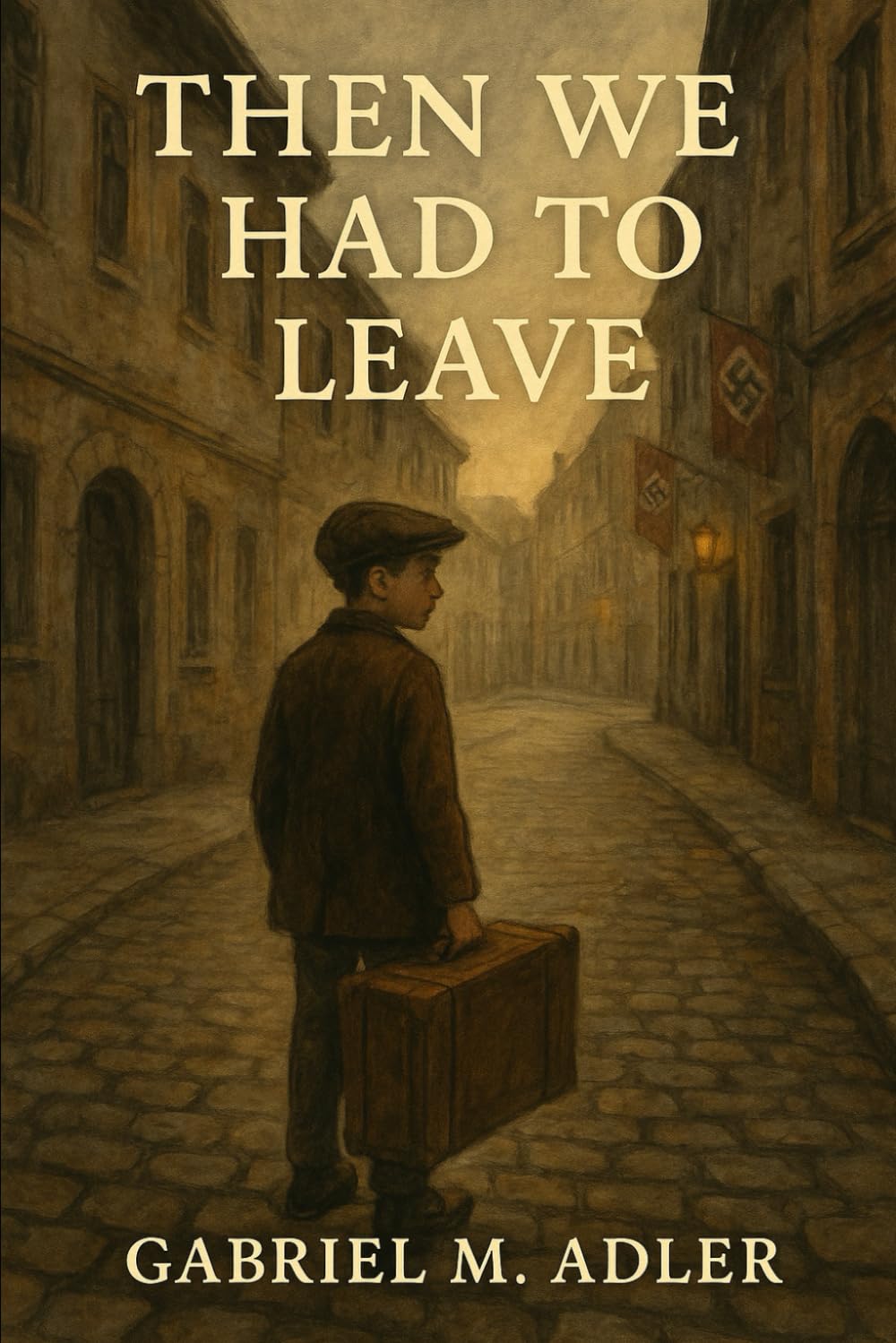



Then We Had to Leave Vienna, 1937. For ten-year-old Leo , childhood unfolds in patterns of comfort and certainty — the smell of his mother’s baking, the sound of trams on Schönbrunner Straße, his father’s steady tread up the stairwell each evening. But as the seasons turn, the familiar rhythm begins to falter. Friends vanish without farewell, silence replaces greeting, and the city he loves begins to look away from itself. When the family is forced to flee to London, Leo enters a new world of fog, ration lines, and borrowed words. The language is strange, the faces unfamiliar, yet somewhere between loss and adaptation he begins to find himself again. The moment he speaks his name — softly, almost as a question — marks the beginning of his survival. Told in quiet, luminous prose, Then We Had to Leave is the story of one boy’s awakening in a world that no longer has room for innocence. It is about exile and belonging, about the small gestures that keep love alive when history demands silence.