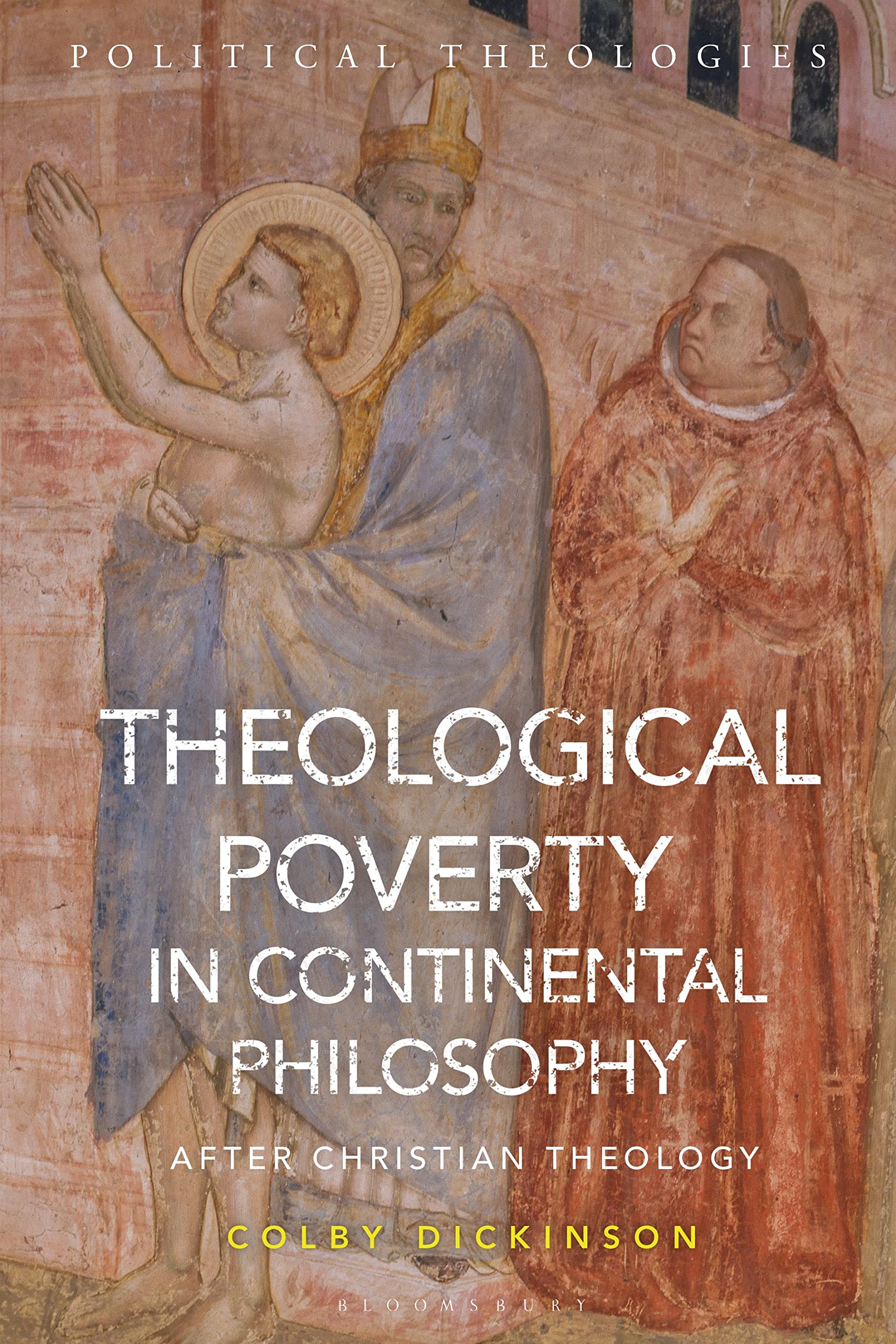
Theological Poverty in Continental Philosophy: After Christian Theology (Political Theologies)
$42.95
by Colby Dickinson



Colby Dickinson proposes a new political theology rooted in the intersections between continental philosophy, heterodox theology, and orthodox theology. Moving beyond the idea that there is an irresolvable tension at the heart of theological discourse, the conflict between the two poles of theology is made intelligible. Dickinson discusses the opposing poles simply as manifestations of reform and revolution, characteristics intrinsic to the nature of theological discourse itself. Outlining the illuminating space of theology, Theological Poverty in Continental Philosophy breaks new ground for critical theology and continental philosophy. Within the theology of poverty, the believer renounces the worldly for the divine. Through this focus on the poverty intrinsic to religious calling, the potential for cross-pollination between the theological and the secular is highlighted. Ultimately situating the virtue of theological poverty within a poststructuralist, postmodern world, Dickinson is not content to position Christian philosophy as the superior theological position, moving away from the absolute values of one tradition over another. This universalising of theological poverty through core and uniting concepts like grace, negation, violence and paradox reveal the theory’s transmutable strength. By joining up critical theology and the philosophy of religion in this way, the book broadens the possibility of a critical dialogue both between and within disciplines. “Dickinson's study offers a creative and wide-ranging engagement with political and continental theology, showing how a 'theology of poverty' destabilizes strong identities. Despite its reliance on postmodern thought, the book serves as an excellent introduction to this field and provides numerous impulses for rethinking theology's political implications.” ― Account Theologische Revue [Bloomsbury translation] “Dickinson mobilizes his commanding grasp of contemporary philosophy to reconceptualize the task of theology for our secular world. Critical of its various entanglements with sovereignty, Dickinson argues that theology should understand itself as kenotically, in relation its own poverty. Rather than abandoning theological and ecclesial traditions, Dickinson's “poor” or minimal theology seeks to open and repurpose them for our globalized existence. His proposal is essential for theology and the future of Christianity itself.” ― Hollis Phelps, Assistant Professor of Interdisciplinary Studies, Mercer University, USA “Colby Dickinson's newest monograph serves as an excellent guide to prophetic Continental voices, especially Adorno, Derrida and Caputo, in order to demonstrate that the poverty of theology is in reality its strength: humility, learning from the other, and “interruption” of interreligious dialogue can only enrich and enliven contemporary theology.” ― Joseph Rivera, Associate Professor of Theology and Philosophy, Dublin City University, Ireland Colby Dickinson is Associate Professor of Theology at Loyola University Chicago, USA. Colby Dickinson is assistant professor of theology at Loyola University, Chicago. He is the author of Agamben and Theology (2011) and Between the Canon and the Messiah (2013), as well as numerous articles on contemporary continental philosophy and theology. He is editor of The Postmodern ‘Saints’ of France (2013) and The Shaping of Tradition: Context and Normativity (2013). Arthur Bradley is Senior Lecturer in Literary and Cultural Studies at Lancaster University, UK. He is the author of Negative Theology and Modern French Philosophy; Derrida's Of Grammatology: A Philosophical Guide and (with Andrew Tate) The New Atheist Novel: Fiction, Philosophy and Polemic after 9/11. Antonio Cerella is a Senior Lecturer in Politics and International Relations at Nottingham Trent University in the UK. He works at the intersection of political theory, continental philosophy, and religious study. He is the author of Genealogies of Political Modernity (2020) and the editor of Heidegger and the Global Age (2017) and The Sacred and the Political: Explorations on Mimesis, Violence and Religion (2015).