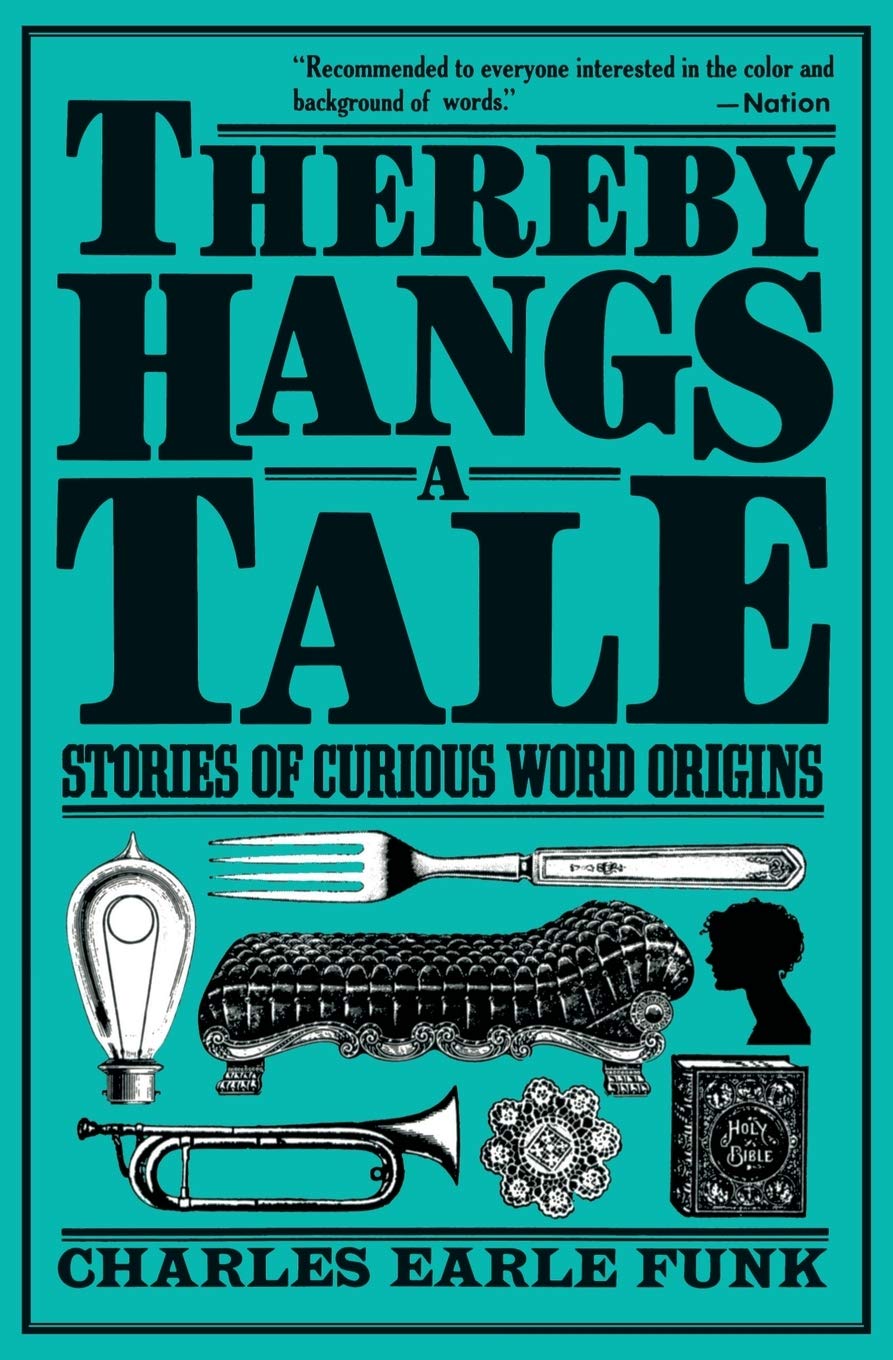
Thereby Hangs a Tale: Stories of Curious Word Origins (Perennial Library)
$11.99
by Charles Earle Funk



From “mad as a wet hen” to “corn dodger” and “hobgoblin,” Charles Funk’s collections of curious words and expressions are a treasure trove of word origin. In a language where hearse and rehearse have the same root and the word dunce comes from a great philosopher, English has hundreds of everyday words that originated or acquired their meanings in unusual ways. Dictionaries don’t have the space to tell us all the mysteries but now Dr. Funk, with humor and insight, tells us the strange and intriguing stories of hundreds of words and how they came to be a part of our language. “Much learning and wide research deftly and entertainingly presented.” - Kirkus Reviews “Recommended to everyone interested in color and background of words.” - Nation “Thereby Hangs A Tale should charm even the earnest reader….An admirable collection.” - New York Times “Just the kind of odds-and-ends information that suits many tastes for pickup reading.” - San Francisco Chronicle The Greek root of school means leisure. A language where hearse and rehearse have the same root and the word dunce comes from a great philosopher, English has hundreds of every day words that originated or acquired their meaning in unusual ways. Dictionaries don't have the space to tell us all the mysteries, but now Dr. Funk, with humor and insight, tells us the strange and intriguing stories of hundreds of words and how they came to be a part of our language. Charles Earle Funk was editor in chief of the Funk & Wagnalls Standard Dictionary Series. He wrote several other books on word and phrase origins, including Horsefeathers, Heavens to Betsy!, and Thereby Hangs a Tale. Word Origins Language Verbal English Unusual Words