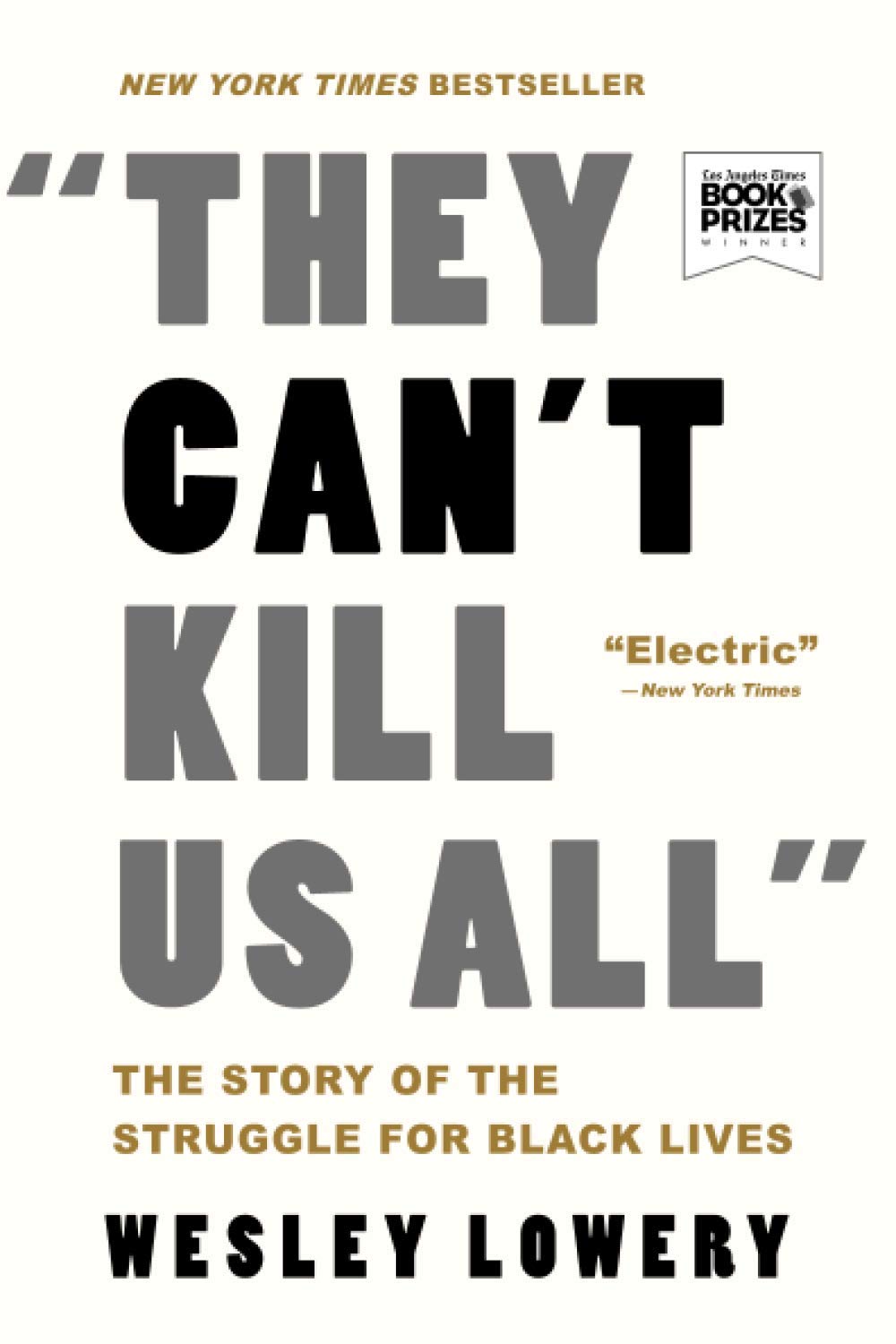



An indispensable work of journalism that “is electric, because it is so well reported” (Dwight Garner, New York Times ) by Pulitzer Prize winning reporter Wesley Lowery that describes the earliest days of #blacklivesmatter and brings to life the quest for justice in the murders by police of Michael Brown, Tamir Rice, and Freddie Gray as well as an intimate, moving portrait of the activists working to dismantle systemic racism in America Conducting hundreds of interviews over the course of one year of reporting on the ground, Washington Post writer Wesley Lowery traveled from Ferguson, Missouri, to Cleveland, Ohio; Charleston, South Carolina; and Baltimore, Maryland; and then back to Ferguson to uncover life inside the most heavily policed, if otherwise neglected, corners of America today. In an effort to grasp the magnitude of the repose to Michael Brown's death and understand the scale of the problem police violence represents, Lowery speaks to Brown's family and the families of other victims other victims' families as well as local activists. By posing the question, "What does the loss of any one life mean to the rest of the nation?" Lowery examines the cumulative effect of decades of racially biased policing in segregated neighborhoods with failing schools, crumbling infrastructure and too few jobs. Studded with moments of joy, and tragedy, They Can't Kill Us All offers a historically informed look at the standoff between the police and those they are sworn to protect, showing that civil unrest is just one tool of resistance in the broader struggle for justice. As Lowery brings vividly to life, the protests against police killings are also about the black community's long history on the receiving end of perceived and actual acts of injustice and discrimination. They Can't Kill Us All is a canonical work in the fight against police brutality. Lowery grapples with a persistent if also largely unexamined aspect of the otherwise transformative presidency of Barack Obama: the failure to deliver tangible security and opportunity to those Americans most in need of both. "Lowery's book is electric, because it is so well reported, so plainly told and so evidently the work of a man who has not grown a callus on his heart.... Lowery's book is valuable for many reasons. He circles slowly and warily around the question of why, during Obama's presidency, so little has happened to improve on the racial front."--Dwight Garner, New York Times "Lowery's dispatches from the front lines of this new era in racial justice movement building have proven indispensable, and with They Can't Kill Us All, he further shows just how vital his reporting has become. Part early history of a still growing movement, as well as part critique of the media charged with covering this movement, Lowery also offers a peek into the process of reporting--the structural challenges, unfortunate failures, and personal successes in accurately capturing the politics and personalities involved in the biggest domestic story of the Obama presidency. They Can't Kill Us All proves itself a necessary read for anyone in need of greater understanding of why and how a new generation of young black activists have taken to the streets to demand justice from their country.― Mychal Denzel Smith, New York Times bestselling author of Invisible Man, Got the Whole World Watching Featured on Anti-Racist Reading Lists by USA Today, Chicago Sun Times, Esquire, Oprah Magazine, Refinery29, InStyle, Publishers Weekly,The Cut, Medium, The Millions, Michigan Daily, and PopSugar "Riveting.... A timely, significant book." ― Kirkus, Starred Review "With empathy, anguish, and a superb eye for telling detail, Wesley Lowery chronicles the birth of the new civil rights movement. This book is an urgent, grounds-eye view of the struggle." ― Chris Hayes, author of A Colony in a Nation " They Can't Kill Us All is a wise memoir that chronicles the fatigue of reporting Black death at the hands of law enforcement." ― Ebony "Lowery takes us inside the pain and courage of those who have cared to challenge the police and this nation. He details their stories and, along the way, provides a powerful and all-too-human account of what it means to be a reporter in a time of profound crisis. His example gives me renewed home in those who report the news. This is a must read!" ― Eddie S. Glaude, Jr., author of Democracy in Black: How Race Still Enslaves the American Soul " They Can't Kill Us All is a comprehensive record of the #blacklivesmatter protest movement, as well as a first-person account of those events from the author's dual--and conflicted--perspective as a journalist and an African-American man." ― Esquire "A searing, affecting, sharply-written treatise on one of the most important crises the United States faces today." ― Harper's Bazaar "[A] vital book.... Setting the fatal police shootings of young black men in the historical context of racial