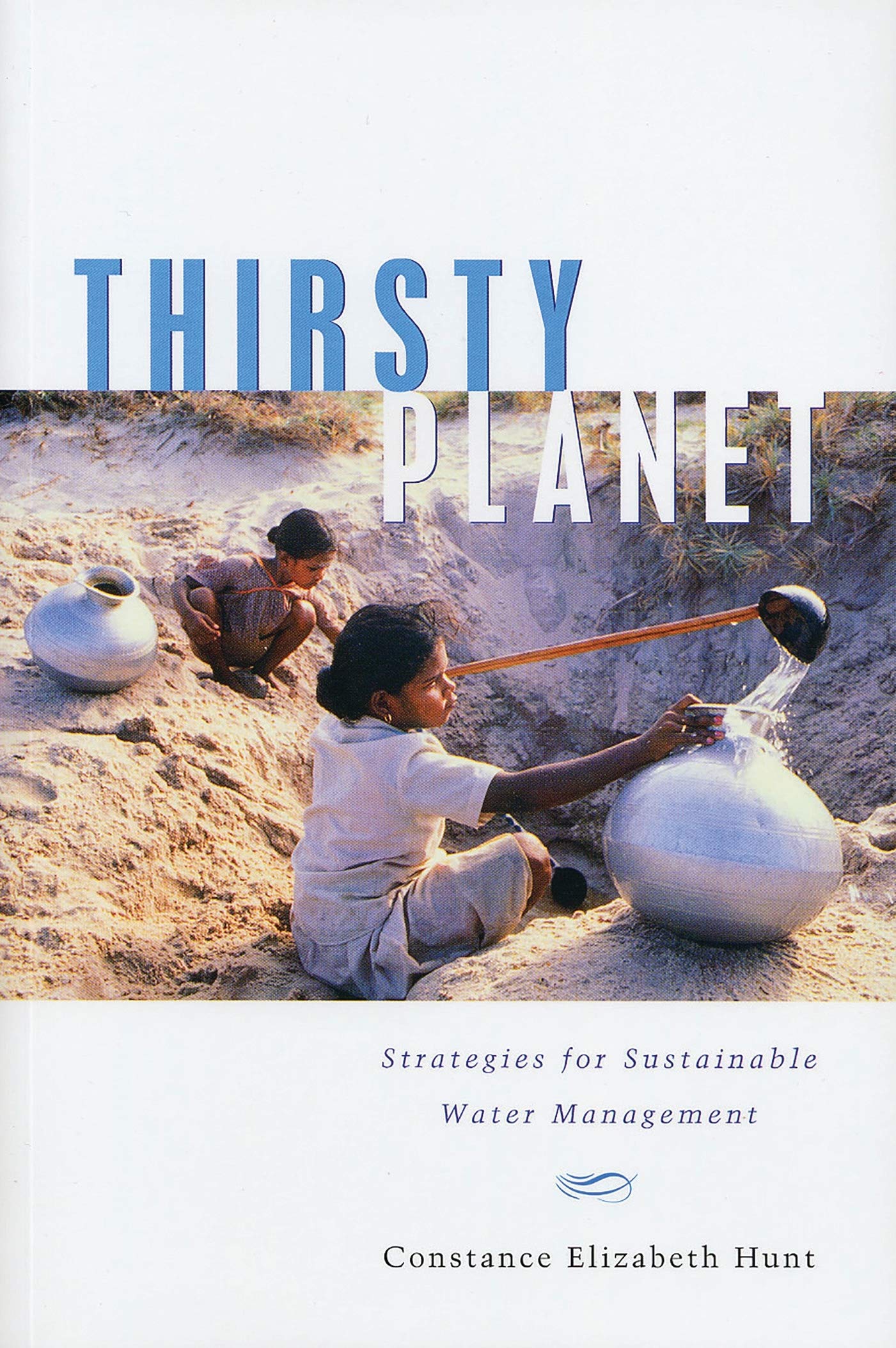
Thirsty Planet: Strategies for Sustainable Water Management
$47.95
by Constance Elizabeth Hunt



By the year 2025 nearly 2 billion people will live in regions experiencing absolute water scarcity. In the face of this emerging crisis, how should the planet's water be used and managed? Current international policy sees nature competing with human uses of water. Hunt takes issue with this perspective. She suggests that nature is the source of water and only by making the conservation of nature an absolute priority will we have the water we need for human use in future. It is essential , therefore, to manage water in ways that maintain the water cycle and the ecosystems that support it. This book looks at the complexity of the problem. It provides a wide array of ideas, information, case studies and ecological knowledge - often from remote corners of the developing world -- that could provide an alternative vision for water use and management at this critical time. Essential and compelling reading for students on courses related to water resource management and development; water managers and decision makers, and non-specialists with an interest in global water issues. “This is a tremendous book for anyone taking a serious look at global water problems. Constance Hunt exposes the powerful forces that have damaged rivers and watersheds and impaired the ability of natural ecosystems to supply clean water. She shows that the big water companies are using their power for a dramatic takeover of public water resources for private profit without thought of sustainability for the long term.” ― Brent Blackwelder, Friends of the Earth “Constance Hunt does a valuable service by providing a concise and readable primer on the task of preserving the freshwater ecosystems on which we all depend. Thirsty Planet is required reading for anyone interested in learning what tools we have available to meet one of the greatest challenges to humanity and nature in the 21st century.” ― Kathryn S. Fuller, World Wildlife Fund About the author Constance Hunt is a biologist and environmentalist with considerable experience in international policy and global campaigns for water management and conservation. She is the recipient of awards from the National Research Council, US Department of Agriculture and US Army Corps of Engineers for outstanding work in the field of water resources management. She has held a variety of posts. As Senior Advisor to the WWF's International Living Waters Campaign (1999-2001), she was responsible for basin-scale conservation for the Niger and Mekong Rivers and for working with the WWF network on international water policy issues. Before this (1993-99) she was Senior Programme Officer and Director of Freshwater Ecosystem Conservation for the WWF, managing policy and field projects for sustainable river and wetland management in the US and internationally. She has also served with the World Water Council. She is currently a Senior Advisor with the United Nations Environment Programme (UNEP)'s Dams and Development Project, where she facilitates global dialogues on the recommendations of the World Commission on Dams. She is the author/editor of two previous books on conservation, and of numerous articles on sustainable water resources development. Thirsty Planet Strategies for Sustainable Water Management By Constance Elizabeth Hunt Zed Books Ltd Copyright © 2004 Constance Elizabeth Hunt All rights reserved. ISBN: 978-1-84277-243-0 Contents List of Figures and Tables, ix, Glossary, xiii, Introduction, 1, 1 Riding the Water Cycle: Water Cycle Dynamics and Freshwater Ecosystems, 5, 2 Spiralling Towards a Crisis: Water Use and Growing Shortages, 37, 3 To Feed the World: Food Supply and the Water Cycle, 62, 4 A Thirsty Planet: Water Supply and Sanitation in a Water-short World, 96, 5 When It Rains, It Pours: Water Management for Flood Damage Reduction, 131, 6 Arteries of Commerce: Inland Waterways and the Water Cycle, 160, 7 A Warmer World: The Interrelationships Between Global Warming and the Water Cycle, 192, 8 When the Water Cycle Breaks Down: The Potential for Restoration, 228, 9 Avenues of Governance: Institutional Options for Protecting the Water Cycle, 258, Index, 293, CHAPTER 1 Riding the Water Cycle Water Cycle Dynamics and Freshwater Ecosystems 'Four and a half billion years ago, Earth was still a molten magma ball, seething from the collision that ejected the Moon. As the planet cooled, its constituents separated like curdled milk. Within about fifty million years, the iron of which much of the Earth was comprised had sunk to the core, and the lighter elements (silicon, aluminum, calcium, magnesium, sodium, potassium, and oxygen, along with some remaining iron) formed a rocky crust at the surface — just as slag floats on top of molten iron in a smelter. 'Amongst all this rocky stuff were the volatile compounds delivered by collisions as the planet formed — hydrogen, nitrogen, hydrogen sulfide, carbon oxides and water. While the Earth was molten, these