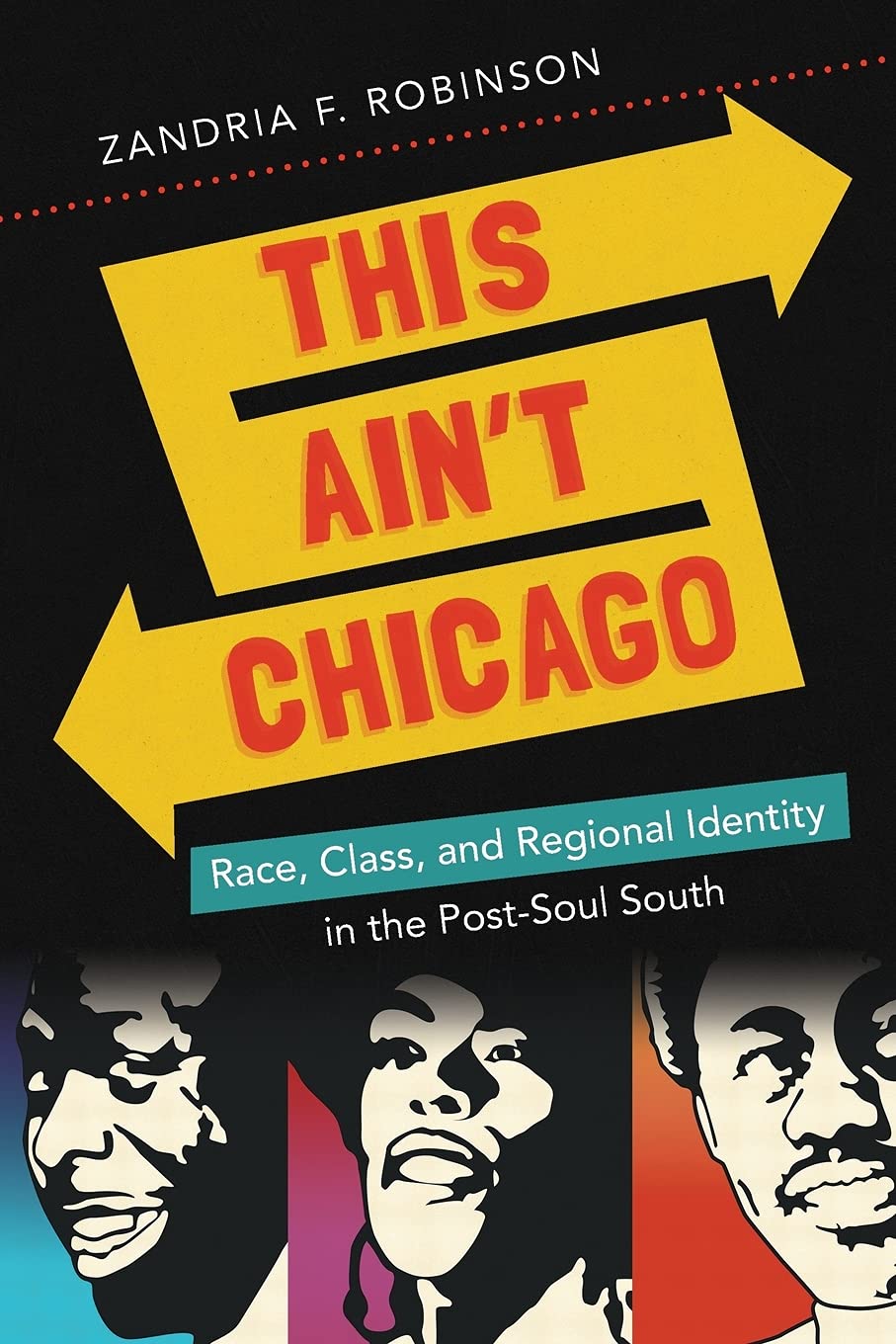
This Ain't Chicago: Race, Class, and Regional Identity in the Post-Soul South (New Directions in Southern Studies)
$37.69
by Zandria F. Robinson



When Zandria Robinson returned home to interview African Americans in Memphis, she was often greeted with some version of the caution “I hope you know this ain’t Chicago.” In this important new work, Robinson critiques ideas of black identity constructed through a northern lens and situates African Americans as central shapers of contemporary southern culture. Analytically separating black southerners from their migrating cousins, fictive kin, and white counterparts, Robinson demonstrates how place intersects with race, class, gender, and regional identities and differences. Robinson grounds her work in Memphis — the first big city heading north out of the Mississippi Delta. Although Memphis sheds light on much about the South, Robinson does not suggest that the region is monolithic. Instead, she attends to multiple Souths, noting the distinctions between southern places. Memphis, neither Old South nor New South, sits at the intersections of rural and urban, soul and post-soul, and civil rights and post–civil rights, representing an ongoing conversation with the varied incarnations of the South, past and present. “Robinson critiques ideas of Black identity constructed through a northern lens and situates African Americans as central shapers of contemporary southern culture.” — The Journal of Pan African Studies “A welcome and even essential book. . . . Robinson convincingly shows that black Southerners no longer feel ashamed to embrace their Southern roots.” — Chapter 16 “Highly recommended. Undergraduates, faculty, professionals.” — CHOICE “Unfolds in magisterial fashion...A self-aware, distinctively southern perspective on the South that is often absent from urban ethnography.” — American Journal of Sociology “Sharply analyzed.” — Middle West Review “[Robinson’s] vibrant prose and her keen cultural eye are timely and unprecedented. . . . Her work ultimately encapsulates the rich growing body of new black Southern studies and is a worthy contribution to the field.” — Arkansas Review “This is an important book for scholars of the South, for those who are interested in racial identity, and for those who appreciate good ethnographic studies that are executed and written well.” — Social Forces “ This Ain’t Chicago is a fascinating exploration of the shifting contours of racial and regional identity in the post-civil rights era. Robinson shows that southern regional identity and culture provide insights into understanding something about cities and 'urban change.' The book offers a bridge between the worlds of southern studies, cultural studies, and urban theory.” — Bruce Haynes, University of California, Davis “Zandria Robinson deploys a sharp eye, a wealth of material, and a mordant wit to address a topic that everyone should have known was important. No one has an excuse for not knowing that now.” ― John Shelton Reed “Zandria Robinson deploys a sharp eye, a wealth of material, and a mordant wit to address a topic that everyone should have known was important. No one has an excuse for not knowing that now.” — John Shelton Reed African Americans as the central shapers of contemporary southern culture When Zandria Robinson returned home to interview African Americans in Memphis, she was often greeted with some version of the caution "I hope you know this ain't Chicago." In this important new work, Robinson critiques ideas of black identity constructed through a northern lens and situates African Americans as central shapers of contemporary southern culture. Analytically separating black southerners from their migrating cousins, fictive kin, and white counterparts, Robinson demonstrates how place intersects with race, class, gender, and regional identities and differences. When Zandria Robinson returned home to interview African Americans in Memphis, she was often greeted with some version of the caution "I hope you know this ain't Chicago." In this important new work, Robinson critiques ideas of black identity constructed through a northern lens and situates African Americans as central shapers of contemporary southern culture. Analytically separating black southerners from their migrating cousins, fictive kin, and white counterparts, Robinson demonstrates how place intersects with race, class, gender, and regional identities and differences. Zandria F. Robinson is assistant professor of sociology at Rhodes College. She is coeditor of Repositioning Race: Prophetic Research in a Post-Racial Obama Age .