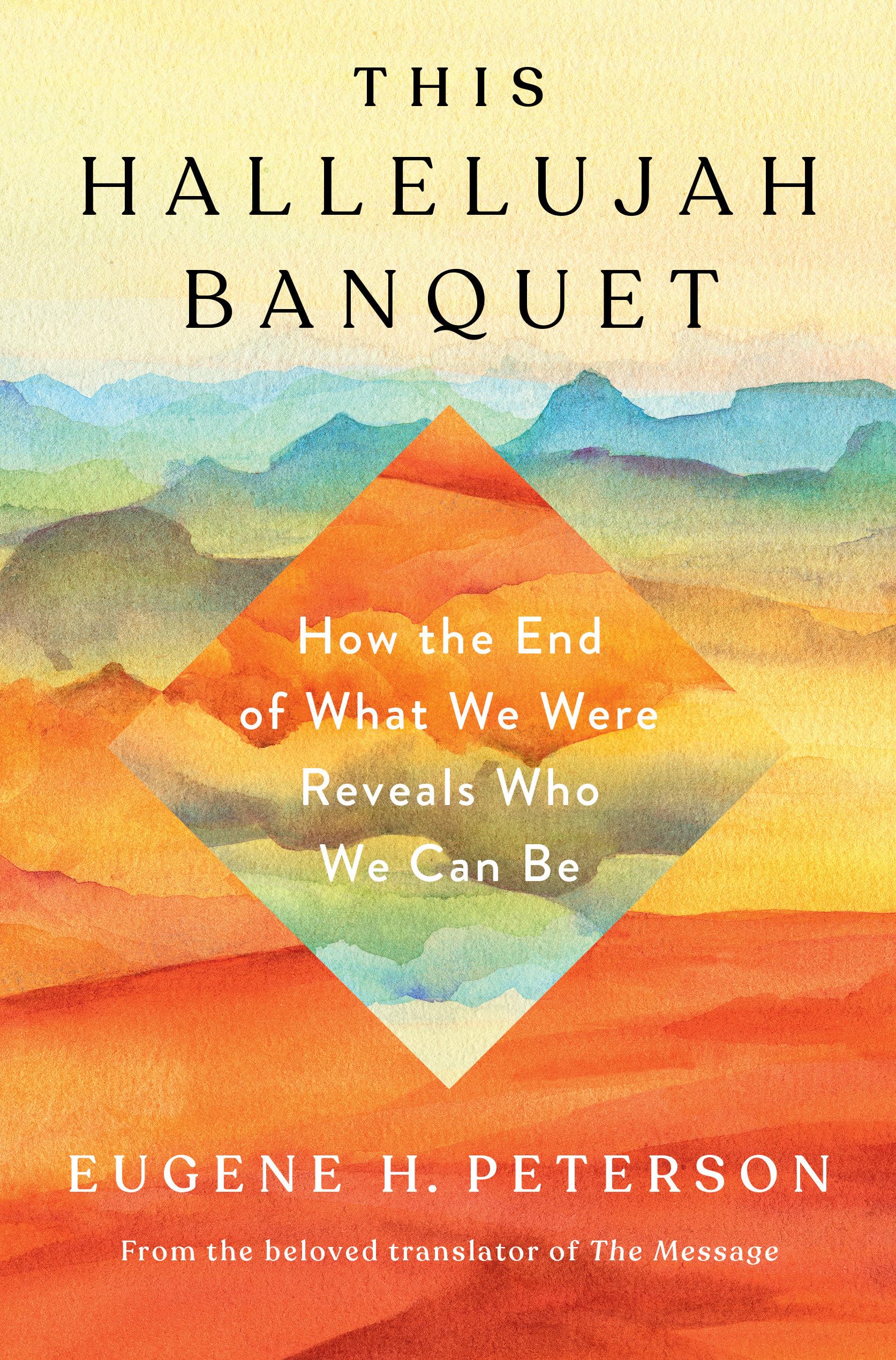
This Hallelujah Banquet: How the End of What We Were Reveals Who We Can Be
$18.00
by Eugene H. Peterson



In this powerful new interpretation of the book of Revelation, the late, revered author and translator of The Message Bible offers timely insights into how we can lean into growth, not in spite of challenging times, but because of them. “Insightful and inviting . . . This is Eugene at his pastoral best.”—Rev. Dr. Glenn Packiam, associate senior pastor at New Life Church and author of Blessed Broken Given The book of Revelation is filled with angels and dragons, fantastic beasts and golden cities, bottomless pits and mysterious numbers. It’s dramatic, sure—but what exactly does that have to do with the tests we face today? Actually, a lot. When the apostle John penned the book of Revelation, believers lived in a time of deception and injustice. But his message doesn’t just reflect their cries for things to be made right; it reveals heaven’s perspective of the bigger picture. In this never-before-published work, Eugene H. Peterson traces the dramatic symbolism found in John’s letters to the seven churches, uncovering Christ’s instructions to these ancient communities. Along the way, encounter seven key tests, of our love, suffering, truth, holiness, reality, witness, and commitment, tests from Christ that can deepen our faith and even shape our future. This Hallelujah Banquet is your personal invitation to grow deep and begin living now in a generous, abundant, and hopeful reality in Christ. Eugene H. Peterson , translator of The Message: The Bible in Contemporary Language , authored more than thirty books, including Every Step an Arrival, As Kingfishers Catch Fire, and A Long Obedience in the Same Direction. He earned his master’s degree in Semitic languages from Johns Hopkins University and also held several honorary doctoral degrees. Peterson was the founding pastor of Christ Our King Presbyterian Church in Bel Air, Maryland, where he and his wife, Jan, served for twenty-nine years. Peterson held the title of professor emeritus of spiritual theology at Regent College, British Columbia, from 1998 until his passing in 2018. The End Is Where We Start The last book of the Bible, Revelation, has some of the best words to start the year, works that launch us into the pages of our calendars. T. S. Eliot wrote in “Little Gidding,” What we call the beginning is often the end And to make an end is to make a beginning. The end is where we start from. “The end is where we start from.” The end of the Bible is the beginning of our new year’s existence. It functions for us in this way as it speaks to our mood and condition. The characteristic mood, the typical mental stance, on New Year’s Day is a look to the future. We have a calendar of unused days stretching out before us. There is curiosity about them and fear of them. Amateur prophets make predictions. Astrological magazines and horoscope plotters are in their peak season. Articles proliferate in magazines and newspapers: the business outlook, the literary prospects, the political probabilities, the social changes expected. And with all this, no one can avoid these personal questions: What will it bring for me? What waits to be recorded in the diary pages of the new year? The book of Revelation is the word of God that speaks to this combination of anxiety and hope about the future. For the person who is concerned with the future, the book of Revelation is the timely word of God. In the course of our years, New Year’s Day is a day wherein our concern about the future is expressed. The book of Revelation is the part of Scripture that deals with our concern about the future. When we begin reading the book of Revelation, we are first confused and then disappointed. We are confused by an author who talks of angels and dragons, men eating books and giant insects eating men, bottomless pits and mysterious numbers, fantastic beasts and golden cities. The language confuses us. And then we are disappointed because we don’t find what we are looking for. We want to know what is going to happen in the future, but we find neither dates nor names. We are fearful of what may happen to the world in the next twelve months, but we don’t find anything said that helps us understand the coming days. We have some hopes for our lives and for our families, but we find nothing that is said about our prospects. We go back to reading the political analysts and working the horoscope in the paper, escaping occasionally with a science fiction novel and making do as best we can. So, what has happened? Has the book of Revelation—a holy scripture notwithstanding—failed us? Is the Word of God, though highly regarded in previous centuries, quite inadequate to communicate to our adult, mature world? We put the writer and reader of Revelation in a class with palm readers and fortune tellers—colorful but chancy. Or is it that we just haven’t given it enough thought? Maybe what is needed is some hard concentration to figure out the symbols, arrange the chronology,