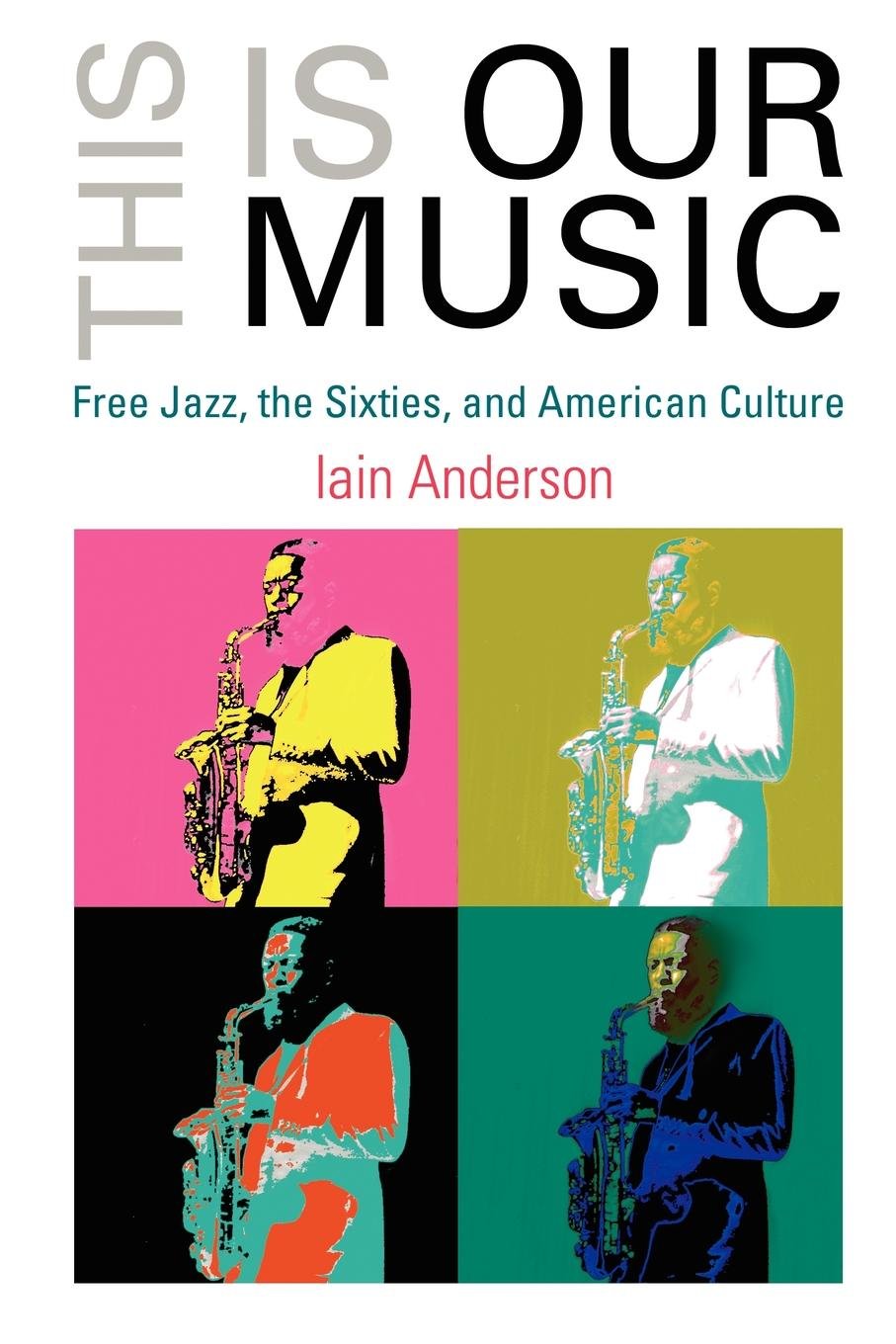
This Is Our Music: Free Jazz, the Sixties, and American Culture (The Arts and Intellectual Life in Modern America)
$26.50
by Iain Anderson



This Is Our Music , declared saxophonist Ornette Coleman's 1960 album title. But whose music was it? At various times during the 1950s and 1960s, musicians, critics, fans, politicians, and entrepreneurs claimed jazz as a national art form, an Afrocentric race music, an extension of modernist innovation in other genres, a music of mass consciousness, and the preserve of a cultural elite. This original and provocative book explores who makes decisions about the value of a cultural form and on what basis, taking as its example the impact of 1960s free improvisation on the changing status of jazz. By examining the production, presentation, and reception of experimental music by Ornette Coleman, Cecil Taylor, John Coltrane, and others, Iain Anderson traces the strange, unexpected, and at times deeply ironic intersections between free jazz, avant-garde artistic movements, Sixties politics, and patronage networks. Anderson emphasizes free improvisation's enormous impact on jazz music's institutional standing, despite ongoing resistance from some of its biggest beneficiaries. He concludes that attempts by African American artists and intellectuals to define a place for themselves in American life, structural changes in the music industry, and the rise of nonprofit sponsorship portended a significant transformation of established cultural standards. At the same time, free improvisation's growing prestige depended in part upon traditional highbrow criteria: increasingly esoteric styles, changing venues and audience behavior, European sanction, withdrawal from the marketplace, and the professionalization of criticism. Thus jazz music's performers and supporters—and potentially those in other arts—have both challenged and accommodated themselves to an ongoing process of cultural stratification. " This Is Our Music takes us back to that moment between the fifties and the sixties when a new music called free jazz took root in the coffeehouses and nightclubs of New York City, Chicago, and Los Angeles. In this rich and evocative book, Iain Anderson meets the challenge posed by the music and follows its lead into the complex political realignments, shifting racial dynamics, and redefinition of art and entertainment that characterized the subsequent decade." ― John Szwed, author of So What: The Life of Miles Davis "Historian Iain Anderson tracks the political and social meanings of jazz as the music changed hands around the world. . . . The crooked line Anderson draws from the maverick [Cecil] Taylor (a Guggenheim Fellowship recipient) to the conservative [Wynton] Marsalis (arbiter of "What Is-and Isn't-Jazz") is the real contribution of This Is Our Music ." ― Bookforum "Anderson's evenhanded, archive-driven book is consistently instructive-a fine guide to the debates that raged around free jazz and to the music's unexpected current place in the American arts canon." ― Journal of American History Iain Anderson is Professor and Chair of History at Northeastern State University. Introduction In the summer of 1960, jazz composer and alto saxophonist Ornette Coleman, trumpeter Don Cherry, bassist Charlie Haden, and drummer Ed Blackwell recorded This Is Our Music for Atlantic records. The album captured an original musical vision that had polarized performers, critics, and fans since the quartet's New York City debut the previous year. Coleman reordered structural principles to afford the members of his group maximum melodic and rhythmic freedom. By allowing each musician to play inside or outside conventional chord, bar, pitch, and tempo guidelines, he pursued an expressive and collective approach to improvisation. On the session's one standard tune, "Embraceable You," Coleman's motivic development quickly departed from Gershwin's melody line, the chord sequence that anchored it, and the four-bar constraints on each phrase. By placing these innovations at the center of his musical conception, rather than referring to them as passing embellishments, he changed the entire sound of jazz. Individually, Coleman's temporary allegiance to tonal centers, and high-pitched bent notes, allowed him to approximate a wider range of human sounds on his horn than previous instrumentalists. Collectively, the absence of orthodox musical reference points forced other band members to contribute to the performance in new ways. Following the saxophone into—or propelling it toward—uncharted territory, the group sacrificed some of its cohesion for improvisational daring and range. Thus the unison introduction by Coleman and Cherry to "Embraceable You" sounded ragged or sloppy to some listeners, the perception of harmonic dissonance between the instruments occurred frequently, and the rhythm section rarely propelled the other players with any urgency. At the same time, the Quartet's spontaneity radically altered the emotional appeal of Gershwin's song, replacing the relaxed ballad interpretation favored by Nat Cole or Charlie Parker with