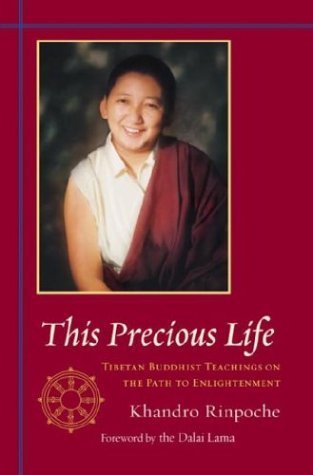



Using the traditional Tibetan Buddhist framework of the Four Reminders—the preciousness of human birth, the truth of impermanence, the reality of suffering, and the inescapability of karma—Khandro Rinpoche explains why and how we could all better use this short life to pursue a spiritual path and make the world a better place. She says, "Think of all the time you've wasted hesitating or feeling distracted, or expending useless energy feeling jealous or angry, or being selfish. At the time of death, you'll look back and it will all seem like a dream." The book includes contemplative exercises that encourage us to appreciate the tremendous potential of the human body and mind. They focus on how we can learn to see this life as a gift—and how, by achieving peace in our own lives, we can bring a seed of happiness to other people. Although raised in Asia, Khandro Rinpoche is well-versed in Western culture, which allows her to translate Tibetan Buddhist wisdom to Westerners with remarkable authenticity and immediacy. She is also one the most highly trained living Tibetan masters and has been teaching in the United States and Europe for over fifteen years, during which time she has attracted thousands of students. She brings a unique feminine perspective to the wisdom tradition of Tibetan Buddhism. Khandro, a Buddhist nun and daughter of a well-known meditation master, has written a thoughtful introduction to Tibetan Buddhist practice. She lucidly summarizes the Four Thoughts central to Tibetan Buddhist teaching: the preciousness of human existence, with its potential for enlightenment and potential to benefit others; the impermanence of life and inevitability of death, recognition of which inspires an urgency to live each moment meaningfully; the reality of suffering and the need to develop compassion for the suffering of others; and the role of karma, the law of cause and effect, in perpetuating suffering. Khandro then explains the practice of Tibetan meditation in relationship to the Four Thoughts and how the practice of meditation can lead to understanding of the preciousness of life and how to use this life to alleviate the suffering of others. Khandro discourages dabbling in Buddhism and so delves deeply into Buddhist philosophy and provides useful contemplations to help the reader understand core concepts. Jane Tuma Copyright © American Library Association. All rights reserved "This is a gem of a book, and throughout Khandro Rinpoche is uncompromisingly direct in her discussion of topics that are often stumbling blocks for Westerners."— Buddhadharma Using the traditional Tibetan Buddhist framework of the Four Reminders?the preciousness of human birth, the truth of impermanence, the reality of suffering, and the inescapability of karma?Khandro Rinpoche explains why and how we could all better use this short life to pursue a spiritual path and make the world a better place. She says, ?Think of all the time you?ve wasted hesitating or feeling distracted, or expending useless energy feeling jealous or angry, or being selfish. At the time of death, you?ll look back and it will all seem like a dream.? The book includes contemplative exercises that encourage us to appreciate the tremendous potential of the human body and mind. They focus on how we can learn to see this life as a gift?and how, by achieving peace in our own lives, we can bring a seed of happiness to other people. Although raised in Asia, Khandro Rinpoche is well-versed in Western culture, which allows her to translate Tibetan Buddhist wisdom to Westerners with remarkable authenticity and immediacy. She is also one the most highly trained living Tibetan masters and has been teaching in the United States and Europe for over fifteen years, during which time she has attracted thousands of students. She brings a unique feminine perspective to the wisdom tradition of Tibetan Buddhism. Born in India in 1967, Khandro Rinpoche is the daughter of Tibetan meditation master His Holiness Mindrolling Trichen and is herself a renowned teacher in the Kagyu and Nyingma lineages of Tibetan Buddhism. She is the head of a Tibetan Buddhist nunnery in India and divides her time between teaching in the West, running the nunnery, and supporting charity projects for Tibetan refugees in India. Used Book in Good Condition