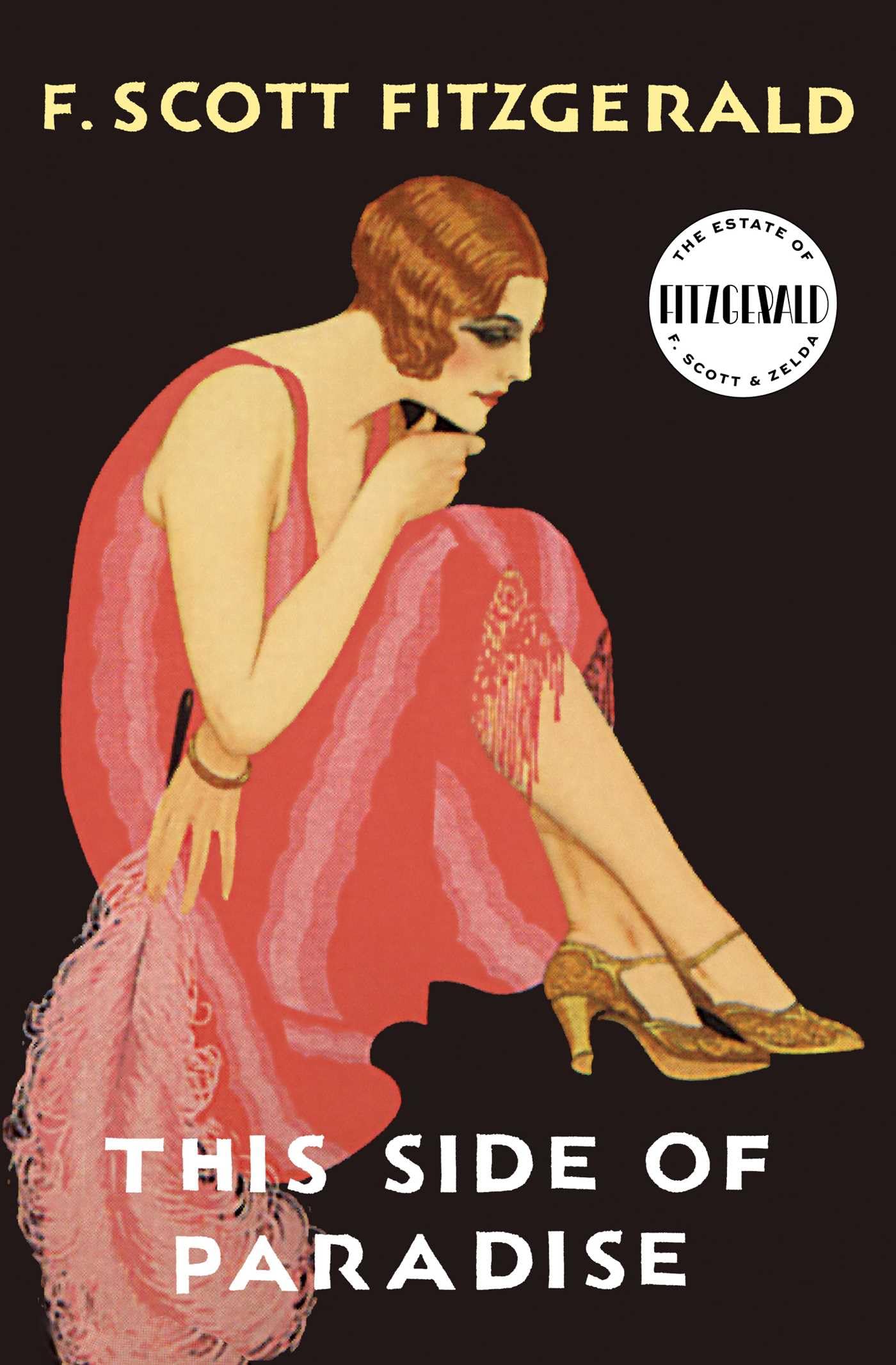



F. Scott Fitzgerald’s romantic and witty first novel—written when he was only twenty-three years old and catapulted Fitzgerald to instant fame—is now available in a beautifully designed special collector’s edition. This Side of Paradise is F. Scott Fitzgerald’s debut novel. The book’s critical success was driven in part by the enthusiasm of reviewers, and it catapulted Fitzgerald to instant fame. H. L. Mencken wrote that is was the “best American novel that I have seen of late.” An examination of the lives and morality of post-World War I youth, this semiautobiographical story of the handsome, indulged, and idealistic Princeton student Amory Blaine brilliantly captures the rhythms and romance of Fitzgerald’s university days and offers a poignant portrait of the Lost Generation. Chicago Tribune Bears the impress of genius...splendid and fascinating. F. Scott Fitzgerald was born in St. Paul, Minnesota, in 1896. He attended Princeton University, joined the United States Army during World War I, and published his first novel, This Side of Paradise , in 1920. That same year he married Zelda Sayre and for the next decade the couple lived in New York, Paris, and on the Riviera. Fitzgerald’s novels include The Beautiful and Damned , The Great Gatsby , and Tender Is the Night . He died at the age of forty-four while working on The Last Tycoon . Fitzgerald’s fiction has secured his reputation as one of the most important American writers of the twentieth century. CHAPTER I AMORY, SON OF BEATRICE Amory Blaine inherited from his mother every trait, except the stray inexpressible few, that made him worth while. His father, an ineffectual, inarticulate man with a taste for Byron and a habit of drowsing over the "Encyclopædia Britannica," grew wealthy at thirty through the deaths of two elder brothers, successful Chicago brokers, and in the first flush of feeling that the world was his, went to Bar Harbor and met Beatrice O'Hara. In consequence, Stephen Blaine handed down to posterity his height of just under six feet and his tendency to waver at crucial moments, these two abstractions appearing in his son Amory. For many years he hovered in the background of his family's life, an unassertive figure with a face half-obliterated by lifeless, silky hair, continually occupied in "taking care" of his wife, continually harassed by the idea that he didn't and couldn't understand her. But Beatrice Blaine! There was a woman! Early pictures taken on her father's estate at Lake Geneva, Wisconsin, or in Rome at the Sacred Heart Convent -- an educational extravagance that in her youth was only for the daughters of the exceptionally wealthy -- showed the exquisite delicacy of her features, the consummate art and simplicity of her clothes. A brilliant education she had -- her youth passed in renaissance glory; she was versed in the latest gossip of the Older Roman Families; known by name as a fabulously wealthy American girl to Cardinal Vitori and Queen Margherita and more subtle celebrities that one must have had some culture even to have heard of. She learned in England to prefer whiskey and soda to wine, and her small talk was broadened, in two senses, during a winter in Vienna. All in all Beatrice O'Hara absorbed the sort of education that will be quite impossible ever again, a tutelage measured by the number of things and people one could be contemptuous of and charming about, a culture rich in all arts and traditions, barren of all ideas, in the last of those days when the great gardener clipped the inferior roses to produce one perfect bud. In her less important moments she returned to America, met Stephen Blaine and married him -- this almost entirely because she was a little bit weary, a little bit sad. Her only child was carried through a tiresome season and brought into the world on a spring day in ninety-six. When Amory was five he was already a delightful companion for her. He was an auburn-haired boy with great handsome eyes which he would grow up to in time, a facile, imaginative mind and a taste for fancy dress. From his fourth to his tenth year he did the country with his mother in her father's private car, from Coronado, where his mother became so bored that she had a nervous breakdown in a fashionable hotel, down to Mexico City, where she took a mild, almost epidemic consumption. This trouble pleased her, and later she made use of it as an intrinsic part of her atmosphere -- especially after several astounding bracers. So while more or less fortunate little rich boys were defying governesses on the beach at Newport or being spanked or tutored or read to from "Do and Dare," or "Frank on the Lower Mississippi," Amory was biting acquiescent bell-boys in the Waldorf, outgrowing a natural repugnance to chamber music and symphonies, and deriving a highly specialized education from his mother. "Amory." "Yes, Beatrice." (Such a quaint name for his mother; she encouraged it.) "Dear, don't think of getting