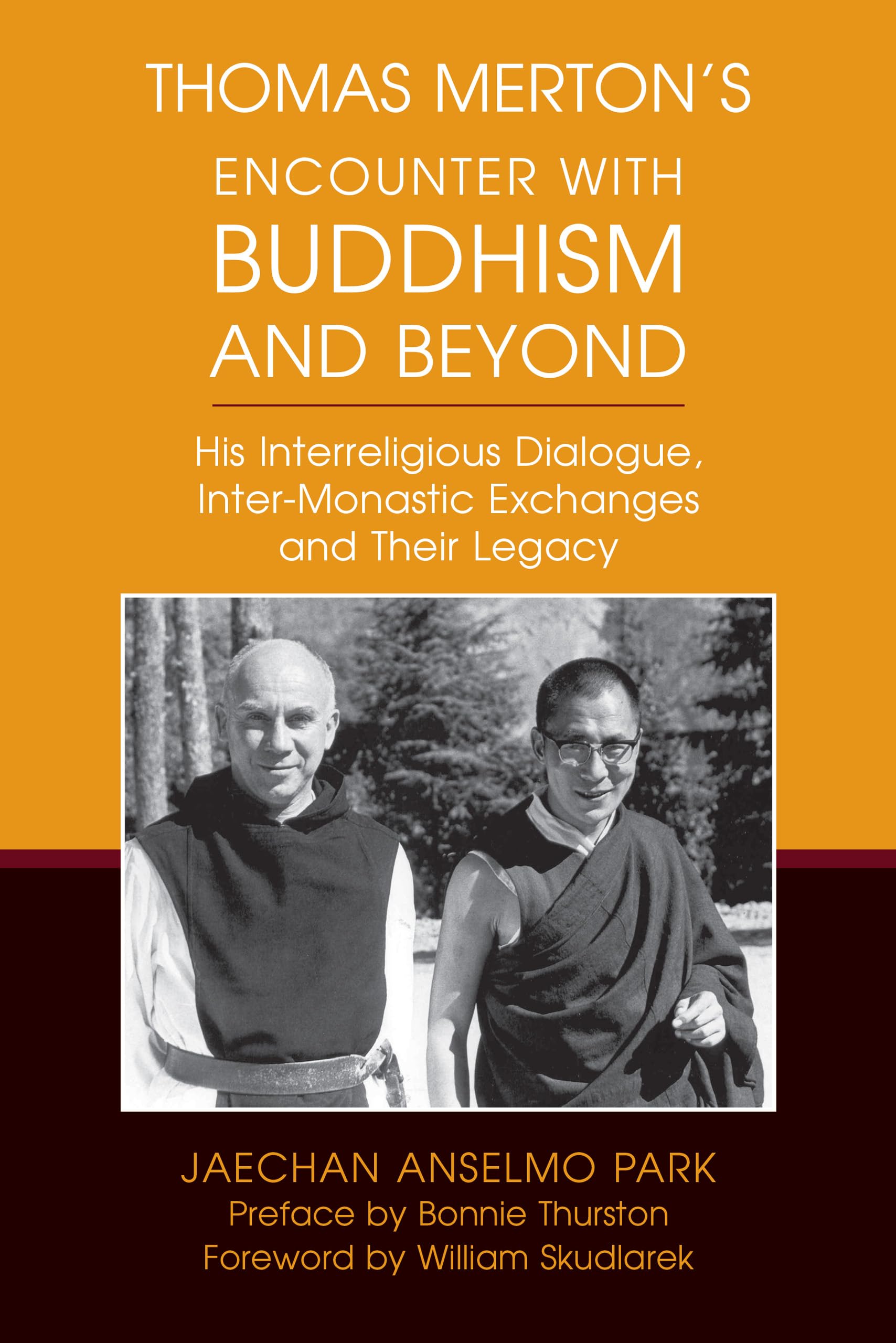
Thomas Merton’s Encounter with Buddhism and Beyond: His Interreligious Dialogue, Inter-monastic Exchanges, and Their Legacy
$30.88
by Jaechan Anselmo Park OSB



Thomas Merton recognized the value and possibility of contemplative dialogue between monastics and contemplatives of other religious traditions and hoped that, through such dialogue, monastics would strive for ‘inter-monastic communion’ and a bonding of the broader ‘spiritual family.’ He held out hope that this bond would demonstrate the fundamental unity of humanity to a world that was becoming ever more materialistic and divided. Among other themes and topics, this book explores Thomas Merton’s role as a pioneer of Buddhist-Christian dialogue and monastic interreligious dialogue. It delves into the process of Merton’s self-transformation through contemplative experiences, explores his encounter with Zen and Tibetan Buddhists and his pioneering engagements in Buddhist-Christian dialogue, and presents and responds to the criticisms of those who raise questions about Merton’s understanding of Buddhism. Fr. Jaechan Anselmo Park, OSB, articulates and analyzes the influences of Buddhist theory and practice on Thomas Merton’s contemplative spirituality and shows how Merton’s legacy has influenced and continues to inspire interreligious and inter-monastic dialogue, particularly in an Asian monastic context. "In Thomas Merton's Encounter with Buddhism and Beyond Jaechan Park explores Thomas Merton's dialogue with Buddhism getting to the very heart of it as only a fellow monk, steeped in the daily monastic rhythm of prayer and work, could do. Park then builds on Merton's legacy suggesting important ways monastic and contemplative interreligious dialogue can continue to develop in the twenty-first century and beyond."Paul M. Pearson, Director, Thomas Merton Center, Bellarmine University "Jaechan Anselmo Park has gifted us with a carefully written, well-organized exploration of Thomas Merton's understanding of inner experience, interreligious dialogue, and inter-monastic/inter-contemplative dialogue. His detailed exploration of Merton's legacy concerning these matters establishes a context for considering the future of inter-monastic exchange and contemplative dialogue in Asia, and more specifically, Korea. Thomas Merton's Encounter with Buddhism clearly describes each of the topics that are explored, providing a historical overview and a critical analysis, drawing from well-recognized Merton scholars. Park makes extensive use of the books and journals of Merton, demonstrating both a familiarity and a critical knowledge of these works. He carefully—and this is much appreciated—repairs the exclusive language found in the older texts. Whether readers have an interest in the work of Thomas Merton, interreligious dialogue, orinter-monastic discourse, they will find this book to be an essential companion."Dennis Patrick O'Hara, St. Michael's College, University of Toronto "Fr. Park's profound study of Thomas Merton's multi-religious encounters reveals the enormous impact and importance of Merton's legacy for the church and for the world. It is the first extensive study to explore Merton's legacy in terms of how it has shaped the institutional church, through the activities of the Pontifical Council for Interreligious Dialogue (PCID) and through the Monastic Interreligious Dialogue (MID), which functions under its aegis. This is a convincing portrayal of Merton's pivotal importance in the history of interreligious dialogue."Joe Raab, Professor of Religious Studies and Theology, Siena Heights University, co-editor of The Merton Annual "This is a well-researched and readable analysis of Thomas Merton's understanding of and engagement with Buddhism. The work is enhanced by an extended consideration of the Christian-Buddhism dialogue from a monastic perspective. Since the author himself is an Asian monk he brings a fresh angle to his task. Like the good householder of the Gospel, Father Park brings forth old things and new." Lawrence S. Cunningham, The University of Notre Dame "This book is written by an experienced Asian Benedictine. It delves into the process of Thomas Merton's spiritual transformation through his encounter with Zen and Tibetan Buddhist thought, and his involvement in the dialogue of religious experience with their practitioners. Father Park makes it clear that the dialogue between Catholicism and Buddhism must be of a different kind from that with Judaism and Islam which centers on the dialogue of theological exchange. And indeed, because the practitioners of Buddhism emphasize the priority of experience over faith, a fruitful dialogue between Catholics and Buddhists may well be impossible without a dialogue on contemplative prayer. The book should be of special interest not only to lay and monastic contemplatives, but to those interested in double religious belonging and the new evangelization."Ovey N. Mohammed, SJ, Professor Emeritus of Catholicism and Eastern Religions, Regis College, University of Toronto "An intriguing and significant contribution to interfaith encounter, Benedictine Jaech