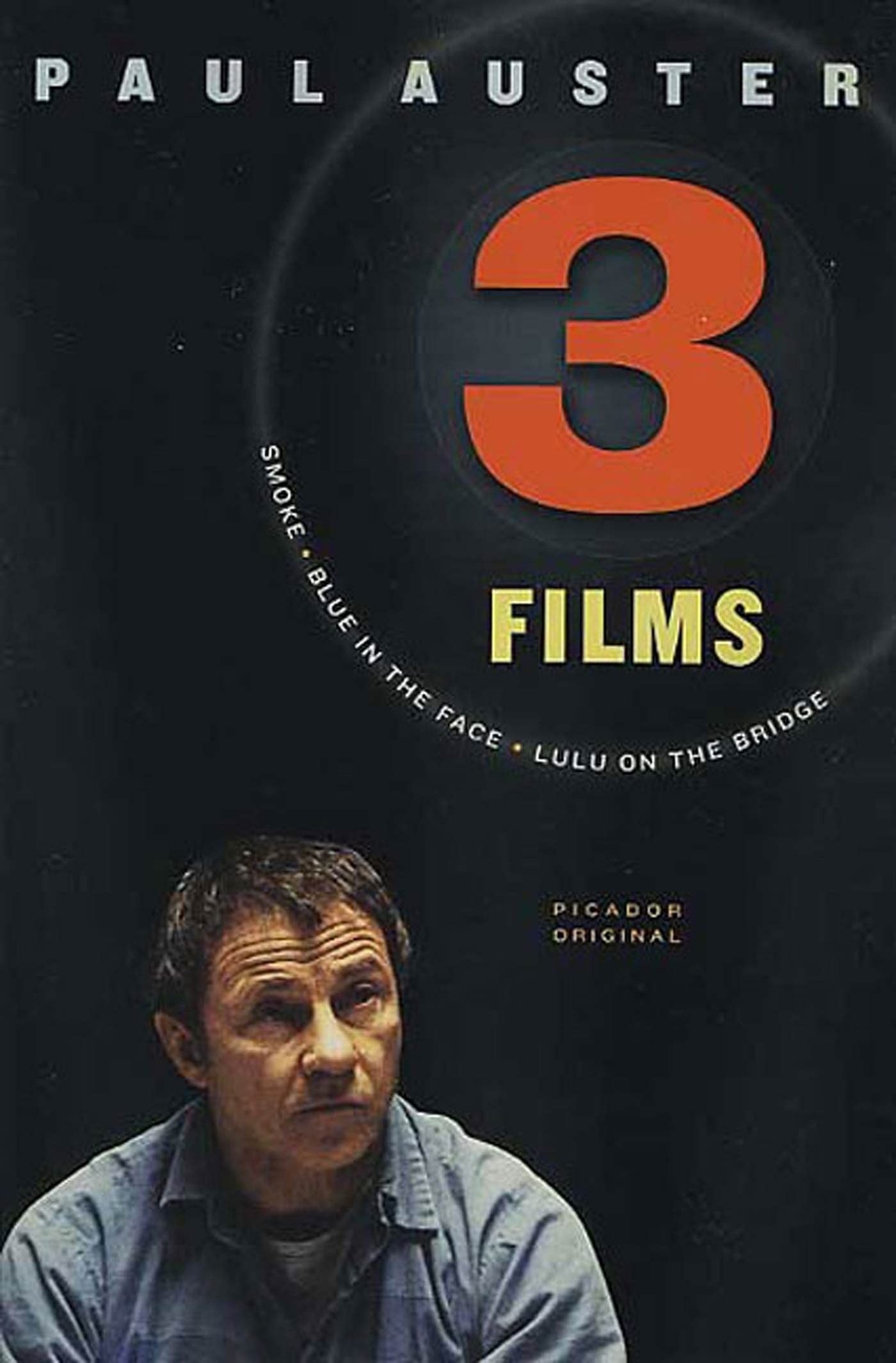



From The New York Trilogy to The Book of Illusions and 4 3 2 1 , Paul Auster's novels earned him a reputation as "one of American's most spectacularly inventive writers." Here, published together for the first time, are the screenplays of the three films he made in the 1990s. Smoke (starring Harvey Keitel, William Hurt, Forest Whitaker, and Stockard Channing) tells the story of a novelist, a cigar store manager, and a black teenager who unexpectedly cross paths and end up changing each other's lives in indelible ways. Set in contemporary Brooklyn, Smoke directly inspired Blue in the Face , a largely improvised comedy shot in a total of six days. A film unlike any other it stars Harvey Keitel, with featured performances by Roseanne, Lily Tomlin, Lou Reed, and Michael J. Fox. Lulu on the Bridge (Auster's solo directorial debut, again starring Harvey Keitel, with Mira Sorvino, Willem Dafoe, and Vanessa Redgrave) opens with the accidental shooting of jazz musician Izzy Maurer during a performance in a New York club. Izzy is then led on a journey into the strange and sometimes frightening labyrinth of his soul. Both thriller and fairy tale, Lulu on the Bridge is above all a story about the redemptive powers of love. Paul Auster was the bestselling author of 4 3 2 1 , Bloodbath Nation , Baumgartner , The Book of Illusions , and The New York Trilogy, among many other works. In 2006 he was awarded the Prince of Asturias Prize for Literature. Among his other honors are the Prix Médicis Étranger for Leviathan , the Independent Spirit Award for the screenplay of Smoke , and the Premio Napoli for Sunset Park . In 2012, he was the first recipient of the NYC Literary Honors in the category of fiction. He was also a finalist for the International IMPAC Dublin Literary Award ( The Book of Illusions ), the PEN/Faulkner Award ( The Music of Chance ), the Edgar Award ( City of Glass ), and the Man Booker Prize ( 4 3 2 1 ). Auster was a member of the American Academy of Arts and Letters and a Commandeur de l’Ordre des Arts et des Lettres. His work has been translated into more than forty languages. He died at age seventy-seven in 2024. Three Films Smoke, Blue in the Face, and Lulu on the Bridge By Paul Auster Picador Copyright © 2003 Paul Auster All right reserved. ISBN: 9780312423148 Three Films Smoke The Making of Smoke Annette Insdorf: I gather that Smoke began with a Christmas story you wrote for The New York Times. Paul Auster: Yes, it all started with that little story. Mike Levitas, the editor of the Op-Ed page, called me out of the blue one morning in November of 1990. I didn't know him, but he had apparently read some of my books. In his friendly, matter-of-fact way he told me that he'd been toying with the idea of commissioning a work of fiction for the Op-Ed page on Christmas Day. What did I think? Would I be willing to write it? It was an interesting proposal, I thought--putting a piece of make-believe in a newspaper, the paper of record, no less. A rather subversive notion when you get right down to it. But the fact was that I had never written a short story, and I wasn't sure I'd be able to come up with an idea. "Give me a few days," I said. "If I think of something, I'll let you know." So a few days went by, and just when I was about to give up, I opened a tin of my beloved Schimmelpennincks--the little cigars I like to smoke--and started thinking about the man who sells them to me in Brooklyn. That led to some thoughts about the kinds of encounters you have in New York with people you see every day but don't really know. And little by little, the story began to take shape inside me. It literally came out of that tin of cigars. AI: It's not what I would call your typical Christmas story. PA: I hope not. Everything gets turned upside down in "Auggie Wren." What's stealing? What's giving? What's lying? What's tellingthe truth? All these questions are reshuffled in rather odd and unorthodox ways. AI: When did Wayne Wang enter the picture? PA: Wayne called me from San Francisco a few weeks after the story was published. AI: Did you know him? PA: No. But I knew of him and had seen one of his films, Dim Sum, which I had greatly admired. It turned out that he'd read the story in the Times and felt it would make a good premise for a movie. I was flattered by his interest, but at that point I didn't want to write the script myself. I was hard at work on a novel [ Leviathan ] and couldn't think about anything else. But if Wayne wanted to use the story to make a movie, that was fine by me. He was a good filmmaker, and I knew that something good would come of it. AI: How was it, then, that you wound up writing the screenplay? PA: Wayne came to New York that spring. It was May, I think, and the first afternoon we spent together we just walked around Brooklyn. It was a beautiful day, I remember, and I showed him the different spots around town where I had imagined