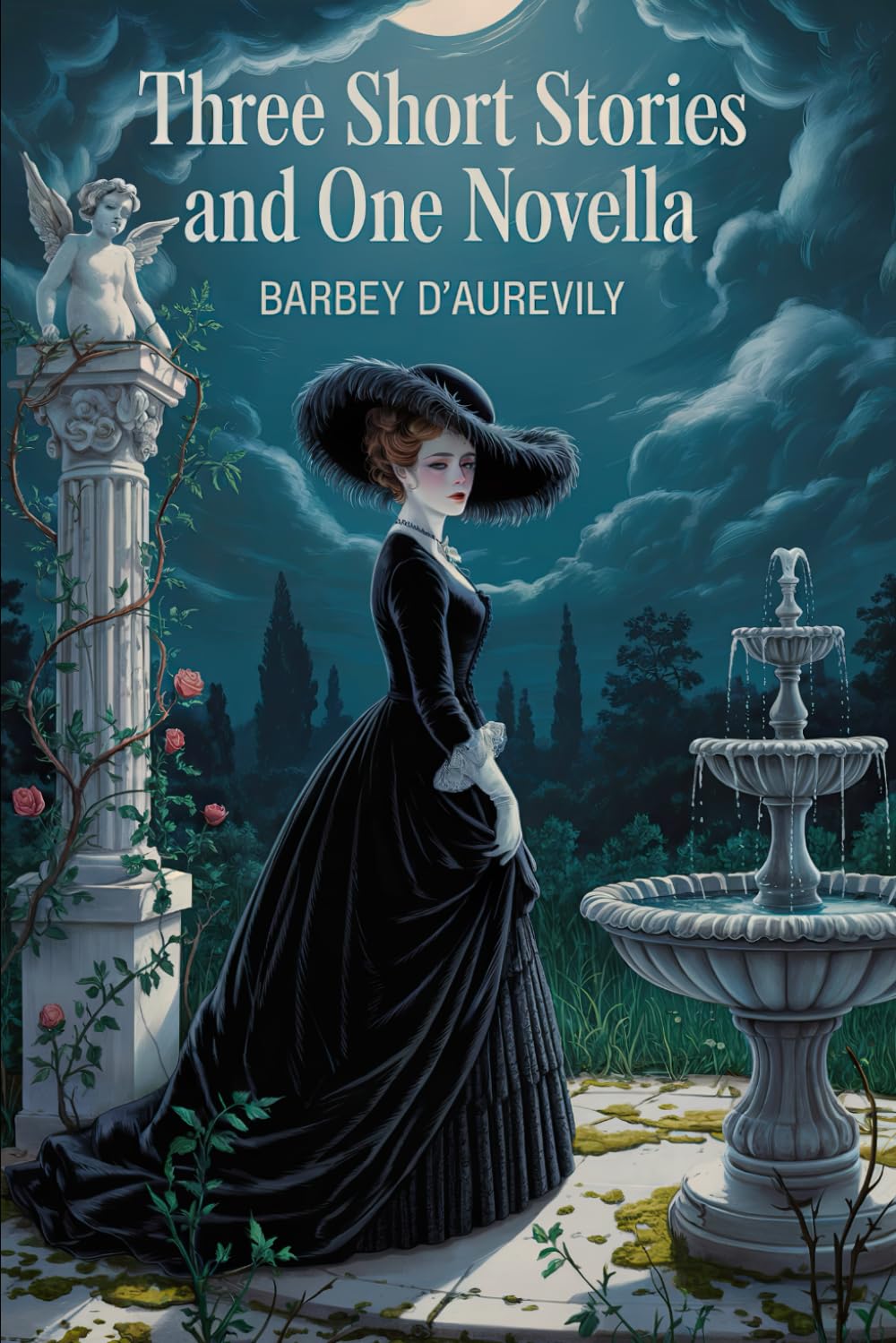
Three Short Stories and One Novella (The Onyx Seal, Léa, A Story Without a Name, A Page of History): A New Translation
$11.69
by Jules Barbey D’aurevilly



Jules Barbey d'Aurevilly (1808-1889) stands as one of the most enigmatic and provocative figures in nineteenth-century French literature. Born into Norman minor nobility and a dandy by temperament, Barbey d'Aurevilly carved out a unique literary territory that bridged Romanticism and the emerging Decadent movement. His works pulse with Gothic sensibilities, Catholic mysticism, and an aristocratic disdain for bourgeois morality that marked him as both anachronistic and startlingly modern. This collection presents four of Barbey d'Aurevilly's most compelling narratives, each showcasing different facets of his literary genius. Written during the height of his creative powers, these stories reveal his mastery of psychological portraiture, his fascination with the darker corners of human nature, and his ability to weave together the mundane and the supernatural with unsettling effect. The Onyx Seal exemplifies Barbey d'Aurevilly's talent for transforming seemingly simple objects into vessels of profound significance. Like many of his tales, it explores the weight of the past upon the present, examining how family histories and inherited guilt can manifest in unexpected ways. The story reveals his particular genius for creating atmosphere through precise, almost fetishistic attention to material detail. Léa presents one of the author's most psychologically complex character studies. Here, Barbey d'Aurevilly showcases his understanding of feminine psychology and the constraints placed upon women in nineteenth-century society. The narrative illustrates his ability to create characters who are simultaneously victims and agents of their own destiny, trapped within social conventions yet possessed of hidden depths of passion and will. A Story Without a Name perhaps best represents Barbey d'Aurevilly's experimental approach to narrative structure. The title itself suggests the author's playful relationship with literary convention, while the content delves into themes of identity, social class, and the sometimes violent collision between different worlds. It reveals his skill at creating stories that operate on multiple levels of meaning. A Page of History , set against a carefully rendered historical backdrop, combines Barbey d'Aurevilly's interests in aristocratic society, political intrigue, and the complex motivations that drive human behavior. The work permits him to develop his characteristic themes with psychological depth and historical texture. These stories also illuminate Barbey d'Aurevilly's dramatic spiritual journey and his conflicted relationship with aristocratic heritage. A self-proclaimed atheist and liberal in his youth, he underwent a profound conversion to Catholicism in 1846, embracing a fervent if unorthodox faith that would shape all his subsequent work. Writing in an era of rapid social change, he presents characters caught between worlds—the old aristocratic order and the emerging bourgeois society, traditional religious belief and modern skepticism, conventional morality and individual desire. His protagonists often embody these contradictions, making them compelling figures whose struggles continue to resonate with contemporary readers. For today's readers, these stories offer more than historical curiosity. They present timeless explorations of human nature, written with psychological insight and stylistic sophistication that remain compelling. Barbey d'Aurevilly's ability to illuminate the hidden motivations and secret histories that shape our lives speaks to universal human experiences of guilt, desire, social constraint, and the search for authentic identity.