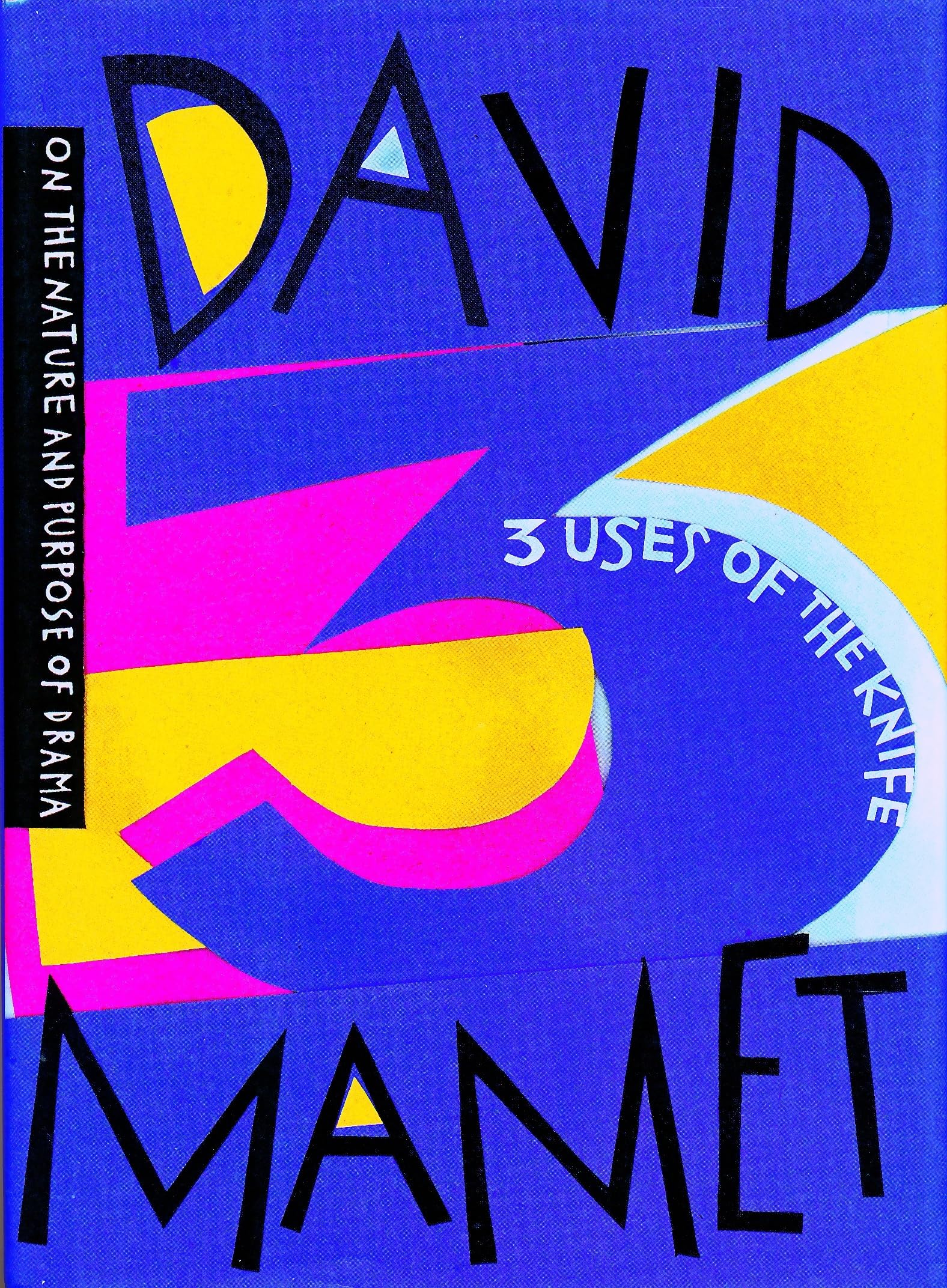



What makes good drama? How does drama matter in our lives? In Three Uses of the Knife, one of America's most respected writers reminds us of the secret powers of the play. Pulitzer Prize–winning playwright, screenwriter, poet, essayist, and director, David Mamet celebrates the absolute necessity of drama―and the experience of great plays―in our lurching attempts to make sense of ourselves and our world. In three tightly woven essays of characteristic force and resonance, Mamet speaks about the connection of art to life, language to power, imagination to survival, the public spectacle to the private script. It is our fundamental nature to dramatize everything. As Mamet says, "Our understanding of our life, of our drama.... resolves itself into thirds: Once Upon a Time.... Years Passed.... And Then One Day." We inhabit a drama of daily life―waiting for a bus, describing a day's work, facing decisions, making choices, finding meaning. The essays in the book are an eloquent reminder of how life is filled with the small scenes of tragedy and comedy that can be described only as drama. First-rate theater, Mamet writes, satisfies the human hunger for ordering the world into cause-effect-conclusion. A good play calls for the protagonist "To create, in front of us, on the stage, his or her own character, the strength to continue. It is her striving to understand, to correctly assess, to face her own character (in her choice of battles) that inspires us―and gives the drama power to cleanse and enrich our own character." Drama works, in the end, when it supplies the meaning and wholeness once offered by magic and religion―an embodied journey from lie to truth, arrogance to wisdom. Mamet also writes of bad theater; of what it takes to write a play, and the often impossibly difficult progression from act to act; the nature of soliloquy; the contentless drama and empty theatrics of politics and popular entertainment; the ubiquity of stage and literary conventions in the most ordinary of lives; and the uselessness, finally, of drama―or any art―as ideology or propaganda. Playwright David Mamet's three lectures at Columbia University are ostensibly about issues of dramatic structure, but as they unfold, and Mamet continually explores the relationship between dramatic structure and the lives we live, much broader concerns are revealed. Here, for example, is Mamet on political propaganda: It is ... essential to the healthy political campaign that the issues be largely or perhaps totally symbolic--i.e., non-quantifiable. Peace With Honor, Communists in the State Department, Supply Side Economics, Recapture the Dream, Bring Back the Pride--these are the stuff of pageant. They are not social goals; they are, as Alfred Hitchcock told us, the MacGuffin .... The less specific the qualities of the MacGuffin are, the more interested the audience will be.... A loose abstraction allows audience members to project their own desires onto an essentially featureless goal. Although occasionally academic, the overall tone of the lectures is consistent with Mamet's no-nonsense manner of speech. He has no time for obfuscation and little time for repetition, save when he must absolutely employ it for emphasis. He is passionate about good theater, and passionate about the truth. 3 Uses of the Knife makes an excellent companion piece to his True and False , which addressed similar philosophical matters in the form of advice on the actor's craft. One of America's leading living playwrights has crafted three short essays beginning with the premise that it is "our nature to dramatize." The belief in the centrality of drama to our daily lives and the centrality of our daily lives to good drama is the recurrent theme of his ruminations here. While he disdains the current vogue for "problem plays," he avoids attacking any of his contemporaries or their works. And without offering a how-to guide for aspiring playwrights, he provides some interesting thoughts on the inevitable difficulty in creating a convincing second act. Known and respected for his ability to create hyperrealistic dialog, Mamet ultimately reveals the theoretical justification for the sort of drama he writes so well. The text reads a bit like a lecture and never quite convinces the reader that this is a fundamental redefinition of drama. Still, it will be compelling to students of theater and serves as a good companion to Mamet's advice to actors, True and False (LJ 10/1/97). Recommended for academic and large public libraries.?Douglas McClemont, New York Copyright 1998 Reed Business Information, Inc. Mamet has written about drama's sociological and psychological implications before ( Writing in Restaurants [1986], Some Freaks [1989]), but never as well as in these eight terse, elegant essays. He writes with thrilling simplicity and authority, discussing problems all working playwrights confront (What am I trying to achieve with this play? How come things always get bal