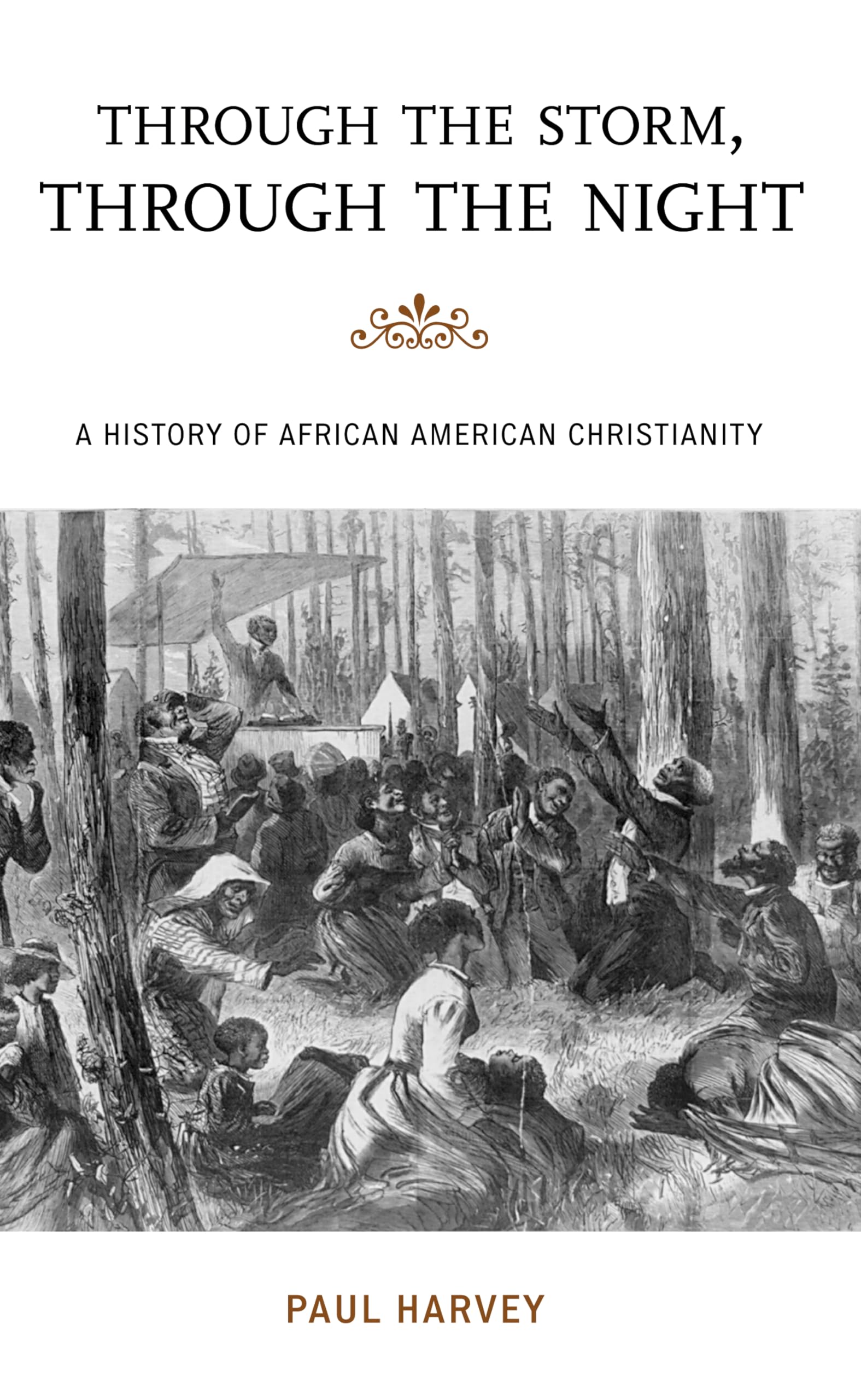
Through the Storm, Through the Night: A History of African American Christianity (The African American History Series) (The African American
$35.84
by Paul Harvey



Paul Harvey illustrates how black Christian traditions provided theological, institutional, and personal strategies for cultural survival during bondage and into an era of partial freedom. At the same time, he covers the ongoing tug-of-war between themes of "respectability" versus practices derived from an African heritage; the adoption of Christianity by the majority; and the critique of the adoption of the "white man's religion" from the eighteenth century to the present. The book also covers internal cultural, gendered, and class divisions in churches that attracted congregants of widely disparate educational levels, incomes, and worship styles. Through the Storm, Through the Night provides a lively overview of the history of African American religion, beginning with the birth of African Christianity amidst the Transatlantic slave trade, and tracing the story through its growth in America. Paul Harvey successfully uses the history of African American religion to portray the complexity and humanity of the African American experience. “Books abound on the African American religious experience in the US, but Harvey's work is a welcome addition and succinct summary of its 400-year history. Typically in such short monographs, detail is sacrificed for brevity, but Harvey (history, Univ. of Colorado, Colorado Springs) packs great substance through insightful biographies and aptly summarized historical events. He argues against any uniform African American church or religious experience, as African Americans experienced varied contacts with Christianity and often mixed traditional African spiritualism and animistic beliefs. Unquestionably, religious beliefs infused the African American community with hope as they struggled through slavery, Jim Crow legislation, segregation, race-oriented violence, and the civil rights movement. Harvey concludes that though the church is still relevant and Christian denominations are still predominant in the African American community, 21st-century immigrants continue to challenge this narrative, as the Orisha traditions of West and Central Africans, Cuban Santería, Haitian Catholicism and Voodoo, Ethiopian Eastern Orthodoxy, and Islamic influences further heighten diversity. The author notes that clannish and local community traditions among these immigrants overshadow any presumed unity based on skin color. In summary, Harvey creates a broad panoramic of the African American religious experience and challenges future scholars to increase scholarly attention to this field. Summing Up: Highly recommended. All levels/libraries.” ― Choice Reviews “The diversity, complexity and tenacity of the African-American religious experience come alive on Harvey’s pages....Harvey’s inclusion of 40 pages of primary sources makes this volume even more valuable for readers interested in an extended encounter with the women and men they meet in Through the Storm.” ― The Christian Century “This deceptively slim book covers an enormous amount of historical terrain as an overview of African-American faith in America, touching a staggering number of major developments without exhaustively detailing them. Harvey, a professor of history at the University of Colorado, begins by explaining how the slave trade permanently altered religion for African-Americans, then moves on quickly to how the black church later provided cultural survival strategies. The same colonies that argued that the Bible sanctioned slavery hosted Protestant evangelical revivals where African-American Christianity was born. The book expertly pulls together the individual stories of well-known historical figures whose lives were shaped in black churches, the significance of syncretism in African and Caribbean-based religions as reflections of some elements of Christian theology, and the spread of gospel music as a new and influential part of American popular culture. There are some repetitive passages on Voodoo and Yoruba traditions, but the book is almost entirely a good, rigorous starting point for those unfamiliar with the place of African-American Christianity in America’s history.” ― Publishers Weekly “Harvey, a professor of history, examines the various roles that Christianity has played in the lives of African Americans. He begins at the very beginning, with Africans stolen from their homes bringing their own religious traditions, including both Christianity and Islam, with them to the Americas. The debate (and the rationalizations) among slave owners and other whites about what conversion to Christianity should mean is discussed as well the role the church played during and after the Civil War. Harvey then continues to the modern day, with an emphasis on the church’s place in the civil rights movement. A leitmotiv that threads through the book is the importance of music in African American life and spirituality. The book ends with the dialogue between Barack Obama and his former minister Jeremiah Wright, in which Harvey