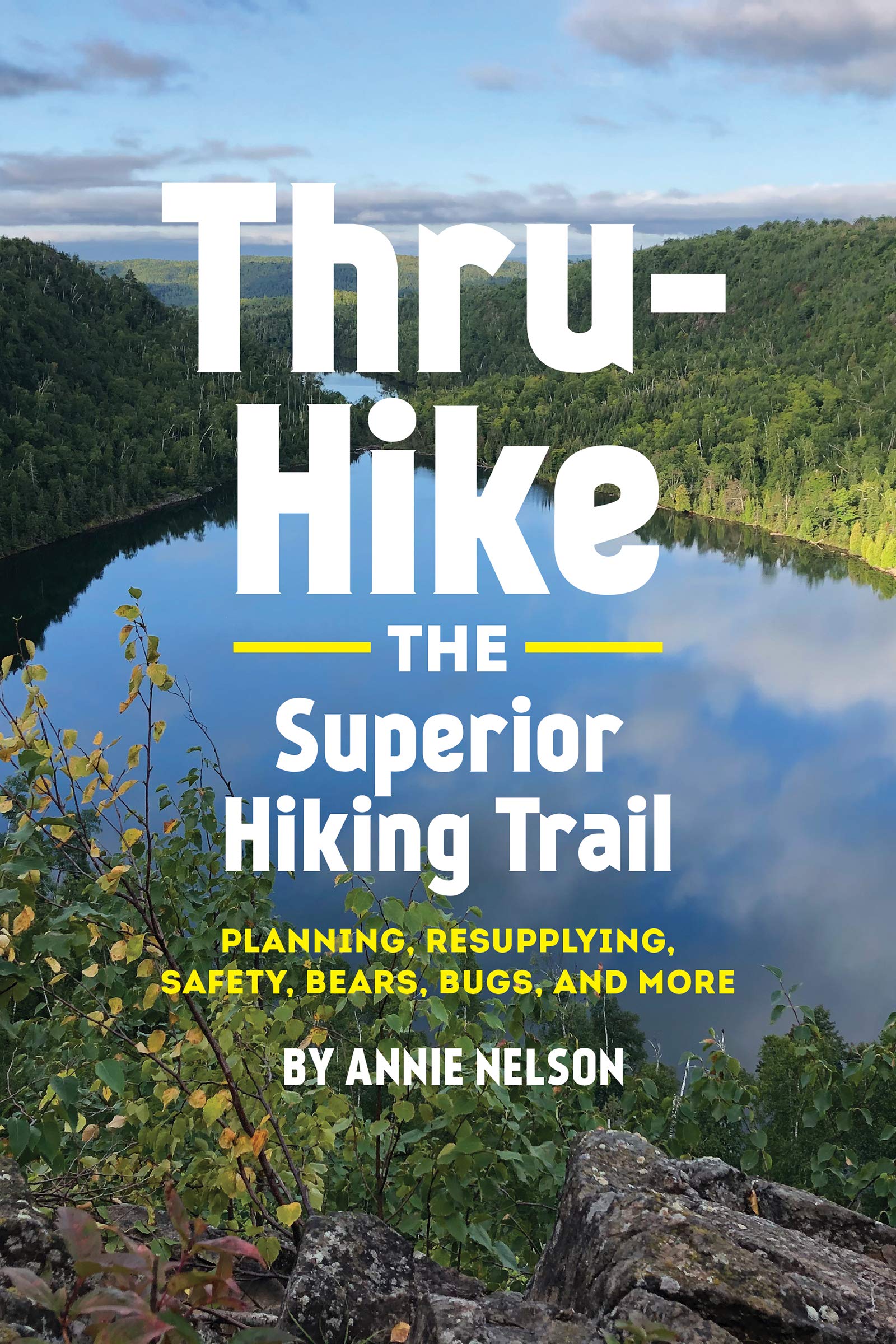
Thru-Hike the Superior Hiking Trail: Planning, Resupplying, Safety, Bears, Bugs and More
$12.39
by Annie Nelson



Plan and implement a day hike or thru-hike on northeastern Minnesota’s Superior Hiking Trail with this handy guide. The Superior Hiking Trail (SHT) is Minnesota’s premier hiking trail. It offers 310 miles of rugged terrain along the North Shore, with sweeping views of Lake Superior, cascading waterfalls, secluded lakes, endless boreal forests and close encounters with wildlife. Thru-hiking the trail―completing the entire distance in one trip―is a dream of many hikers and backpackers. It is an extraordinary accomplishment. Expert hiker and Minnesota author Annie Nelson shares her advice, research and experience to help you plan a successful trip. In Thru-Hike the Superior Hiking Trail , she answers questions like why thru-hike and how far to hike in a day. She delves into planning your trip, navigating the trail, and safety on the SHT. Annie further includes a detailed list of available food stops, lodging and amenities along the way, as well as a quick reference guide to campsite mileages. With an emphasis on Leave No Trace principles, this is a useful book for anyone who loves the Superior Hiking Trail and for those who are experiencing its unparalleled beauty for the first time. “This guide provides a thorough and easy-to-understand overview of how to plan a trip on the SHT from someone who did it the right way. It’s written for thru-hikers, but the information is useful for day hikers and overnight backpackers too.” ―Jaron Cramer, Superior Hiking Trail Association Annie Nelson learned how to build fires at Split Rock Lighthouse State Park. She grew up climbing the northwoods’ trees and boulders, skipping stones into Lake Superior, and trying to swim in its frigid waters. She started backpacking solo in 2016. A year later, Annie thru-hiked the Superior Hiking Trail (SHT) for the first time. Since then, she has backpacked more than 2,000 miles. In 2019, she thru-hiked the SHT a second time while hiking a third of America’s longest National Scenic Trail: the North Country Trail. (She made it 1,500 miles.) Annie is from St. Paul, Minnesota, and frequently travels to the North Shore. Thru-hiking the SHT changed her life. Her gratitude for that experience spawned a desire to help others successfully thru-hike the trail. Annie worked as a journalist for 10 years, and she hopes that her experiences as both a backpacker and a writer make for a useful, enjoyable guide. Planning Your Thru-Hike The details involved in planning a thru-hike can be overwhelming. I spent the final two weeks before I left with a migraine because of stress. Hindsight is 20/20; this was totally unnecessary. Before delving into the details, I want to encourage you to give yourself as much flexibility in your hiking plan as you can. The Superior Hiking Trail is so well-documented between the guide, maps, its online communities, and now this thru-hiking guide, that you can plan by section rather than by day. Find a balance between the Leave No Trace principle of “Plan and Prepare” and obsessive overplanning (like me). Do pay close attention to the Trail Conditions page on the SHTA website, superiorhiking.org, which the SHTA updates weekly. Also read the Know Before You Go, FAQ, Thru Hiking and Leave No Trace pages on the website, which outline rules, trail safety, and more. Check the Trail Conditions page during your planning stage, right before you go, and whenever you’re in town or have cell service. Take a screen grab of the web page on your phone before leaving town to reference when on the trail if you don’t have service. Other hikers you meet on trail coming from where you’re going will also be a good source of information on trail conditions. The woods are constantly changing: beavers flood the trail, trees come down, new reroutes are sometimes needed. One of the best parts of thru-hiking is that you have time on your side. The luxury of free time is a rarity in our fast-paced society, and it took me a while to realize how much flexibility I really had. If you can embrace being more relaxed with your hiking plan, you will set yourself up for success. If you’re going to hike 10-12 miles a day, plan to resupply every 50 miles or so. Most hikers carry about 1.5-2 pounds of food per day per hiker, so 10 pounds of food gets a solo hiker five days of uninterrupted trail time. If you’re hiking 15-20 miles a day, plan to resupply every 75-100 miles. If you have a mileage goal for the week instead of a daily goal, you can be more flexible with yourself, the weather and any unforeseen circumstances. Most resupply options are very flexible, time-wise. Hotel reservations can be changed. Resupply packages sent “General Delivery” to post offices will be held between 10 days and a month. To maintain the frenetic pace of our everyday lives, it’s hard to avoid developing a frantic outlook on time. If you can force your mind to let go of worrying about deadlines and just focus on putting one foot in front of the other, your confidence will grow