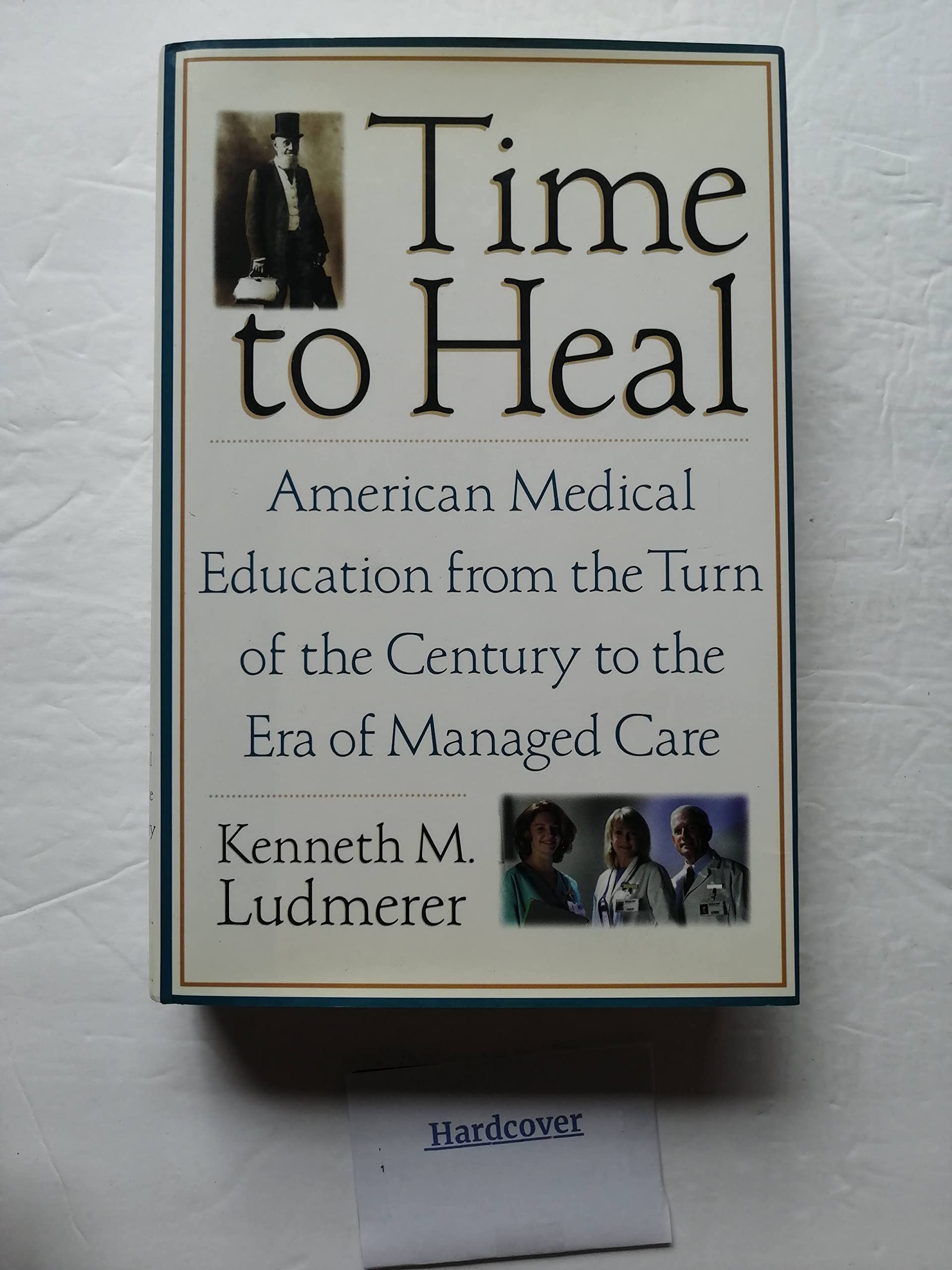
Time to Heal: American Medical Education from the Turn of the Century to the Era of Managed Care
$20.87
by Kenneth M. Ludmerer M.D



Already the recipient of extraordinary critical acclaim, this magisterial book provides a landmark account of American medical education in the twentieth century, concluding with a call for the reformation of a system currently handicapped by managed care and by narrow, self-centered professional interests. Kenneth M. Ludmerer describes the evolution of American medical education from 1910, when a muck-raking report on medical diploma mills spurred the reform and expansion of medical schools, to the current era of managed care, when commercial interests once more have come to the fore, compromising the training of the nation's future doctors. Ludmerer portrays the experience of learning medicine from the perspective of students, house officers, faculty, administrators, and patients, and he traces the immense impact on academic medical centers of outside factors such as World War II, the National Institutes of Health, private medical insurance, and Medicare and Medicaid. Most notably, the book explores the very real threats to medical education in the current environment of managed care, viewing these developments not as a catastrophe but as a challenge to make many long overdue changes in medical education and medical practice. Panoramic in scope, meticulously researched, brilliantly argued, and engagingly written, Time to Heal is both a stunning work of scholarship and a courageous critique of modern medical education. The definitive book on the subject, it provides an indispensable framework for making informed choices about the future of medical education and health care in America. Ludmerer (Learning To Heal; medicine, Washington Univ.) reviews American medical education from World War I to the present, examining its exponential growth and response to social trends. While some of this thoroughly researched and well-documented work may be of interest only to academics, most of it concerns us all: Ludmerer looks at the future of medicine in America and reveals some very disturbing trends in managed care, education, and research funding. With a wealth of factual details and insightful questions, this book is destined to have an impact on the future of medical education. Highly recommended for all libraries.AEric D. Albright, Duke Medical Ctr. Lib., Durham, NC Copyright 1999 Reed Business Information, Inc. Each year, thousands of bright, energetic, highly motivated students are admitted to medical school. I have often pondered how much formal teaching such bright students really need to become excellent doctors. How much does the curriculum matter? How critical is the environment? I asked myself these questions again after reading the last several chapters of Ludmerer's book. They deal with the profound influences of our current system of health care delivery on medical faculty and on the teaching and learning environment of our major medical institutions. Ludmerer skillfully describes how we got into our current educational turmoil. His account cries out for us to think deeply and thoughtfully about how to educate our students and house officers in the future. In my opinion, Ludmerer, an internist and medical historian in St. Louis, has written the classic work on medical education in the 20th century. Rather than describing the myriad educational programs or techniques set up by individual schools or training programs, he has placed medical students, residents, their teachers, and their institutions in the context of an evolving system of medical practice, medical research, and governmental involvement. From this perspective, he explains how the environment influences students. He explores their mentors and role models: are they caring, do they respect and listen to patients, do they pay attention to details? He expresses concern about the influence on students of the new terms introduced by the conversion of medical care into a marketplace commodity: market share, "throughput," and population health. Ludmerer escapes the common trap of historians in which they bracket eras by using dates. Instead, he defines his own periods: an initial period in which the public developed trust in medicine, a middle period of stunning expansion in research and training, and a later period of the erosion of professional values and a deterioration in the environment of medical education. For each of these periods he explores a number of questions: What did the medical care delivery system look like? How was the cost of patient care funded? What were the contributions of federal and state governments to the cost of education? What were the prevailing concepts about the needs of the marketplace for physicians? How did the status of academic medical centers influence teaching programs? How did research support, especially from the National Institutes of Health, influence medical education? Ludmerer adeptly describes the ways in which money has influenced medical education for more than a century and points to certa