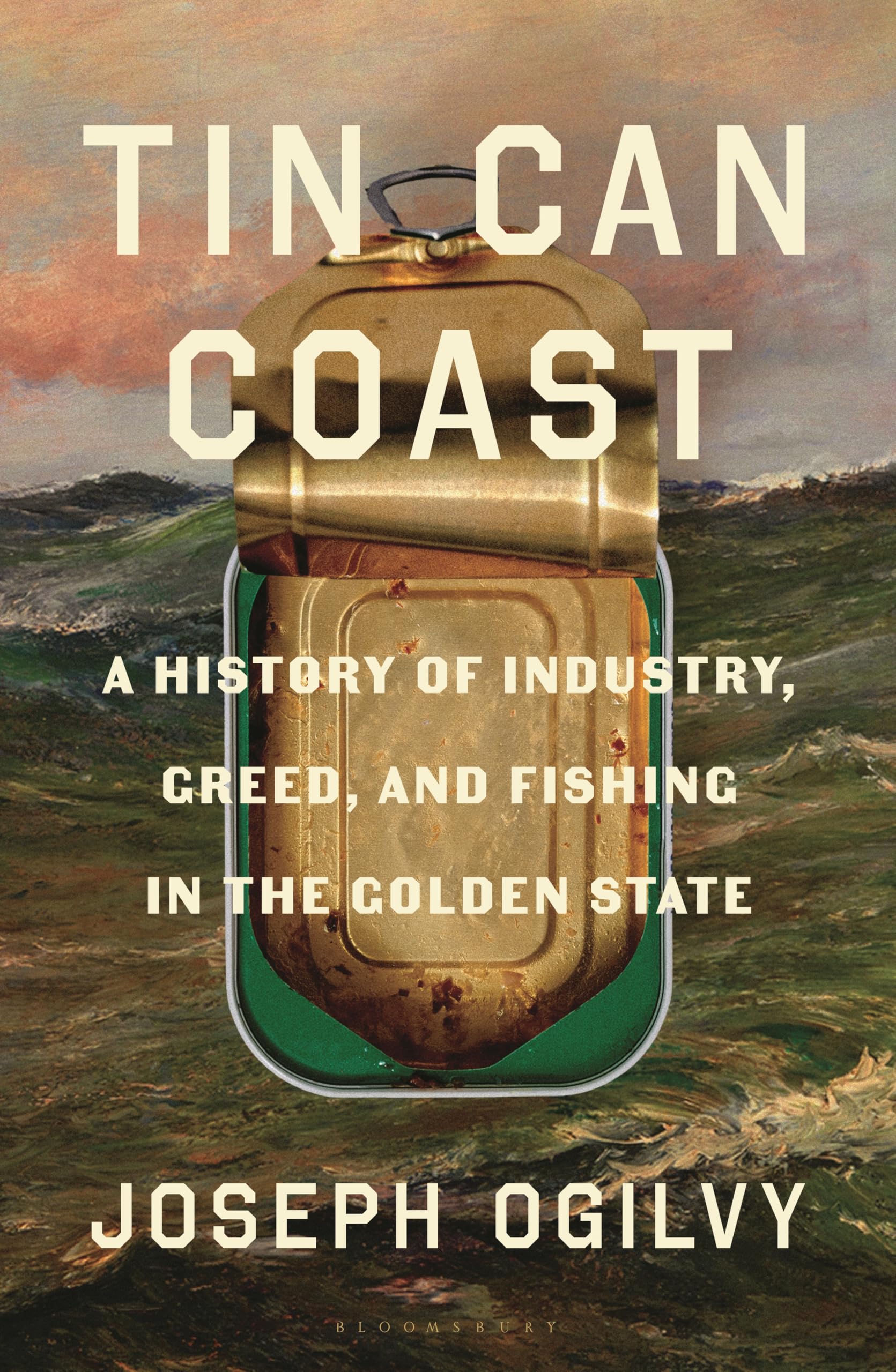
Tin Can Coast: A History of Industry, Greed, and Fishing in the Golden State
$29.99
by Joseph Ogilvy



The hidden story of the California Coast, told through generations of immigrants, surges of industry, and three marine species caught in the dragnet of human history. Look west from San Francisco or Monterey, past the surfers and cargo ships. This is the California Current, 1,900 miles of the most productive waters on earth. It was here that eighteenth-century locals encountered frisbee-sized abalone mollusks, sardine schools the size of buses, and Yellowfin tuna, each the size of a man. But it was not to last. Over the next three centuries, the abalone, sardine, and tuna were swept into the violent undertow of history. Their species became resources. Fishing and hunting drove the Spanish-Russian territory battle of the eighteenth century, California's virulently racist first “conservation” laws in the 19th, and an ad campaign that kept America fed on just-like-chicken canned goods in the 20th. Along the way, they became drivers of geopolitical competition, catalysts for the dramatic rise and fall of Cannery Row aristocracy, and even surly muses for John Steinbeck and Fritz Lang. Collapsing the distinctions between human and natural history, Tin Can Coast brings the cautionary tale of the California shore to life. “In Tin Can Coast , Ogilvy does a masterful job of weaving together the enmeshed fates of the California Current's fisheries, the immigrant communities that first exploited them, and the way greed eventually killed what could have been the Golden Coast's golden goose. A fascinating story at every turn, exceptionally well told.” ― Scott Weidensaul, New York Times bestselling author of THE WORLD ON THE WING Joseph Oglivy is a writer and chef. After graduating from Oxford University, he spent several years working in restaurants in both London and Texas, while writing on his days off. His experience in kitchens led him to research involving the tangled human and ecological history of food. This is his first book.