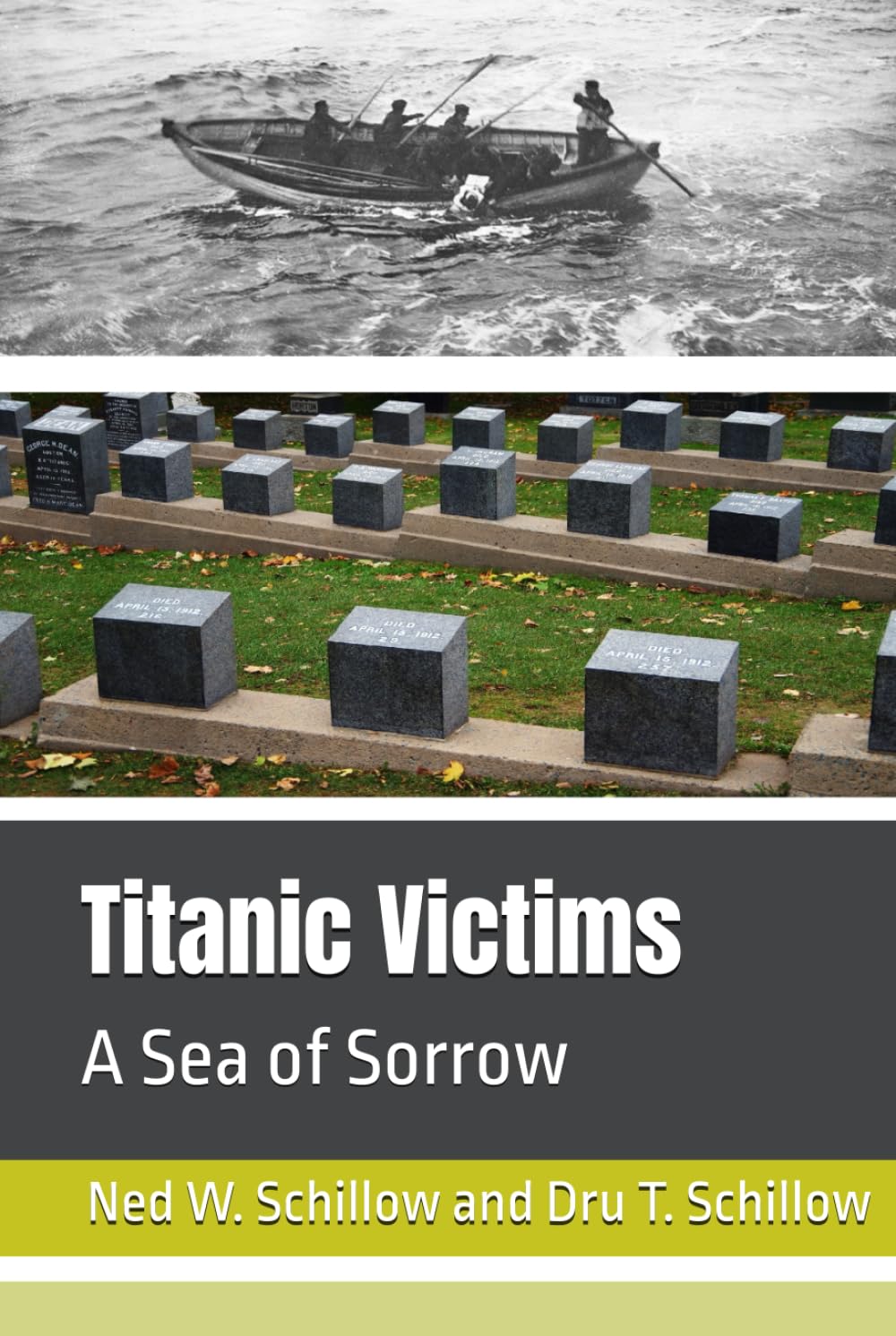



After the Titanic sank below the surface of the Atlantic, a total of 712 passengers and crew members survived in 20 lifeboats, but almost 1500 went down with the ship that cold night of April 15, 1912. The White Star Line chartered four ships to search the area for these victims, hoping to retrieve and identify as many as they could in order to provide them with proper burials on land or at sea. The somber task got underway in Halifax, Nova Scotia, when the cable ship the Mackay-Bennett was quickly equipped with coffins, ice, and embalming supplies. On April 21, the members of its crew found their first victim. Body number 1: A ten-year-old boy with light hair. Wearing a grey overcoat, a blue coat, grey woolen jersey, white shirt, grey knickers, black stockings, and black boots. On his body was a purse that contained a few Danish coins, along with handkerchiefs marked with “A.” These recovery ships and the city of Halifax handled the grim but necessary final chapter to the story of the Titanic . Their efforts provided sensitive respect to the souls lost in a sea of sorrow and closure for their loved ones back home, who were waiting for news of their family members. Proper burials, whether at sea or on land, finally accorded the dignity they deserved.