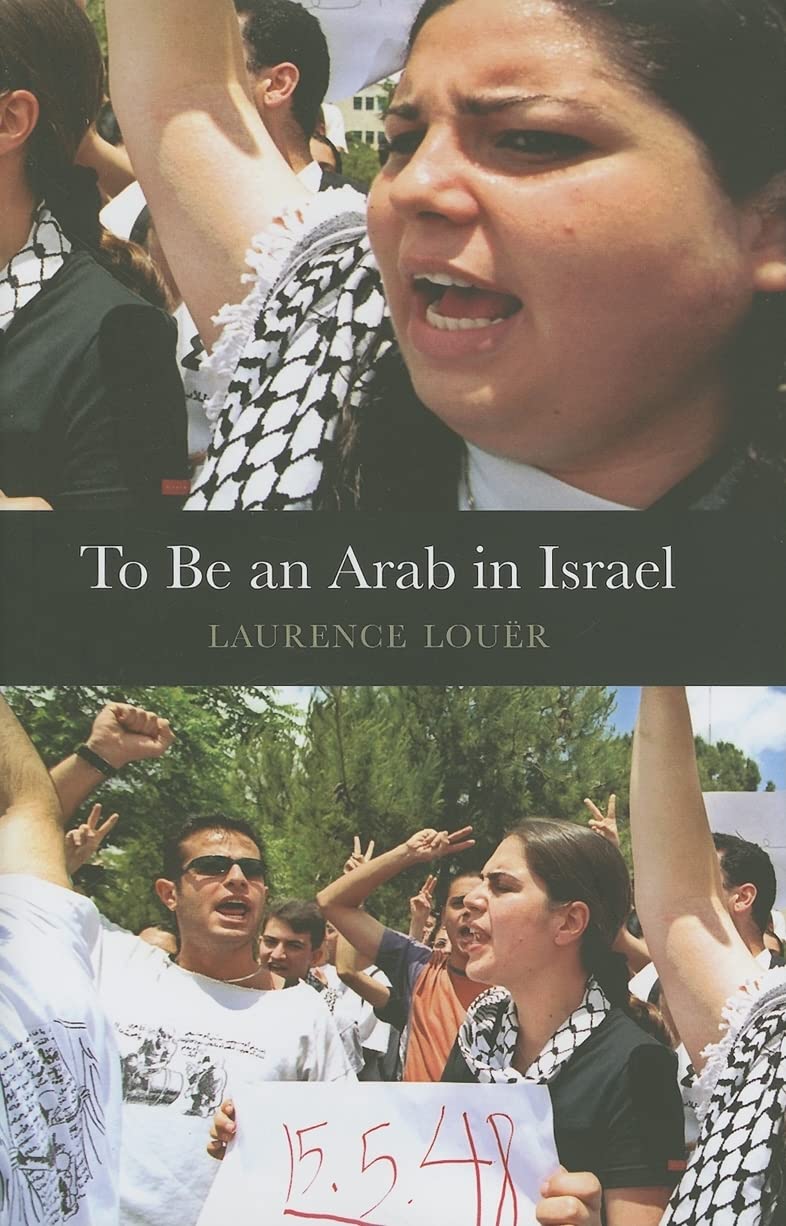



To Be an Arab in Israel fills a long-neglected gap in the study of Israel and the contemporary Arab world. Whether for ideological reasons or otherwise, both Israeli and Arab writers have yet to seriously consider Israel's significant minority of non-Jewish citizens, whose existence challenges common assumptions regarding Israel's exclusively Jewish character. Arabs have been a presence at all levels of the Israeli government since the foundation of the state. Laurence Louër begins her history in the 1980s when the Israeli political system began to take the Arab nationalist parties into account for the political negotiations over coalition building. Political parties-especially Labour-sought the votes of Arab citizens by making unusual promises such as ownership and access to land. The continuing rise of nationalist sentiments among Palestinians, however, threw the relationship between the Jewish state and the Arab minority into chaos. But as Louër demonstrates, "Palestinization" did not prompt the Arab citizens of Israel to set aside their Israeli citizenship. Rather, Israel's Arabs have sought to insert themselves into Israeli society while simultaneously celebrating their difference, and these efforts have led to a confrontation between two conceptions of society and two visions of Israel. Louër's fascinating book embraces the complexity of this history, revealing the surprising collusions and compromises that have led to alliances between Arab nationalists and Israeli authorities. She also addresses the current role of Israel's Arab elites, who have been educated at Hebrew-speaking universities, and the continuing absorption of militant Islamists into Israel's bureaucracy. To Be an Arab in Israel is a discerning treatment of an enigmatic, little known, but nevertheless highly influential people. Their effect on the balance of power in the Middle East seems destined to grow in the twenty-first century. French sociologist Louer examines the demographics, politics, and complex cultural identities of Israeli Arabs. A non-Jewish minority within the Jewish state--although a sizeable one, encompassing nearly 20 percent of Israeli citizens--Israeli Arabs are themselves a diverse group. Although possessing full political rights as citizens of Israel, their political sympathies frequently rest with the Palestinian cause and their identities are formed in the cultural interstices between Israel and Palestine. Louer's research, conducted primarily through interviews with students, clerics, and community leaders in north-central Israel, is a portrait of a society in transition, as Israeli Arabs grow in number and political clout, but also conflicted about its complicity with the Israeli state. Showing the concrete interactions between groups, Louer reveals incentives to compromise and unlikely alliances that resist powerful pressure to radicalize. Her research also provides a rare and fascinating glimpse into less-public aspects of Israeli Arab identity, such as the evolving sexual morality of young Israeli Arabs. This book assumes some background on Israeli history and politics but remains highly readable. Brendan Driscoll Copyright © American Library Association. All rights reserved Behind the increasing shrillness of Jewish-Arab relations within Israel lie deep ambiguities, and it is these which renders Laurence Louër's imaginative and elegantly written book so important. -- Times Literary Supplement Laurence Louër is a researcher at the Centre d'Etudes et de Recherches Internationales (CERI) in Paris. She is an Arabist and specializes in Middle East studies.