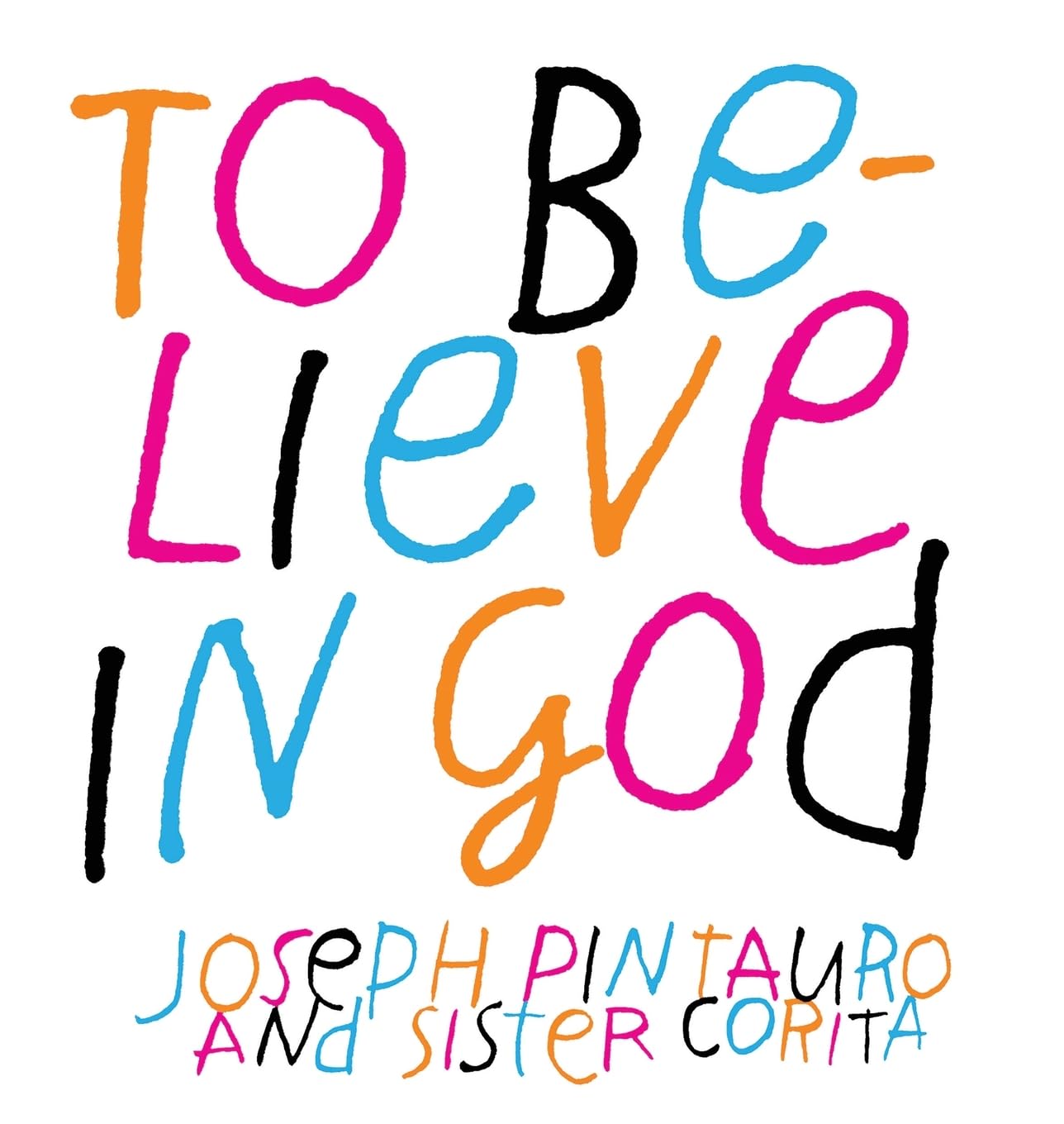



Find Yourself in This Seminal Poetic Work Working with words and color, poet Joseph Pintauro and artist and activist Corita Kent created this unparalleled inspirational gem in the late 1960s. The poet turns the question of a belief in God in his palm, looking at it as one might examine the creases and lines there, and uses that contemplation to celebrate through faith the extraordinary ordinary events in life. His words are set against Sister Corita's vibrant and riotous color flowing through the pages. A visit through these pages will summon the reader back time and again to find inspiration and beauty. Joseph Pintauro's literary works as a poet, novelist and playwright are known world wide and critically acclaimed for their passion, honesty, and distinctive artistry. Pintauro's poetry includes To Believe In God, To Believe in Man, and To Believe in Things (with artist Corita Kent), The Rainbow Box, (a collection of four volumes, with artist Norman LaLiberte), and Kites At Empty Airports. His plays include Snow Orchid, Raft of the Medusa, Men's Lives, Beside Herself, Cacciatore, Heaven & Earth, and Metropolitan Operas, a cycle of twenty-six short plays. His novels are Cold Hands and State of Grace. An ordained priest, Pintauro obtained special permission from his bishop while in his 30s to join the secular world and thus began a five-decade career in the literary and visual arts. Pintauro was also an accomplished photographer whose work is held in numerous public and private collections; in 2018 he authored American House: A Photographic Flight Through Time. Pintauro lived and worked in Sag Harbor, New York City, and Key West. Corita Kent (1918-1986) was an artist, educator, and advocate for social justice. At age 18, she entered the religious order Immaculate Heart of Mary, eventually teaching in and then heading the art department at Immaculate Heart College. When she first began printmaking in the 50s, her silkscreen prints were heavily influenced by figurative and religious iconography. Her work would soon evolve, incorporating advertising images and slogans, popular song lyrics, biblical verses, and literature. Throughout the 60s, it became increasingly political, urging viewers to consider poverty, racism, and social injustice. In 1968, she left the order and moved to Boston. After 1970, her work evolved into a sparser, introspective style, influenced by living in a new environment, a secular life, and her battles with cancer. She remained active in social causes until her death in 1986. At the time of her death, she had created almost 800 serigraph editions, thousands of watercolors, and innumerable public and private commissions.