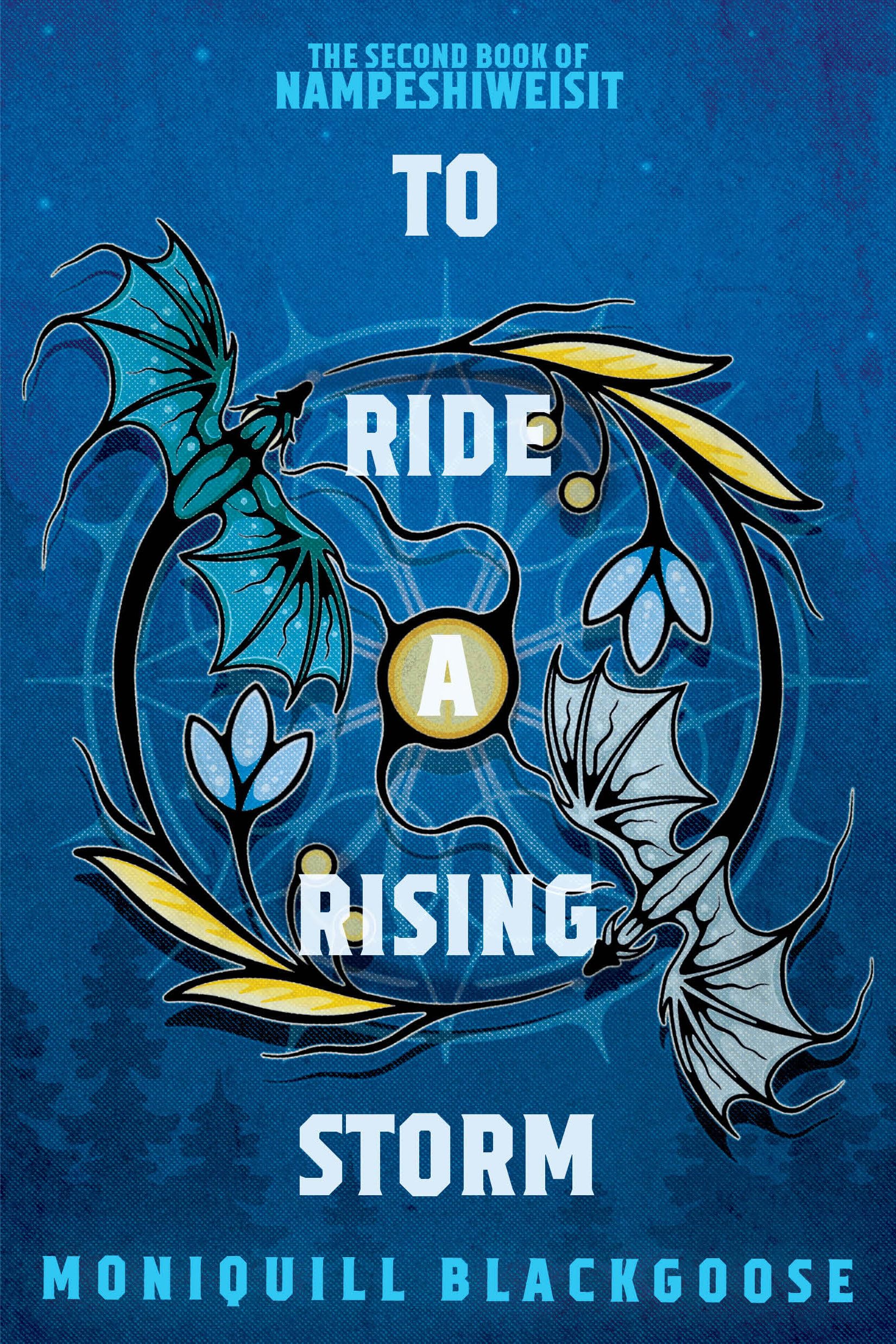



NATIONAL BESTSELLER • A young indigenous woman and her dragon fight for the independence of their homeland in this epic sequel to the bestselling and multi-award-winning To Shape a Dragon’s Breath, “a remarkable novel that is bound to be a staple of fantasy shelves for years to come” ( BuzzFeed ). Anequs has not only survived her first year at Kuiper’s Academy but exceeded her professors’ admittedly low expectations—and passed all her courses with honors. Now she and her dragon, Kasaqua, are headed home for the summer, along with Theod, the only other native student at the Academy. But what should have been a relaxing break takes a darker turn. Thanks to Anequs’s notoriety, there is an Anglish presence on Masquapaug for the first time ever: a presence that Anequs hates. Anequs will always fight for what she believes in, however, and what she believes in is her people’s right to self-govern and live as they have for generations, without the restrictive yoke of Anglish rules and social customs. And fight she will—even if it means lighting a spark that may flare into civil war. “The smart and exciting sequel to Blackgoose’s Nebula Award–winning debut, To Shape a Dragon’s Breath , digs into the colonialism and classism of magic academy and dragon rider tropes. . . . Readers will be eager for more.” —Publishers Weekly , starred review Moniquill Blackgoose is the bestselling author of To Shape a Dragon’s Breath , which has won both the Nebula and Lodestar Awards. She began writing science fiction and fantasy when she was twelve and hasn’t stopped writing since. She is an enrolled member of the Seaconke Wampanoag Tribe and a lineal descendant of Ousamequin Massasoit. She is an avid costumer and an active member of the steampunk community. She has blogged, essayed, and discussed extensively across many platforms the depictions of Indigenous and Indigenous-coded characters in sci-fi and fantasy. First, Anequs came home The first thing I saw, as Masquapaug became visible on the horizon, was the new Anglish encampment. The sight of it made my eyes sting and my breath catch. The Anglish were not supposed to be on Masquapaug— home was supposed to be safe from them. I wanted to scream. I wanted to ask Kasaqua to loose her breath at it, shapeless and wild, reducing everything to ash and wind. I didn’t just want the camp and its people gone; I wanted it to never have been. The jarl and his people had hidden all of this from me until this morning. On the ninth of May, a representative of the Ravens of Joden had made an attempt on the jarl’s life, and had shot at Kasaqua and me in the process. Kasaqua had dispatched the would-be assassin. She wasn’t yet one year of age and still could not fly, but she’d already killed a man in my defense—and in defense of the jarl, which made the act heroic rather than monstrous. At least to the jarl and his supporters. It was the twenty-sixth of May today, and Theod and I had been informed just this morning that, in the wake of these events, the Ministry of Dragon Affairs had decided that Masquapaug—as a district of Lindmarden—ought to have an outpost of thanegards. Every other district had one, after all—even Naquipaug. Especially Naquipaug. Whatever I might have expected them to do in seventeen days, it hadn’t been this. What had been the point of my going to the academy, in following all the rules that had been dictated to me, if the Anglish were going to be here anyway? A neat row of white canvas tents stood along the road that led from the docks back to the village, and the skeletal timber frame of a building under construction loomed behind them. It was twice the size of the post and telegraph office, built in the Anglish style—a square base with a sharply sloping roof. It was not at all the kind of building that belonged on Masquapaug. I wondered, as we approached, if they’d sourced the timber locally—if trees that had grown on the island had been felled to make that monstrosity. And if they’d thought to plant new ones to replace the ones they’d killed. “It’s bigger than I thought it would be,” I said, swallowing hard, gripping the rail so tightly that my fingers ached. I glanced at Theod. We were both leaning over the railing near the bow of a boat, gazing toward the island. He was staring at the tents, his face devoid of emotion. It couldn’t be the same for him; he’d been raised among the Anglish. He wasn’t from Masquapaug. “Isn’t it a provision of the treaty of 1757 that the Anglish can’t even visit Masquapaug without special invitation?” he asked uncertainly, not looking away from the camp. “It is,” I said. “I wonder if Sachem Tanaquish signed an amendment, or if this is just a breach of the treaty. I wish someone had told us about this before.” Another thing they hadn’t told us until after breakfast was that our travel plans from the academy had changed. We wouldn’t be taking the train and the ferry as usual, but would instead be delivered by a