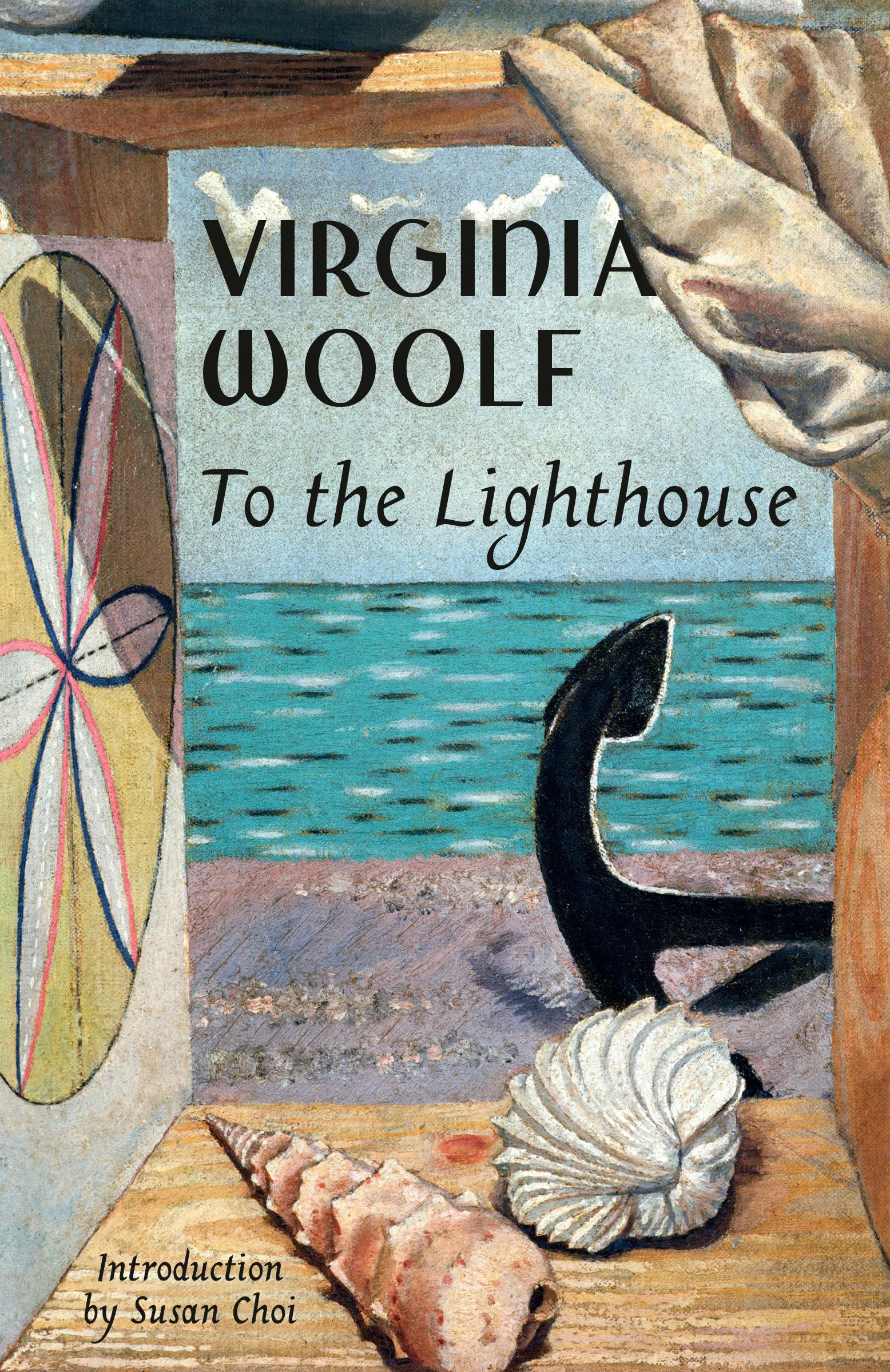



A beautiful edition of the groundbreaking classic novel, with a new introduction by award-winning writer Susan Choi “Without question one of the two or three finest novels of the twentieth century. Woolf comments on the most pressing dramas of our human predicament: war, mortality, family, love.” –Rick Moody, bestselling author of The Ice Storm The enduring power of this iconic classic flows from the brilliance of its narrative technique and the impressionistic beauty of its prose. Though the novel turns on the death of its central figure, Mrs. Ramsay, her presence pervades every page in a poetic evocation of loss and memory that is also a celebration of domestic life and its most intimate details. Observed across the years at their vacation house on the Isle of Skye, Mrs. Ramsay and her family seek to recapture meaning from the flux of things and the passage of time. To the Lighthouse enacts a moving allegory of the creative consciousness and its momentary triumphs over fleeting material life. “I reread this book every once in a while, and every time I do I find it more capacious and startling. It’s so revolutionary and so exquisitely wrought that it keeps evolving on its own somehow, as if it’s alive.” —Alison Bechdel, author of Fun Home “A classic for a reason. My mind was warped into a new shape by her prose and it will never be the same again.” —Greta Gerwig, director of Lady Bird and Little Women “ To the Lighthouse is one of the greatest elegies in the English language, a book which transcends time.” —Margaret Drabble, author of The Witch of Exmoor “[Woolf’s] people are astoundingly real…The tragic futility, the absurdity, the pathetic beauty, of life–we experience all of this in our sharing of seven hours of Mrs. Ramsay’s wasted or not wasted existence. We have seen, through her, the world.” —Conrad Aiken, author of The Conversation VIRGINIA WOOLF (1882-1941) was born in London. A pioneer in the narrative use of stream of consciousness, she published her first novel, The Voyage Out , in 1915. This was followed by literary criticism and essays, most notably A Room of One’s Own, and other acclaimed novels, including Mrs. Dalloway, To the Lighthouse, and Orlando. ABOUT THE INTRODUCER: SUSAN CHOI is the author of five novels, including Trust Exercise , which received the 2019 National Book Award for fiction. She has also been recipient of the Asian-American Literary Award for fiction, the PEN/W.G. Sebald Award, a Lamba Literary award, the 2021 Sunday Times Audible Short Story Award, and fellowships from the National Endowment for the Arts and the Guggenheim Foundation. She serves as a trustee of PEN America and teaches in The Writing Seminars at Johns Hopkins University. She lives in Brooklyn. from the Introduction to the Vintage Classics edition (2023), by Susan Choi To the Lighthouse begins very abruptly—with nothing much going on. “Yes, of course, if it’s fine tomorrow,” said Mrs. Ramsay. It’s an empty moment of vacation in-betweenness, of busywork and lazy repetition. Six-year-old James Ramsay has been given by his mother a catalogue to cut out the pictures. Mr. Ramsay and his tendentious acolyte Charles Tansley are walking back and forth as they always do, in the same track, talking as they always do about the same petty, insular topics. Mrs. Ramsay is thinking, as she always does, about the dominating qualities of men; and the claims of houseguests; and the prejudices of her children. Her children are feeling as usual prejudiced against Mr. Tansley, as well as reflexively compelled to curb their prejudice, as per their mother’s admonishments. The house as always is littered with paint pots and bird skulls and handfuls of sand; it’s decorated as ever with “long frilled strips of seaweed pinned to the wall” (p. TK) from which the sun pouring into the room draws “a smell of salt and weeds,” as changeless as the sun itself. Even the possible trip to the lighthouse is a tired debate (Will the weather be fine?), not a plan, and even were the lighthouse attained, it would only be to offer superfluous tribute to a changeless landmark affixed to its “rock the size of a tennis lawn” where there’s nothing to see but “the same dreary waves breaking week after week.” In other words, nothing changes—in this room, in this house, in this family, in these conditions of existence . . . where the walls are so thin that it is impossible not to hear one of the servants, a “Swiss girl sobbing for her father who was dying of cancer in a valley of the Grisons.” Should we pay attention to this sound of bereavement? Surely not. Surely we’re meant to disregard this, as the family does. Nothing much going on: yet everything is here, in sparkling distillation, as we drift aimlessly on time’s stream. It’s the kind of afternoon that might well have been swept under the amnesic rug of “non-being,” Woolf ’s name for that greater part of experience, the part that we live but