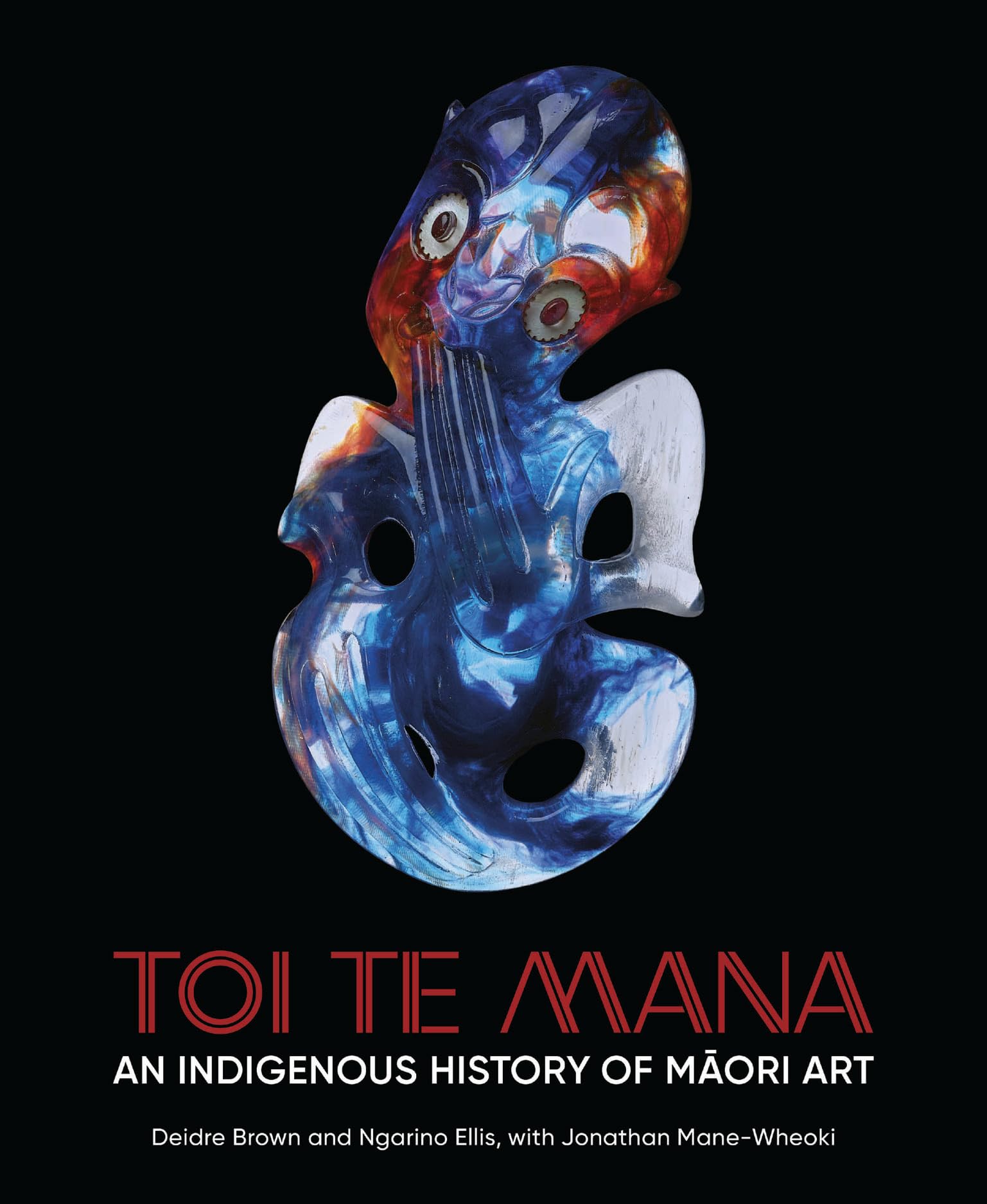
Toi Te Mana: An Indigenous History of Maori Art (Abakanowicz Arts and Culture Collection)
$47.38
by Deidre Brown



A landmark account in words and pictures of Māori art, by Māori art historians—from Polynesian voyaging waka to contemporary Māori artists. He toi whakairo, he mana tangata. Through artistic excellence, there is human dignity. In six hundred pages and with over five hundred illustrations, this volume takes us on an extraordinary voyage through Māori art—from ancestral weavers to contemporary artists at the Venice Biennale, from whare whakairo to film, and from Te Puea Hērangi to Michael Parekōwhai. Deidre Brown, Ngarino Ellis, and Jonathan Mane-Wheoki explore a wide field of art practices, including raranga (plaiting), whatu (weaving), moko (tattooing), whakairo (carving), rākai (jewellery), kākahu (textiles), whare (architecture), toi whenua (rock art), painting, photography, sculpture, ceramics, installation art, digital media, and film. The works discussed span a period from the arrival of Pacific voyagers eight hundred years ago to the contemporary artists working around the world today. With expansive chapters and breakout texts focusing on individual artists, movements, and events, Toi Te Mana is an essential book for anyone interested in te ao Māori. "The achievement of Toi Te Mana (which roughly translates as ‘arts of power’) is of another order altogether. Its subtitle points to its distinctiveness. This is both a work grounded in and animated by Māori concepts―of time, place, people and valuables―and the outcome of sophisticated art-historical research, which deftly mobilizes the discipline’s foundational methods and the feminist and postcolonial perspectives that have challenged the field. . . . Toi Te Mana is remarkable not only for its lucid broader history but also for fascinating detail regarding specific works, images, and histories, and even of quirks such as notable fakes." ― Apollo, on the selection of Toi Te Mana as their 2025 Book of the Year "Here, the breadth of Māori artistic practices, from shipbuilding to urban graffiti, is placed within a continuum of Māori heritage. A traditional cloak can embody a tribe’s whakapapa —its inheritances and genealogies—within the pattern of the weave and the materials used. Large, gorgeous images capture centuries-old objects, abstract modern installations, and everything in between, tying visual detail to cultural significance with textual analysis. This is a passionate work of scholarship that will capture the minds of students and practitioners of Indigenous art." ― Foreword Reviews (starred review) "A new landmark book celebrating Māori art has clocked up a couple of impressive firsts: not only is it the most comprehensive account of creative work by Indigenous New Zealanders ever published, it is also the first wide-ranging art history written entirely by Māori scholars. . . . The book traverses Māori creativity across time and locations – from ancient ocean-voyaging waka (canoe) to intricately carved treasure boxes held in international museums, painting and street art, digital film, protest flags and a Venice Biennale award-winning installation. The book also highlights forgotten artists and overlooked mediums such as Māori architecture." ― The Guardian "This groundbreaking survey has been a decade in the making and is informed by the belief of the authors that 'a greater understanding of Māori art—by Māori and non-Māori—is essential for the survival of Māori culture.'" ― Apollo "Off the Shelf" column "This volume covers 800 years of Māori art, exploring a range of art practices including raranga (plaiting), whatu (weaving), moko (tattooing), and whakairo (carving). The volume, written by a trio of Māori art historians, took 12 years to complete and focuses on 'exploring the idea of Indigenous art histories that value Indigenous voices, perspective and objectives, making art history more relevant and less Eurocentric,' the authors say." ― The Art Newspaper "Book Bag" column “ Toi Te Mana demonstrates what becomes possible when Indigenous epistemologies structure the telling of art (hi)stories. The book is not only a major contribution to Māori art history―it is also a theoretical intervention with wide-reaching implications for Indigenous studies, museum practice, anthropology, and visual culture. My awaiting this volume with great curiosity and enthusiasm was entirely justified; what Toi Te Māori delivers is monumental. It is aesthetically sumptuous, intellectually rigorous, and methodologically innovative. By grounding its narrative in the three baskets of knowledge, it honors Māori ways of knowing while offering readers a coherent and generous guide through centuries of artistic practice. For scholars, artists, curators, students, and all those engaged with Indigenous arts or the rethinking of art history, this book is an essential reading. It is a landmark publication that will continue to shape the field for generations to come.” -- Fanny Wonu Veys ― Pacific Arts "Extremely beautiful. .