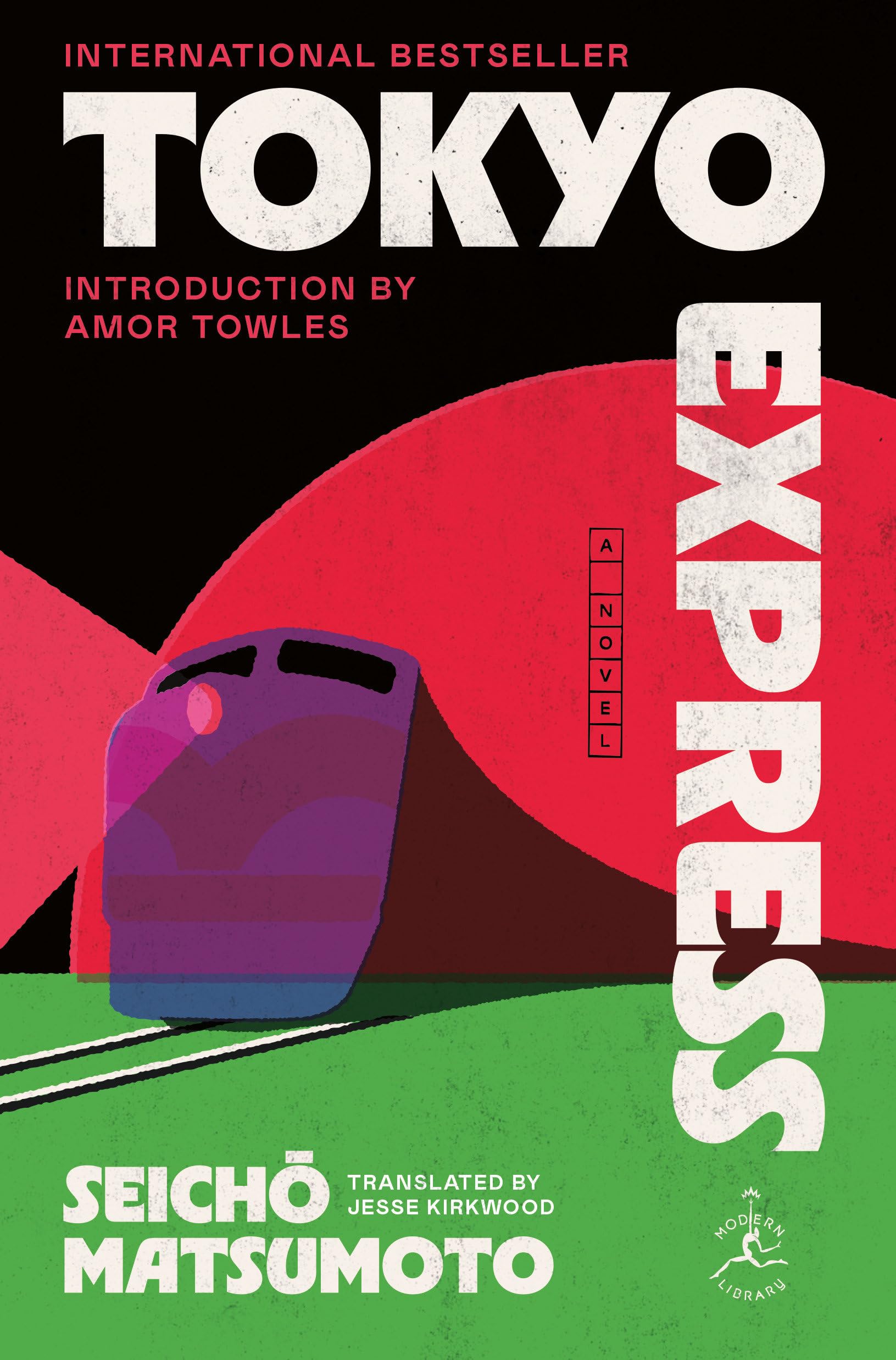



From “Japan's Agatha Christie” ( The Sunday Times ): A secluded bay. An apparent lovers’ suicide. And a pair of detectives with a nagging suspicion that the pieces don’t add up. Can you solve one of the most astonishing literary puzzles ever written? “An irresistible Hitchcockian gem: a fiendishly plotted crime novel told in crisp, elegant prose.”—Paula Hawkins, author of The Girl on the Train In a rocky cove at Hakata Bay, the bodies of a young and beautiful couple are discovered. Standing on the cold beach, the police see nothing to investigate: The flush of the couple’s cheeks and the empty juice bottle speak clearly of cyanide, of a lovers’ suicide. But in the eyes of two men, senior detective Torigai Jutaro and Kiichi Mihara, a young gun from Tokyo, something is not quite right. Together, they begin to pick at the knot of a unique and calculated crime. Now widely available in English for the first time, Tokyo Express is celebrated around the world as Seichō Matsumoto’s masterpiece. “The debut novel of bestselling writer Seichō Matsumoto . . . first published in Japan in 1958 and never out of print, [is an] ingeniously plotted railway mystery.” —The Guardian “[ Tokyo Express ] stands out thanks to the ‘elegant spareness of the prose,’ as Amor Towles writes in his introduction, but also because of the ingenuity of the tightly coiled plot . . . this novel floored me, and I expect it will floor other new readers, too.” — New York Times Book Review “The descriptions are elegant, the plotting even moreso, with complex characterizations that belie the slim size of the volume. If you read one reissue this year, pick up this one.” — CrimeReads “A timetable mystery par excellence!” —Ed Park, author of Same Bed Different Dreams “ Tokyo Express by seasoned Japanese mystery writer Seichō Matsumoto is a brilliant reminder that mysteries and thrillers are not unique to the Western world . . . Japanese crime fiction fans will especially like [it]. Nonetheless, this book is perfect for all dedicated to crime investigations and the entire gamut of personnel found once a crime has been committed.” —Great Mysteries and Thrillers “Matsumoto’s debut novel is credited with launching the mystery genre in Japan. The story is built on the meticulous examination of data; timelines and maps and train schedules figure prominently. Its underlying message about malignant corporate growth in the aftermath of World War II adds poignancy and raises the novel above the genre’s parameters. . . . A tidy vintage whodunit with a forensic flavor.” — Kirkus Reviews “’Japan’s Agatha Christie’ gets an overdue wide launch . . . [ Tokyo Express is] a work of art.” —Book Riot “A tight and fun read that is really perfect if you’re traveling.” — Maris Kreizman, The Maris Review Seichō Matsumoto was born in 1909 in Fukuoka, Japan. Self-educated, Matsumoto published his first book when he was forty years old, and he quickly established himself as a master of crime fiction. His exploration of human psychology and Japanese postwar malaise, coupled with the creation of twisting, dark mysteries, made him one of the most acclaimed and highest selling writers in Japan. He received the prestigious Akutagawa Prize in 1950 and the Kikuchi Kan Prize in 1970. He died in 1992. The Witnesses 1 On the evening of the thirteenth of January, Tatsuo Yasuda invited one of his clients to join him at the Koyuki restaurant in Akasaka. His guest was a senior official at one of the government ministries. Yasuda was the president of a company that sold industrial machinery. The company had grown considerably in recent years, a success it was rumored to owe to its large number of contracts with the government. This explained why Yasuda often brought important officials like tonight’s guest to the Koyuki. Yasuda liked the restaurant. It wasn’t the fanciest in this part of Tokyo, but that was precisely what gave it such an informal, relaxing atmosphere—and the waitresses who served in the private dining rooms were all more than up to the task. Yasuda was considered a good customer. He was happy to splash his cash around—or, as he liked to call it, his “capital.” His clients were all the type to enjoy this extravagance. Still, no matter how friendly he was to the waitresses, he took care never to reveal much about his guests. A bribery scandal had been in the news since the previous autumn, centering on a certain government ministry. A number of companies doing business with the ministry were also said to be involved. So far only a few lower-ranking officials had been implicated, but the newspapers were predicting that by spring the scandal would have spread to the ministry’s upper echelons. As a result, Yasuda had become even more discreet about his guests’ identities. There were clients he had brought seven or eight times, whom the waitresses knew by affectionate nicknames like “Ko-san” or “Wu-san”—and yet, while they realized most of