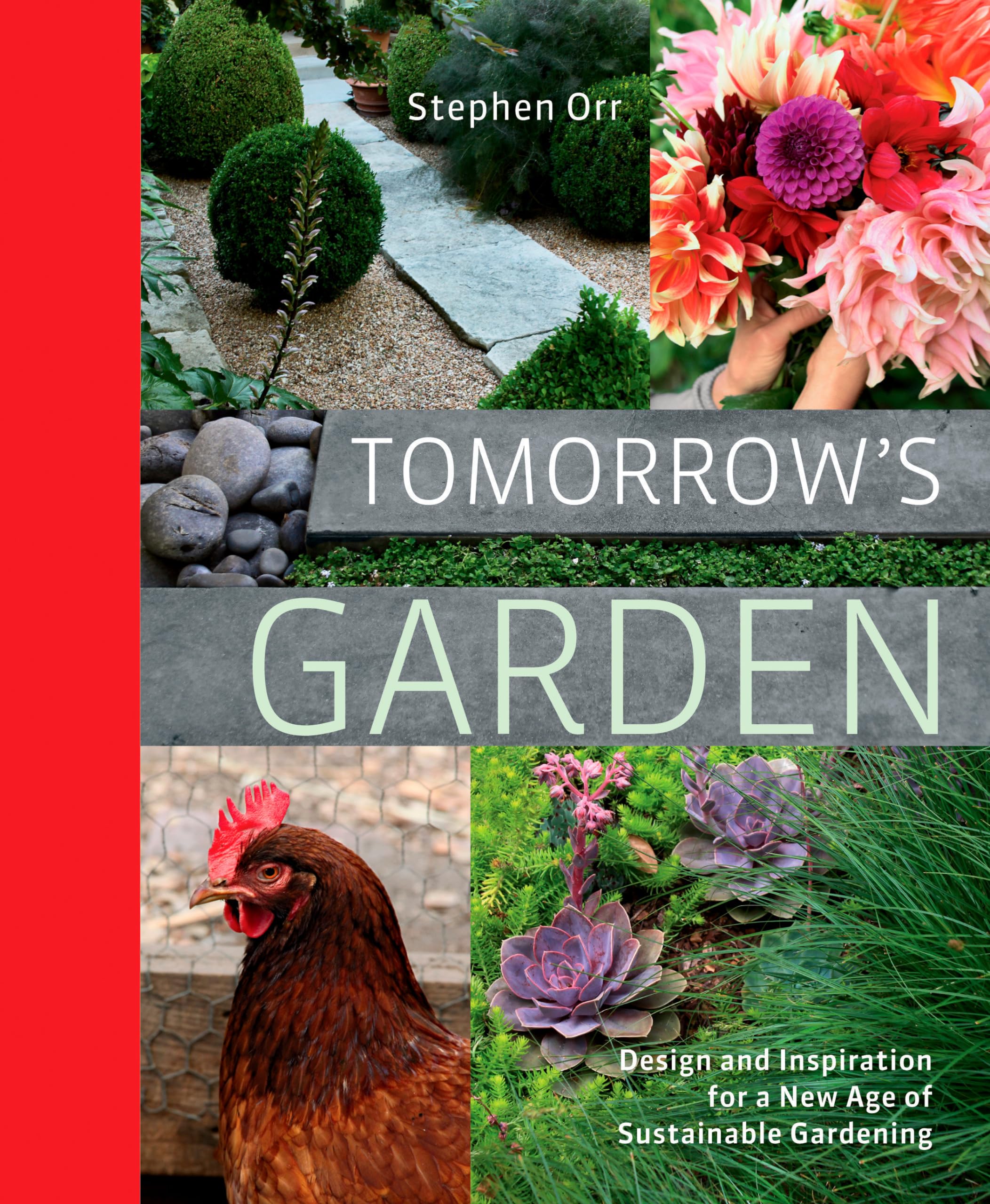
Tomorrow's Garden: Design and Inspiration for a New Age of Sustainable Gardening
$23.50
by Stephen Orr



With a keen eye for aesthetics matched by a strong concern for the environment, garden expert Stephen Orr has developed a sense of what a modern garden should be: small, visually pleasing, and responsible. In Tomorrow's Garden , he presents gardens in 14 American cities that have been scaled back and simplified without sacrificing beauty or innovative design. A devoted supporter of the organic gardening movement, Orr advises gardeners to think about their gardens as part of an interconnected whole with the surrounding environment--with an eye to water usage, local ecology, and preservation of resources. However, for those who are afraid that a sustainable garden means a lack of flora and fauna, Orr believes that a garden, first and foremost, should be a thing of beauty. He encourages flower lovers to plant flowers, and he showcases gardens filled with traditional and exotic plants that are designed with both visual appeal and the environment in mind. With detailed case studies, stunning photographs, and an appendix of resources and information to help gardeners achieve their ecological best, Tomorrow's Garden will teach you the true definition of sustainability and show you how to create beauty without excess in the 21st century and beyond. "The perfect dream journal for winter has finally arrived. Orr gives garden owners their say and nurtures dreams, scattering how-tos and lists of plants among his more than 200 photographs. --By Jan Gardner, February 27, 2011 Boston Globe What makes it armchair-worthy: We might be drawn in by the images, but as we pore over the text, consider its lessons, we begin to reshape our own vision of how to plant our own gardens for tomorrow. --Barbara Mahany, Tribune Newspapers [Orr] devoted a year away from his home bases to find gardens that not only reached a level of sustainability in plant choices, water usage and preservation of other resources, but that also looked delightful. --Debra Prinzing, Los Angeles Times "But, wisely, [Orr] resists a didactic tone, concentrating instead on describing small plots whose modest beauties speak volumes. There are intriguing designs here for any gardener." --Dominique Browning, The New York Times Given the forward-looking issues it addresses, the differing climates and conditions of the gardens featured, plus its sheer joie de vivre, this is a book of international stature... --Rob Cassy--Garden Illustrated STEPHEN ORR is the gardening editorial director for Martha Stewart Living magazine and formerly was a contributor to the New York Times and garden editor for Domino and House & Garden magazines. He lives and gardens in New York City and upstate New York. CHAPTER 1 What's the Program? ENTHUSIASTIC NEW GARDENERS often launch into the more decorative part of gardening (i.e., the planting of flowers) before giving the spatial design much thought. Ahead of plant selection, one of the most important lessons to learn when making a garden is to consider how each area is going to be used. Each defined space should have a purpose--what architects refer to as a program. Will you be eating outdoors? Will you be entertaining small groups of friends for dinner or having formal cocktail parties for work? Do you have kids and/or pets? Is there a quiet spot to escape from the kids with a drink or a book? How well do you like your neighbors? Can you create some sense of privacy? Ask yourself these important lifestyle questions to plan your valuable outdoor spaces most effectively and keep them from going unused, which is a waste of valuable time and money. The Outdoor Room Of course, the answers to many of the above questions will vary according to where you live. Speaking from personal experience as a native Texan, many residents of that state possess a seemingly innate desire to stay indoors. Perhaps it's the heat, but let's be frank--the weather in much of the state is temperate for a large portion of the year. To thwart that tendency at an Austin, Texas, garden, landscape designer Mark Word specifically added smart elements to entice people outdoors. The small walled courtyard of the newly built house is a stylized campground of sorts with simple painted wood furniture, a fire pit, and a small running "stream" (abstracted as a tiered steel fountain). This elemental approach employs earth, fire, air, and water to transform what could otherwise merely be a pass-through space or, at its worst, a claustrophobic cell that never gets used. Now instead, it's a spot for evening drinks by the fire. Flowers in the graveled space, even plants themselves, are few--but it's still a garden in the classic sense. Word combined a few special selections- -yellow abutilon with prehistoric-looking rice paper plant (Tetrapanax papyriferus), plume poppy (Macleaya cordata), and the twisted trunk of a slender shoestring acacia (Acacia stenophylla)--into a sculpture garden of bold plants. The splashing fountain, deep enough to sustain several hardy