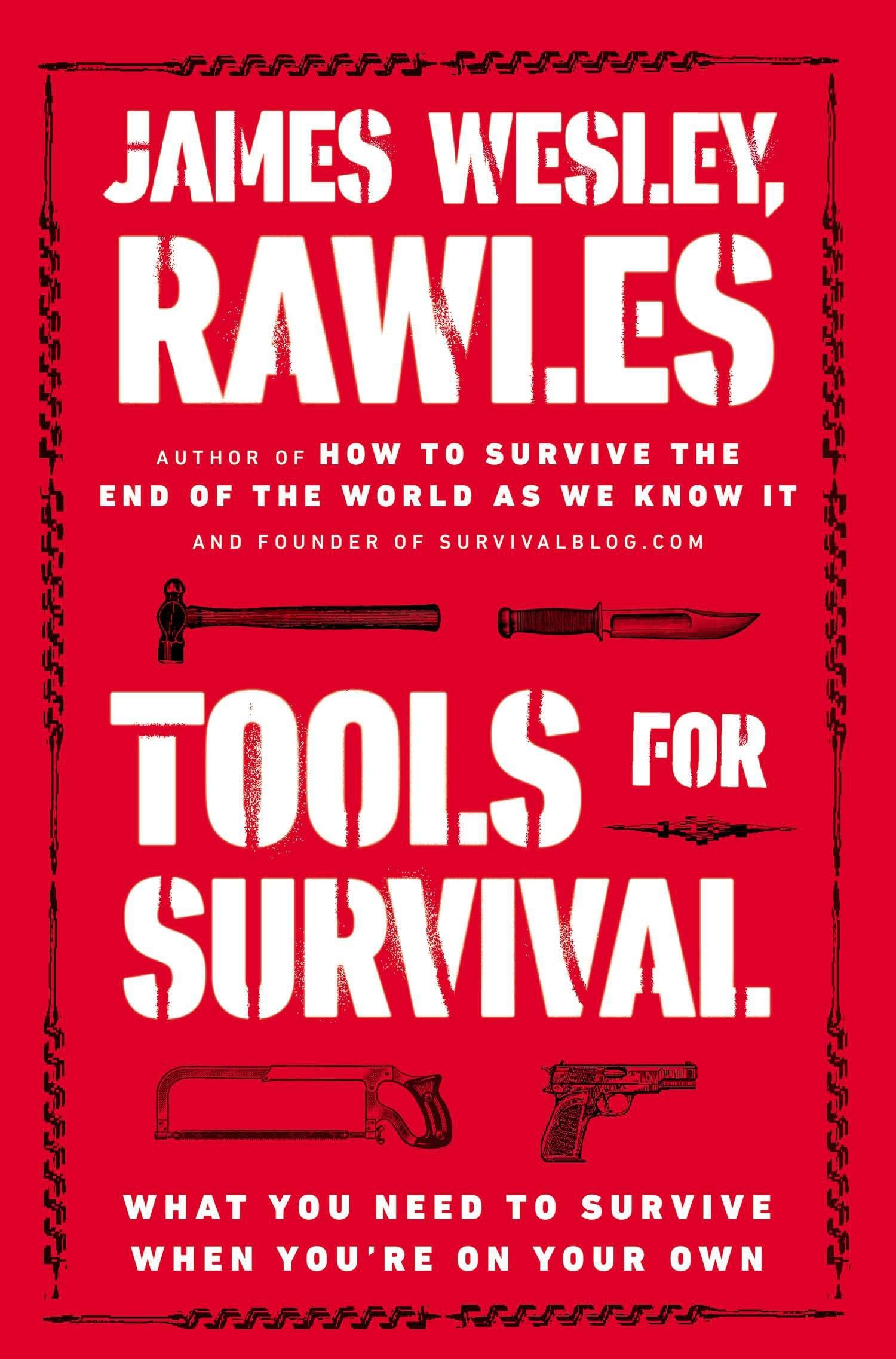
Tools for Survival: What You Need to Survive When You’re on Your Own
$18.32
by James Wesley Rawles



Essential survival advice from a former U.S. Army Intelligence Corps Officer and the world’s preeminent expert in preparedness. For years, James Wesley, Rawles has lived a self-sufficient lifestyle along with his family on a property surrounded by National Forest. In his earlier bestselling nonfiction book, How to Survive the End of the World as We Know It , Rawles outlined the foundations for survivalist living. Now, he details the tools needed to survive anything from a short-term disruption to a long-term, grid-down scenario. Here, Rawles covers tools for every aspect of self sufficient living, including: • Food preservation and cooking • Welding and blacksmithing • Timber, firewood, and lumber • Firefighting • Archery and less-than-lethal defense tools • And more... Field-tested and comprehensive, Tools for Survival is a must-have reference for anyone who wants to know how to prepare for the worst. Praise for James Wesley, Rawles and Tools for Surivial “An amazingly gifted author.”—#1 New York Times bestselling author Brad Thor “Well-written and informative, and speaks with an honesty and bluntness often missing from the policy prognotications of the political elite.”— The New American “Meticulously researched with a wealth of local and technical details.”—Formilog James Wesley, Rawles is the founder of SurvivalBlog.com. A former U.S. Army Intelligence officer and technical writer, he is the author of the novels Patriots, Expatriates , and Liberators , as well as of the nonfiction guides How to Survive the End of the World As We Know It and Tools for Survival. He lives in an undisclosed location west of the Rockies. ***This excerpt is from an advance uncorrected proof*** Copyright © 2015 James Wesley, Rawles CHAPTER 1 SETTING UP SHOP Law of the Workshop: Any tool, when dropped, will roll to the least accessible corner. —Jerry Smith One of the first things you’ll need to do as you embark on becoming more prepared is to set up a well-equipped workshop for yourself. Actually, you’ll want to set up multiple workshops with dedicated purposes. Having one big combination shop is an invitation to a conflagration caused by negligence. Having sawdust and scrap wood from your carpentry projects in proximity to your welding bench is foolhardy. As you build up the assortment of tools in your metal and woodworking shops, resist the urge to have any of your tools—other than perhaps measuring and squaring tools—migrate from one shop to the other. Using a wood-working chisel on any sort of metal is sure to ruin it. And it is quite discouraging to see one of your metalworking files gunked up with sap from wood. Keep your tools separate, and insist that your children and teenagers do likewise. If possible, set aside separate shops or at least dedicated corners of a shop building for each purpose. TIP When designing your workshops, try to err on the side of (A) more closely spaces power outlets, (B) better ventilation, and (C) copious lighting. SAFETY FIRST! Keep safety in mind when designing and operating your shop. Keep power cords out of the way and minimize other hazards that might cause anyone to trip or slip. Use common sense when designing your shelving arrangement: Stow the heaviest objects at waist level (so you don’t have to bend your back when lifting them), stow the moderately heavy objects down low, and stow the light objects up high. And of course keep anything flammable away from sources of ignition. Oily rags should be stored in a special fire-resistant bucket (such as a Justrite model 9100) that is positioned well away from walls or benches. One good mental exercise is to try to picture a spunky, unrestrained, and curious yearling bull that has been set loose to go crashing around in your workshop. That gives you a rough approximation of the trouble that people (especially kids) can get themselves into. You will want all of your sharp tools secured, nothing to trip over, no hazardous protuberances (particularly at eye level), and nothing flammable in places of risk. THE ESSENTIALS There are five items that you need to keep close at hand at all times: • A rack of eye goggles and safety glasses (a couple of pairs of each so you have absolutely no excuse for not wearing them) • A first aid kit with tourniquet • An emergency eye-wash bottle • An ABC fire extinguisher • Communications gear in case of an accident or emergency Buy sets of these for each of your workshops and position them where they are in prominent view and within easy reach. WORKBENCHES I’m often asked about the ideal height for a workbench. That varies, depending on your own height. Most bench tops are between thirty-two and thirty-eight inches. The ideal height for a carpentry bench is palm height, just where your palms rest on the surface if you stand up straight and leave your arms hanging at your sides. I generally like woodworking and painting benches right at palm height, m