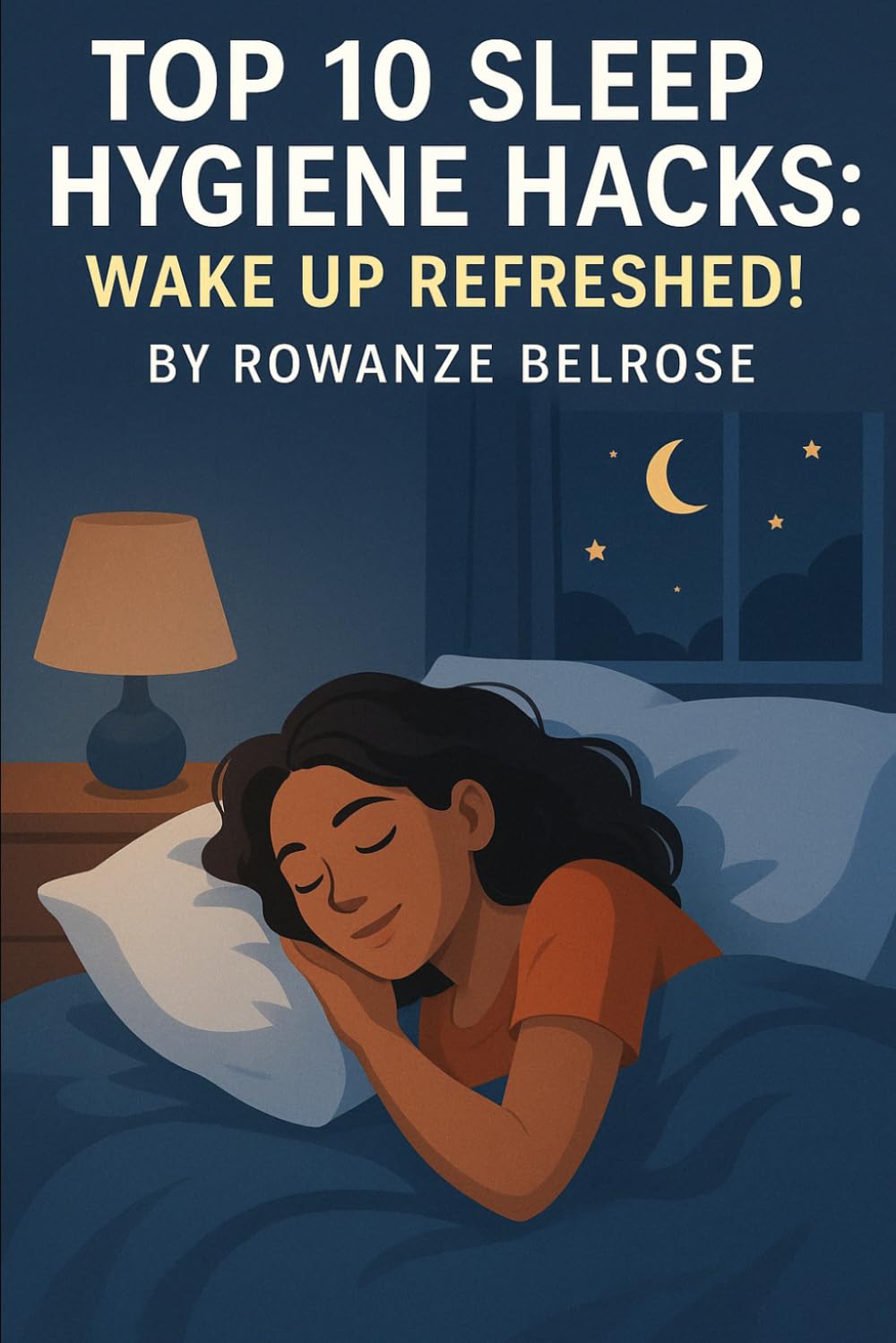
Top 10 Sleep Hygiene Hacks: Wake Up Refreshed! (Everyday Wellness)
$5.35
by Rowanze Belrose



Rest Easy: Why Sleep Hygiene Matters More Than You Think Struggling to get a good night’s sleep? You’re not alone. Millions of people around the world wrestle with the same challenge—tossing and turning through the night, waking up groggy, and stumbling through their days in a fog of exhaustion. In our fast-paced, high-stress, and constantly connected world, restful sleep can feel like a luxury instead of the necessity that it truly is. But what if the key to better sleep wasn’t found in medication, expensive gadgets, or complicated regimens—but in a few consistent, evidence-based habits known as sleep hygiene ? Let’s dive into ten science-backed sleep hygiene tips that can help you reset your nights and rediscover the magic of waking up truly refreshed. These aren’t just trendy wellness hacks or generic advice. They’re rooted in real research and practical application. Whether you’re battling insomnia, experiencing fragmented sleep, or simply want to feel more energized in the morning, this book is for you. Why Sleep Hygiene? “Sleep hygiene” is a term coined by sleep researchers to describe the practices and environmental factors that promote consistent, uninterrupted, and restorative sleep. It doesn’t refer to how clean your sheets are—though that might help too—but rather to a set of behavioral and environmental recommendations designed to optimize your body’s natural rhythms and sleep cycles. These practices might sound simple, even obvious—but that’s exactly what makes them so powerful. You don’t need to overhaul your entire life to improve your sleep. You just need to make some strategic adjustments. Think of sleep hygiene like dental hygiene: you can’t expect your teeth to stay healthy without daily care, and you can’t expect good sleep without regular habits that support it. The Wake-Up Call We All Need The science is clear: poor sleep doesn’t just make you tired—it affects every system in your body. Chronic sleep deprivation is linked to weakened immunity, weight gain, reduced cognitive function, mood disorders, increased risk of heart disease and diabetes, and even shorter life expectancy. But here’s the good news—sleep is incredibly responsive to behavior. In other words, the quality of your sleep is something you can actively improve. That’s what makes sleep hygiene so empowering. Unlike conditions that may require medication or professional intervention, many sleep issues can be alleviated—or even solved—through lifestyle changes.