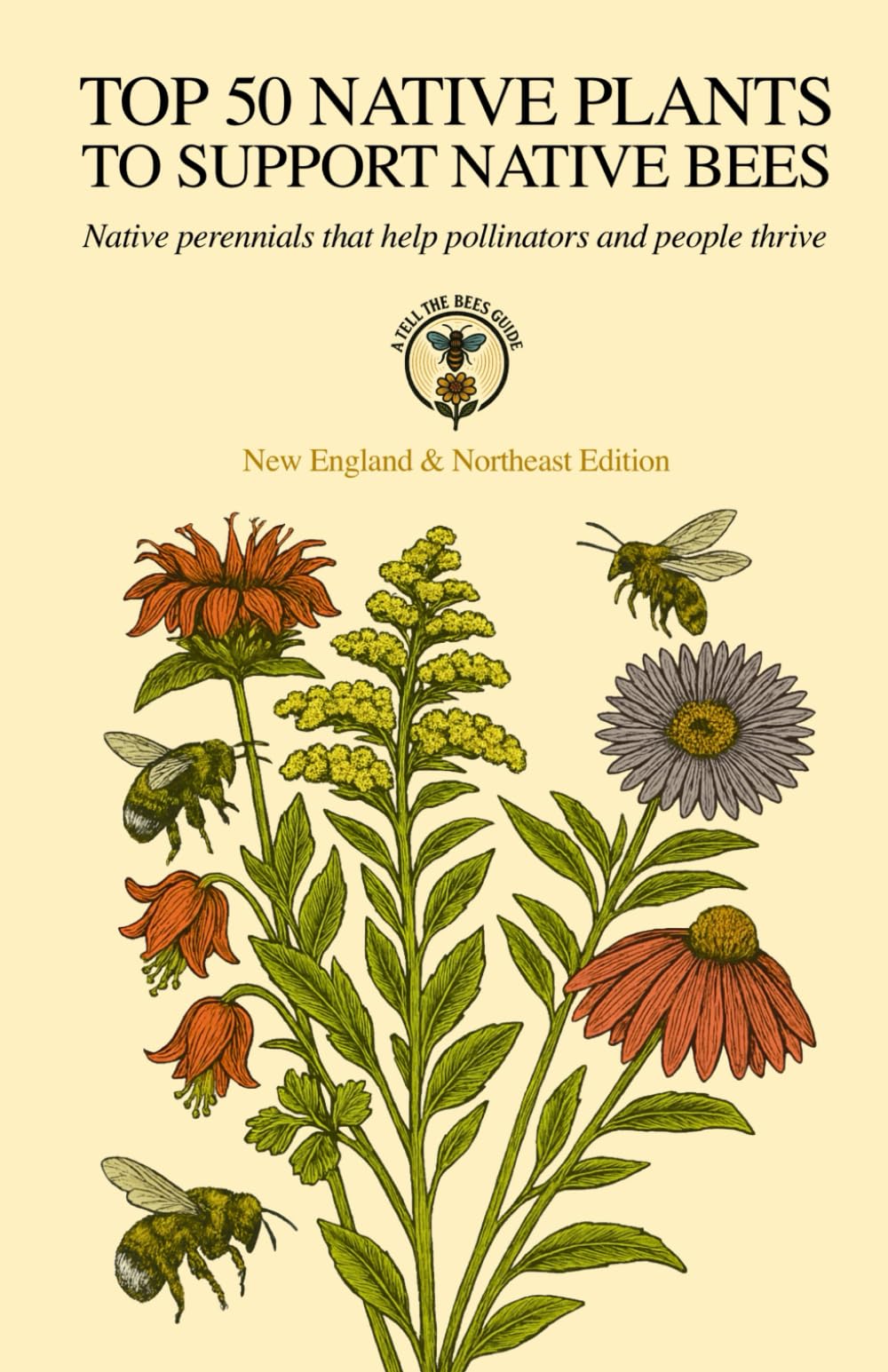
Top 50 Native Plants to Support Native Bees: Native perennials that help pollinators and people thrive (New England & Northeast Edition)
$11.95
by Scott Burnham



Top 50 Native Plants for Northeast Bees: A Practical Guide to Pollinator & Healing Gardens Create a living refuge for people and pollinators. This book highlights fifty high-value native perennials for the Northeast that support wild bees while helping you shape calm, restorative spaces—from balcony containers to shared community gardens and senior living campuses. Why this book? Most plant lists leave you guessing. These profiles give you exactly what you need to choose well the first time and build a garden that blooms from spring through fall—steady forage for native bees, steady calm for you. Inside you’ll find: 50 plant profiles with at-a-glance specs: height × width, sun, water, soil, habitat, bloom time, spacing, and USDA zone. - Bee-forward guidance : “Bees supported,” “Bloom value,” and “Other wildlife” so you can match plants to leafcutter bees, sweat bees, bumble bees, and more. - Role in Garden notes that translate ecology into design—how to use each plant for structure, softness, movement, and winter interest. - Healing-garden focus inspired by the “Tell the Bees” tradition—spaces where attention softens and breathing steadies. - Action steps : “Nice plants. Now what?” A simple path to start small, add bloom succession, and avoid common pitfalls. - Helpful appendices : quick bee overview, vetted native-plant vendors, and a concise reference list. Built for real-world sites Whether you’re planting a balcony container, small backyard, rain garden, or community courtyard , the guidance is tuned to Northeast conditions so plants establish and thrive without constant rescue. Who it’s for Home gardeners seeking bee-friendly, low-input natives that truly perform. - Designers and caretakers creating healing, recovery, and senior living landscapes with dependable bloom. - Educators, clubs, and community leaders promoting biodiversity, sustainable landscaping, and nature-based well-being. Results you can expect Less guesswork: Match site conditions quickly and select plants with confidence. - Season-long support: Layer spring, summer, and fall bloom for continuous forage and color. - Calmer spaces: Use scent, texture, and movement to invite mindful moments and daily decompression. How to use this book Pick three plants that fit your light and soil; plant in friendly clusters. - Water deeply at planting, then taper as roots establish. - Add early and late bloomers next season to extend forage. - Skip systemic pesticides; leave a little wild for nesting and winter habitat. About the author & practice Scott Burnham is the founder of Tell the Bees , a design practice creating healing and recovery gardens for people and pollinators across the Northeast. The work blends ecological planting with evidence-informed well-being principles to help both humans and wild bees thrive. Keywords & topics covered: native plants • Northeast gardening • pollinator garden • bee friendly • native bees • biodiversity • healing gardens • recovery gardens • senior living gardens • balcony and small-space gardening • rain gardens • wildlife gardens • sustainable landscaping • bloom succession • low maintenance Make a start that matters—plant for bees, and plant for yourself.