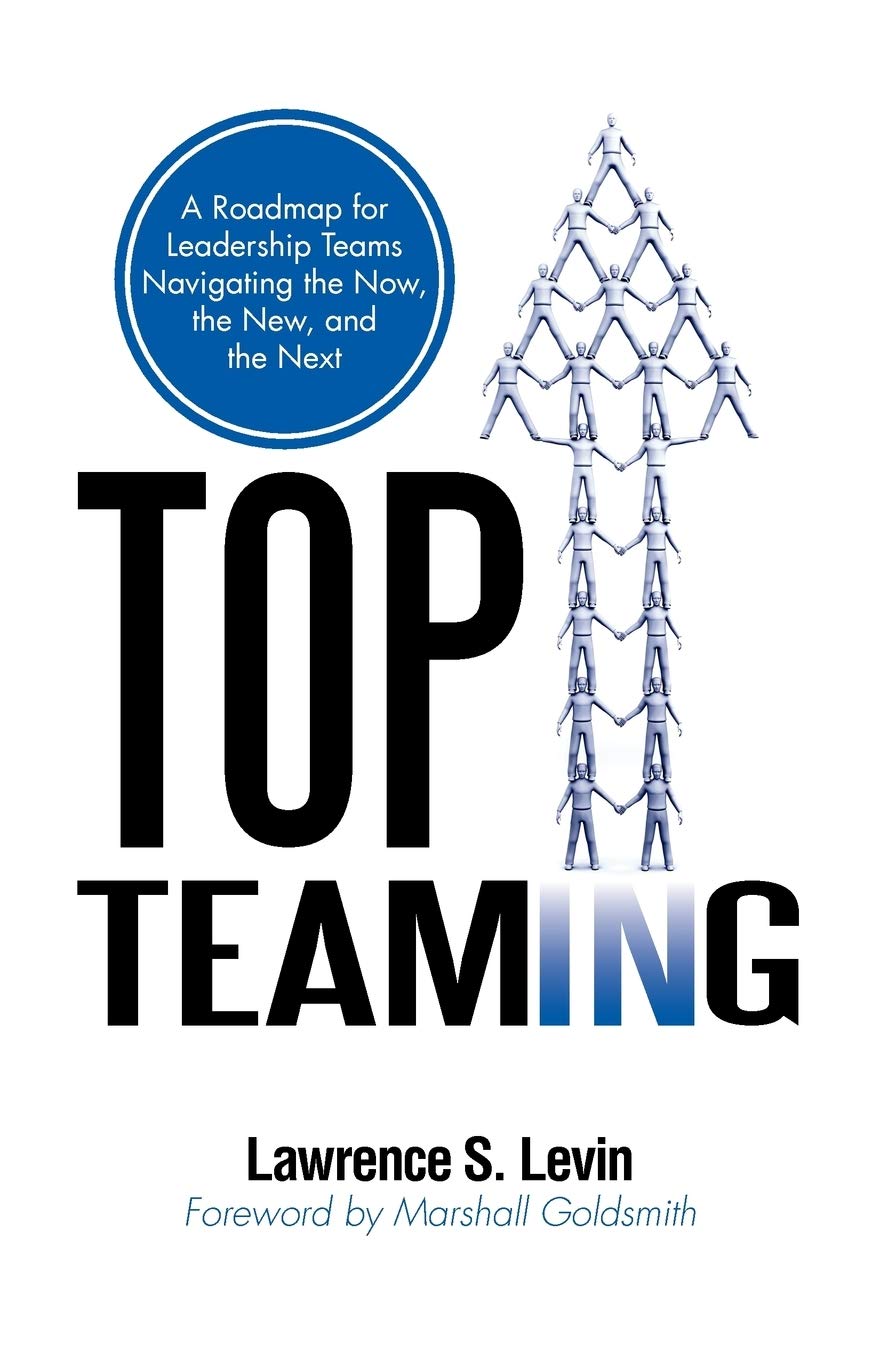
Top Teaming: A Roadmap For Teams Navigating The Now, The New, And The Next
$18.95
by Dr. Lawrence S. Levin



Top Teaming is about the conversations and practices that extraordinary leaders and their teams have that differentiate them from usual high-performing" teams, and make them exceptional, high-caliber Top Teams. Simply put, it is about how good teams get even better to become great teams in an increasingly complex world". -Marshall Goldsmith In today's complex and volatile world, the importance of building executive teams that understand how to manage the "Now, the New, and the Next" is perhaps the most important criterion in achieving both operational success and strategic advantage. This guidebook is written from the viewpoint of an experienced practitioner-someone who has been a trusted advisor to CEOs and executive leadership teams for twenty years across a wide range of industries and geographies. Larry understands how great leaders develop and thus develop their Top Teams. Profit from Levin's experience and learn: * how to harness the "power of a collective future" * how to create "trust over peace" to address the issues that matter most * how to drive the "fierce urgency of now" * how to navigate the critical intersections in any organization * how to build key teams 1-3 levels down * how to move beyond classical "high performing teams" to become a Top Team By learning from the case studies and insights in Top Teaming, you'll drive the alignment, collective intelligence, and focus needed to influence your company's direction, mindset, and performance. Whether you're seeking to make a struggling team good or a good team great, you'll find the guidance you need in Top Teaming: A Roadmap for Leadership Teams Navigating the Now, the New, and the Next. TOP TEAMING A Roadmap for Leadership Teams Navigating the Now, the New, and the Next By Lawrence S. Levin iUniverse, Inc. Copyright © 2011 Dr. Lawrence S. Levin All right reserved. ISBN: 978-1-4620-3677-6 Contents Foreword...................................................................................xiAcknowledgments............................................................................xiiiIntroduction...............................................................................xvChapter 1—Setting the Cornerstone: Being Truly For Something.........................1Chapter 2—Aligning the Stars.........................................................12Chapter 3—Focusing on the Now and the New............................................25Chapter 4—Wrap Your Head around Change...............................................39Chapter 5—Essential Navigational Skills..............................................51Chapter 6—The Art of the Advance: How Good Teams Get Even Better.....................67Chapter 7—Growing and Sustaining Top Teams...........................................90Chapter 8—Being "That" Person: Great Teams Need Great Leaders........................106Chapter 9—The Power of Integration...................................................124Chapter 10—Being Fully in the Game: Building the Top Team............................141Appendix...................................................................................151Bibliography...............................................................................173 Chapter One Setting the Cornerstone: Being Truly FOR Something David was named general manager of a highly profitable division of a large manufacturing firm. A very ambitious and forward–thinking leader, he wanted to reshape the historic command–and–control culture and build a leadership team that could use its collective intellect and experience to grow the organization by reshaping its business model and leadership approach. He inherited a culture that was, by most external standards, quite successful and profitable—never having missed a promise to the company or to stockholders. The team was smart, hardworking, and proud of their operational excellence. David's questions for himself and his team were: "How can this team get even better? How can we grow in global reach, innovation, and profitability? How can we begin to think more strategically and more globally?" And, "How can we `raise the bar' of our performance?" Working with David, our firm decided to schedule an "Advance" (not a Retreat) for his team of direct reports. (Read more about how to plan Advances in chapter 6.) We began this process by interviewing each team member and performing a thorough diagnosis to measure how well the team thought it was doing. We began the actual Advance by presenting data from the interviews to the assembled group. People were surprised at the level of agreement and the passion within the team around their real desire to be more strategic, to think together more deeply, and to take the team to a new level. They knew that it would not be easy and that it would require changes in their dynamics and their willingness to surface and resolve real issues. They understood that it would challenge the very culture t