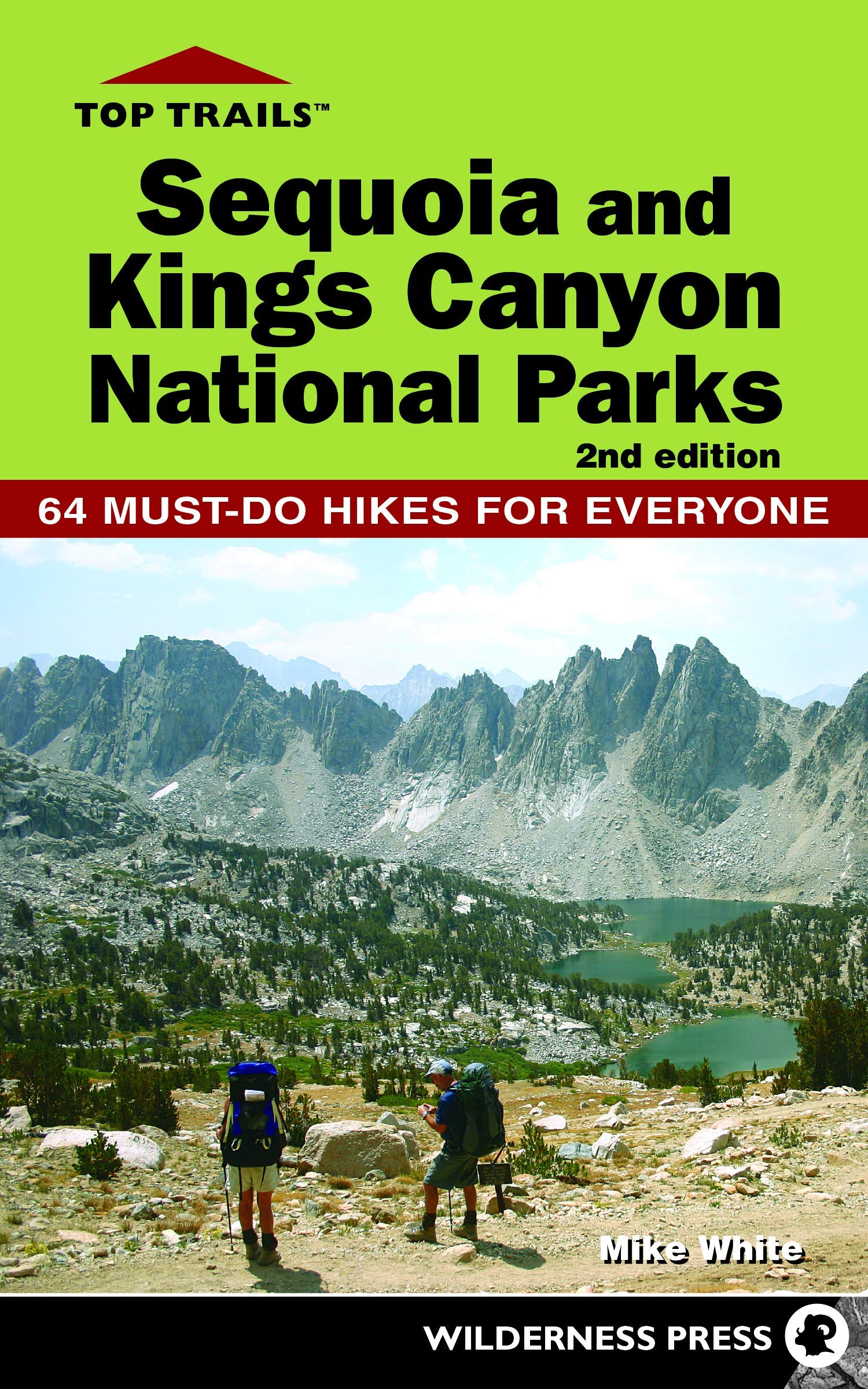
Top Trails: Sequoia and Kings Canyon National Parks: 64 Must-Do Hikes for Everyone
$11.25
by Mike White



Whatever you’re looking for, there’s a trail for you at Sequoia and Kings Canyon National Parks. The southern High Sierra, including Sequoia and Kings Canyon National Parks and the surrounding John Muir, Jennie Lakes, and Monarch Wildernesses, is one of the most magnificent natural areas in the world. Blessed with the largest trees on Earth (giant sequoias), one of the deepest canyons in North America (Kings Canyon), and the highest mountain in the continental U.S. (Mt. Whitney), the greater Sequoia-Kings Canyon region offers unparalleled mountain majesty. Along with such superlatives, hundreds of miles of trails provide access to a boundless number of high mountain lakes, wildflower-covered meadows, cascading streams, deep forests, and craggy peaks. Mike White 's Top Trails: Sequoia and Kings Canyon National Parks guide presents the best curated selection of trips suitable for varied skill levels at this portion of John Muir's Range of Light. Mike White was raised in the southeast suburbs of Portland, Oregon, in the shadow of Mount Hood (whenever the Pacific Northwest skies cleared enough to allow such things as shadows). As a teenager, Mike began hiking, backpacking, and climbing in the Cascades of Oregon and Washington, and he honed his outdoor skills while attending Seattle Pacific University. After acquiring a B.A. in political science, Mike and his new wife, Robin, relocated to the high desert of Reno, Nevada, from where he discovered the joys of exploring the Sierra Nevada. After leaving his last “real” job, Mike began a full-time writing career. He is the author or coauthor of 19 outdoor guides, including award-winning books Top Trails Lake Tahoe and 50 Classic Hikes in Nevada. Mike also has contributed to Sunset and Backpacker magazines and the Reno Gazette-Journal newspaper. A former community college instructor, Mike is also a popular featured speaker for outdoors groups. Chapter 1: The Foothills Trail 1: Putnam and Snowslide Canyons Trail Use: Day Hike, Run, Horse Length: 6.8 miles, 3-4 hours Vertical Feet: +2690/-460/±6300 Difficulty: Level 3 Trail Type: Out-and-back Features: Canyon, Stream, Wildflowers, Giant Sequoias, Camping, Great Views, Secluded Facilities: Campground The short journey to Putnam and Snowslide Canyons offers hikers early- and late-season opportunities to enjoy the foothills zone on the western fringe of Sequoia while the higher elevations are buried in snow. Wildflowers offer splashes of color in early spring, and views of Homers Nose and Dennison Mountain are excellent throughout the hiking season. The journey to Putnam Canyon passes through oak woodland, while continuing on to Snowslide Canyon exposes hikers to a mixed coniferous forest, including a small grove of giant sequoias. Best Time With a location in the foothills, the first 2-plus miles of trail to Putnam Canyon can be hiked year-round. Snow may blanket the trail between Putnam Canyon and Snowslide Canyon during the winter months, but the trail should be snow-free from March to December. Finding the Trail Drive CA 198 eastbound from Visalia to the town of Three Rivers and turn right onto South Fork Road, approximately 7 miles west of the Ash Mountain Entrance. Follow South Fork Road for about 9 miles to the end of the pavement, and continue another 3 miles on narrow, dirt road to the South Fork Campground (pit toilets, no water, and no fee). Pass through the campground and leave your vehicle in the small, shady parking area. Logistics In the foothills zone, hikers should be on the lookout for poison oak, ticks, and rattlesnakes. Trail Description [1] The signed Garfield-Hockett Trail begins at the campground access road, a short distance before the parking area. Climb moderately across an oak-dotted hillside amid lush trailside vegetation, including colorful wildflowers and a rather healthy population of poison oak. Enter a side canyon about 1 mile from the trailhead and hop across the first of many small rivulets slicing down the lower slopes of Dennison Mountain. The extra moisture in these diminutive nooks creates a dramatic change in vegetation, as ferns, thimbleberry, maples, nutmegs, alders, dogwoods, and cedars line the shady streambanks. Continue a steady climb through oak woodland to Putnam Canyon. [2] The sound of rushing water out of sight below the trail, coursing down the canyon from Big Spring, will be quite noticeable, but chances are the creek at trail level will be dry following the conclusion of snowmelt. The steep and narrow canyon is filled with boulders and low shrubs, allowing a cross-canyon view of the bulbous granite dome dubbed Homers Nose. Beyond Putnam Canyon, the steady climb continues as a smattering of ponderosa pines, white firs, and incense cedars begin to intermix with the deciduous trees. Fortunately the arrival of the conifers coincides with the departure of the poison oak, although the innocuous flowers and plants from the lush understory below