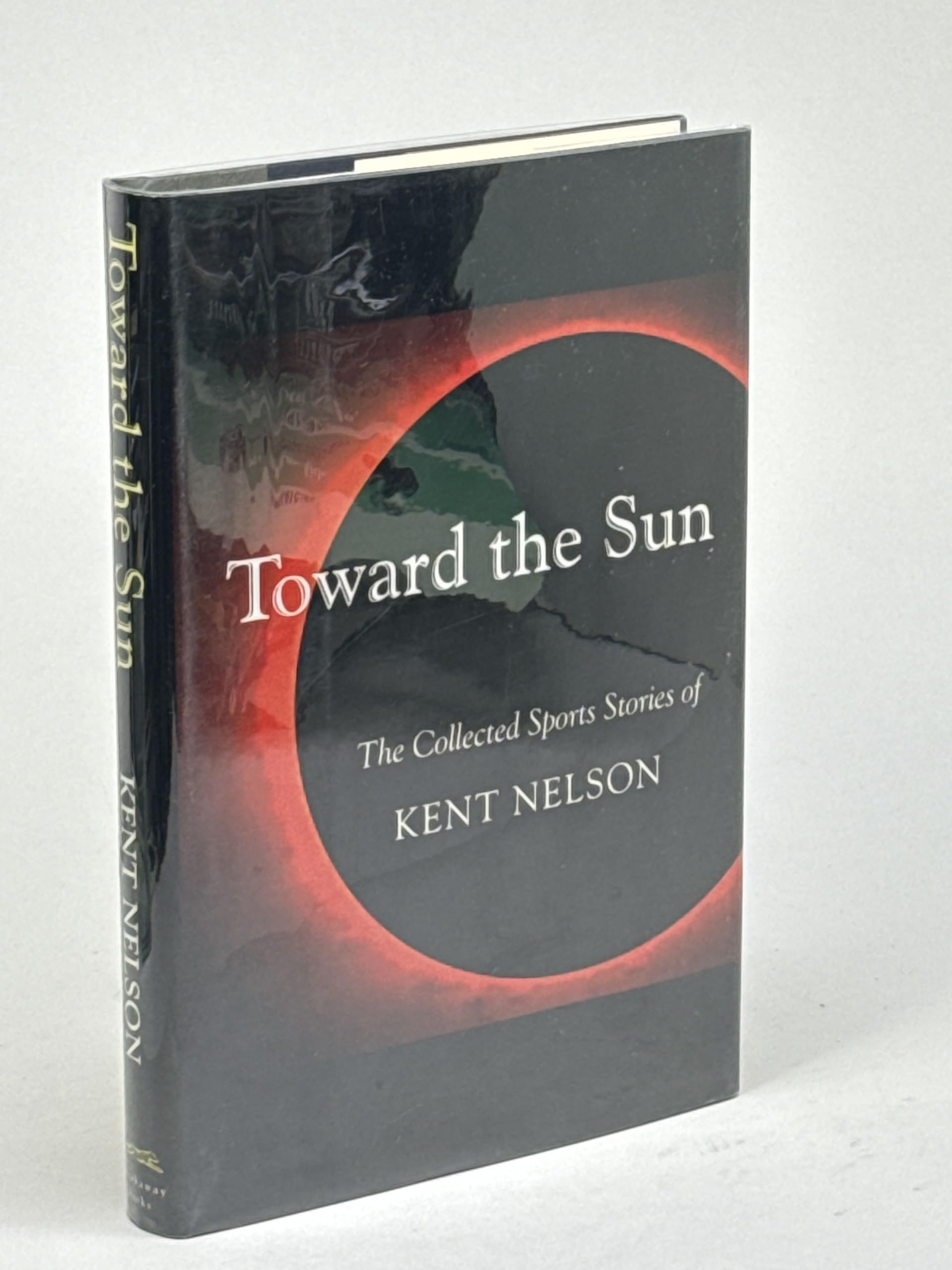



Literary fiction using a variety of sports to plumb the depths of the human experience. There are no last-minute touchdowns or cheering crowds in these 13 exquisitely crafted tales about men, women, and sports; Kent Nelson is far too intelligent and thoughtful a writer for prefab heroics. Instead, his interest lies in sports as obsession, as the crucible that both shapes and deforms his characters' lives. "Projections" is a series of snapshots, capturing a hockey player's career in brief chronological tableaux of violence, anger, and helplessness. In "Alton's Keeper," a Charleston real-estate agent finds that squash breaks down all the barriers of his background and breeding: "I wished for a new world undiscovered, where property was not bought and sold or spoken for, where no houses stood, and power was a word with no meaning." The grief-stricken son of "A False Encounter" traces his father's suicide back to a single defining moment, when he got up from a knockout punch to face certain defeat. And then there is the extraordinary title story, in which a legendary athlete runs his way back into a pure animal state. "Some say to cage an animal destroys its essence.... What kind of animal has it become when it knows it will be fed at intervals, when it is cared for, when it cannot hunt and run free?" his girlfriend wonders, as she tries to urge him toward some form of domesticated life. As his protagonists run, climb, or ski their way into increasingly rarefied states, Nelson lays bare their deepest hopes and fears in spare, moving language that evokes Richard Ford or Jim Harrison. On the basis of these stories alone, Kent Nelson is a name more readers should know. --Mary Park Precise, shrewd tales by a prodigiously talented but still too-little-known writer. Nelson (Language in the Blood, 1991, etc.) offers an enthralling refresher course in the exploration of character. Each of the 13 tales here use a character's dedication (or addiction) to a sport to plumb hesitations and hopes. In ``A False Encounter,'' a grieving son is driven to investigate why his seemingly happy father committed suicide. The quest eventually leads him back to a group of his father's college friends, all of them accomplished amateur boxers. The key to his father's behavior, it turns out, is hidden in a moment of triumph in his youth when, against all expectations, he was able to rise from the canvas after devastating blow. Such exhilarating, defining moments, Nelson suggests, both shape and haunt us. What happens when one discovers that these moments are singular and unsurpassable? The appropriately named ``Death Valley offers quite a different view of sports: a wealthy and accomplished, diffident young professional golfer visits her lover, a groundskeeper at a golf course in the California desert. Golf has helped to insulate her from the world, and her self-absorption and life of privilege are both called into question when she collides with the hard, sad lives of a group of migrant laborers camped close to the links.''Every Day a Promise'' perfectly catches the unwillingness of a track champ to give up his dream of the Olympics. ``The Invisible offers a droll, somewhat mystical celebration of the way in which a star college quarterback wins back his soul from the coaches, boosters, and agents. And ``The Squash Player'' works out an artful variation on the theme of the aging athlete, as a man struggles to find his place in a world in which hes no longer physically dominant. Moving, fresh, perceptive work, and further evidence of Nelson's considerable skills. -- Copyright ©1998, Kirkus Associates, LP. All rights reserved. Used Book in Good Condition