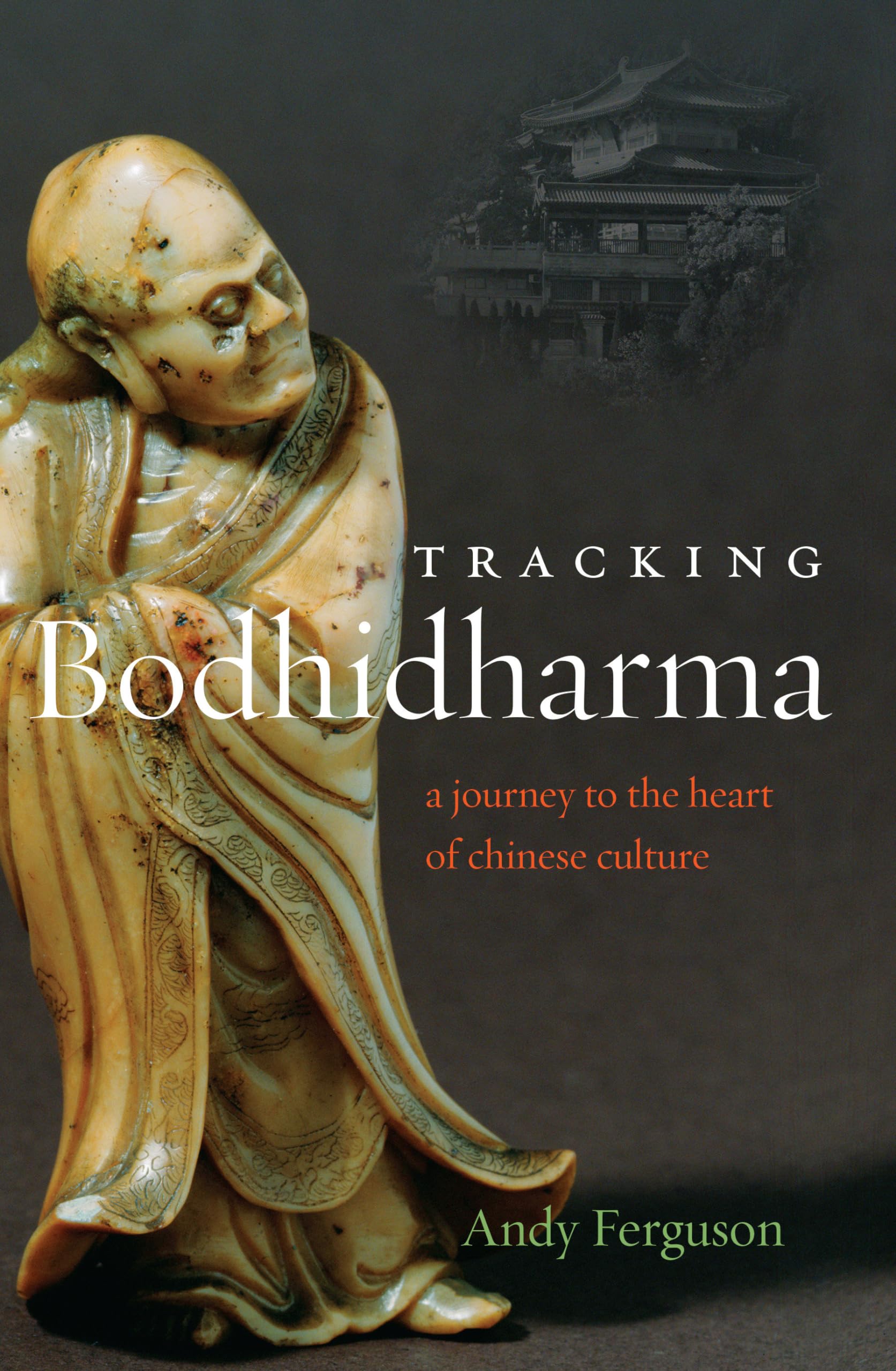



The life of Bodhidharma, the founder of Zen Buddhism, has, with the passing of time, been magnified to the scale of myth, turning history into the stuff of legend. Known as the First Patriarch, Bodhidharma brought Zen from South India into China in 500 CE, changing the country forever. In Tracking Bodhidharma , Andrew Ferguson recreates the path of Bodhidharma, traveling through China to the places where the First Patriarch lived and taught. This sacred trail takes Ferguson deep into ancient China, and allows him to explore the origins of Chan [Zen] Buddhism, the cultural aftermath that Bodhidharma left in his wake, and the stories of a man who shaped a civilization. Tracking Bodhidharma offers a previously unheard perspective on the life of Zen's most important religious leader, while simultaneously showing how that history is relevant to the rapidly developing super–power that is present–day China. By placing Zen Buddhism within the country's political landscape, Ferguson presents the religion as a counterpoint to other Buddhist sects, a catalyst for some of the most revolutionary moments in China's history, and as the ancient spiritual core of a country that is every day becoming more an emblem of the modern era. Tracking Bodhidharma is a book about seeking an understanding of the origins and thought of Zen Buddhism. Some of the essential philosophical perspectives of the tradition, in particular the bedrock concept of signlessness, are discussed here. Signlessness has at least two basic meanings for Zen: It signifies the nature of consciousness itself. In addition, it signifies the most effective path of the Bodhisattva. When Bodhidharma prescribed to "Point directly at the human mind, observe its nature, and become Buddha" it was to these two ideas, plus others, that he meant to point us. It has long surprised me that this central concept of Zen is so widely misunderstood or ignored. This book also connects the historical person of Bodhidharma with the court of Emperor Liang Wudi through a review of historical records, especially the possible connections with the emperor's son Zhao Ming. The dynamic between Bodhidharma and Emperor Wu is a key to understanding the widely ignored political importance of Zen in ancient China. The tradition, in some sense, represented freedom in a society that was inherently totalitarian, and thus deserves our interest and appreciation. The book is also a travel adventure that probes other stories about Zen, Shao Lin Temple, plus China's origins along the Yellow River. Many of the original materials that served as a basis for these stories are virtually unknown outside of China. May readers find it enlightening. Andy Ferguson, Paris, France 2021 Andy Ferguson is a graduate of the Chinese Language and Literature program at the University of Oregon. He has lived in Taiwan, Hong Kong, and Japan, and has traveled extensively in East and Southeast Asia since 1978. He has organized and led numerous tours to visit Chinese Zen history sites. He lives in Petaluma, California. Used Book in Good Condition