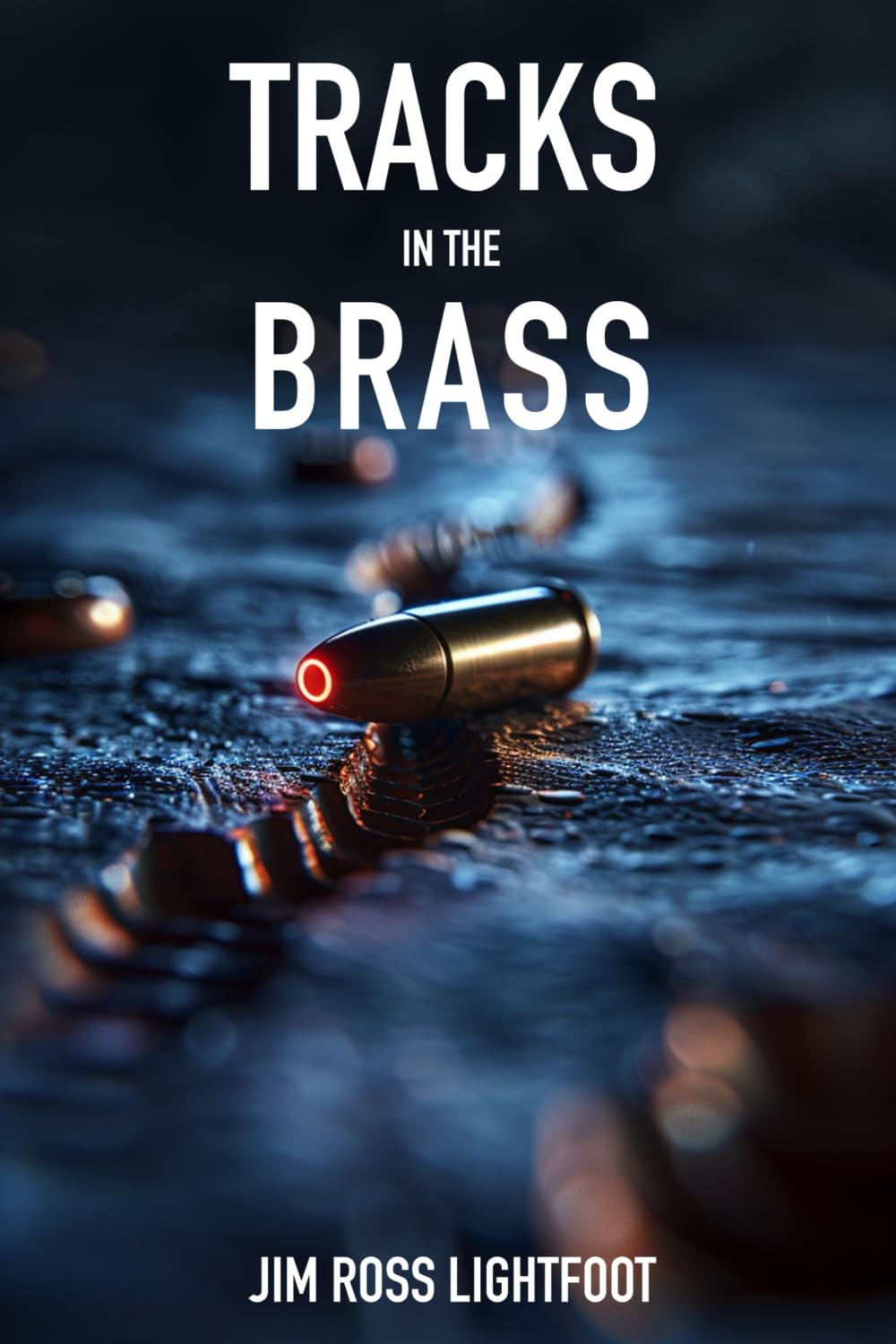
Tracks in the Brass (Cold cases turned hot: Detective Roger Blair)
$14.99
by Jim Ross Lightfoot MC Ret



Tracks in the Brass is a gripping murder mystery that follows Detective Soper as he tirelessly pursues the killer of retired banker Hershel Harper. After moving from Iowa to California to be near their grandchildren, Harper is brutally murdered in a gangster-style attack. Detective Soper becomes obsessed with solving the case, dedicating his every waking moment to uncovering the truth. Despite his relentless efforts, the case goes cold for seventeen years. As retirement age catches up with Soper, he hands over the reins to Detective Roger Blair, who brings fresh insight and modern investigative skills to the Chief of Detective's office. Blair, too, falls under the spell of this cold case, pursuing it with the same vigor as Soper while managing a large detective bureau. The mystery unravels in the final chapter, revealing the true killer amidst a web of red herrings and blind alleys that will keep even the most ardent murder mystery fans engaged until the very last paragraph. Tracks in the Brass offers a deep dive into crime-fighting stories, with most characters being law enforcement personnel. As the old saying goes, "Only their names have been changed to protect the innocent." If you enjoy real mysteries, insights into law enforcement techniques, and page-turners, you'll want to discover what "Tracks in the Brass" are and their role in solving a seventeen-year-old cold case. Or do they? "Tracks in the Brass," my debut fictional novel, takes you deep into the heart of law enforcement, inspired by a lifetime of firsthand experience. From my early days as a police officer in Tulsa, Oklahoma, to serving as a subcommittee chairman in Congress overseeing nearly 40% of the federal law enforcement budget—including key agencies such as the ATF, U.S. Secret Service, and Customs—my passion for law enforcement has shaped every page of this story. Following my time in Congress, I became vice president of Forensic Technology Inc. (FTI), pioneers of IBIS—the world's gold standard in ballistic identification technology. This unique insider perspective infuses the novel with authenticity and depth rarely found in crime fiction. While the story is fictional, its roots run deep in real-life cases, with characters inspired by actual people (names changed for privacy). Blending historical insight and cutting-edge forensic science, the plot unravels a gripping mystery centered on a 17-year cold case—leading to a conclusion so unexpected that even seasoned murder mystery enthusiasts have been caught off guard. "Tracks in the Brass" is more than a thrilling read—it's a tribute to the dedication and courage of today's law enforcement professionals. It reveals how advanced forensic technology is revolutionizing justice, turning elusive clues into breakthrough leads. Join me on a gripping journey behind the scenes, where every bullet, every fingerprint, every "track in the brass" tells a story—and where the timeless motto "To Protect and Serve" truly comes alive. Dive in and discover the truth beneath the surface, because sometimes justice leaves a mark you can't ignore. Jim Ross Lightfoot was born in 1938 in Sioux City, Iowa in a home for unwed mothers. He was adopted by a wonderful farm couple when he was just a few months old and grew up on a farm in southwestern Iowa. His fascinating life began upon graduation from high school. He enlisted in the US Army and served in the active reserve from 1956 to 1968. His career began as an IBM Customer Engineer. He later became a police officer in Tulsa, Oklahoma before entering the broadcast business for 24 years. KMA Radio, an old-line powerhouse radio station in the Midwest, was his home for 19 years. He was an award-winning farm broadcaster, speaker and rodeo announcer. In 1984, he launched a successful bid for a seat as a US Congressman. During his twelve-year tenure, he focused on the infrastructure of highways, airports, and providing the shipping capabilities to export products overseas. As Chairman of the Appropriations Sub-committee of the Treasury and General Government (TPS), he had oversight of 40% of Federal Law Enforcement's budget, including the Bureau of Alcohol, Tobacco, Firearms, and Explosives, the Secret Service, the Federal Law Enforcement Training Center, Customs Service, IRS, and other minor agencies in the Treasury Department. He was a strong believer in term limits and finished his career as the Vice President of Forensic Technology, Inc. (FTI), the founder and developer of a system used in ballistic forensics, now in more than 88 countries. He served as Vice President for 14 years before retiring.