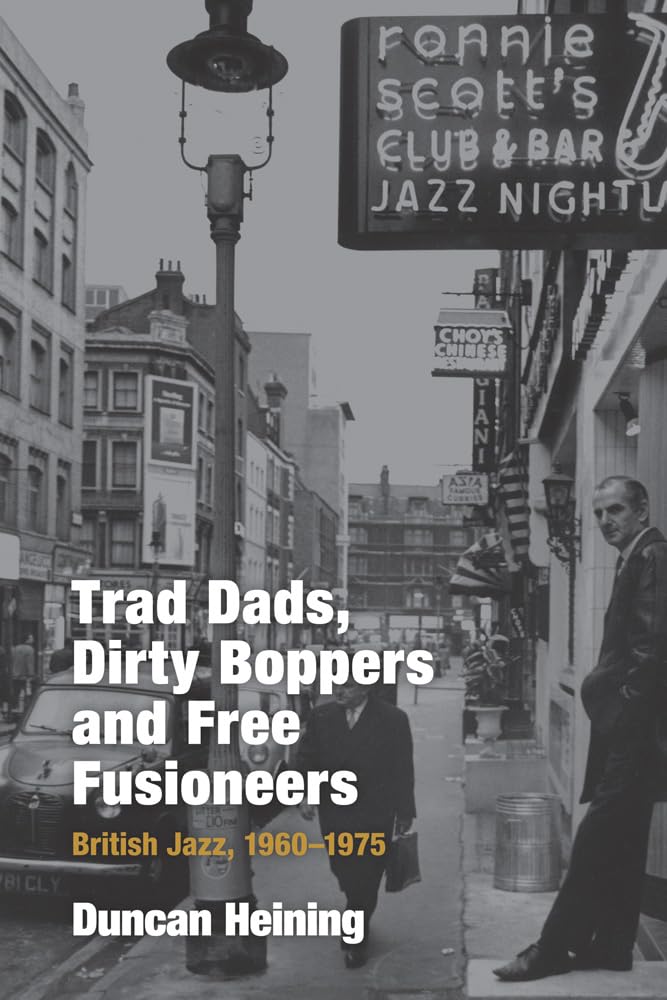
Trad Dads, Dirty Boppers and Free Fusioneers: British Jazz, 1960-75 (Popular Music History)
$29.28
by Duncan Heining



The 1960s was a decade of major transformation in British jazz and in British popular music in general. The British jazz scene had been, arguably, the first outside America to assert its independence. At first slowly but with gathering speed, it began to define an identity that drew increasingly on sources from within its own culture, as well as those from African-American jazz, and from its shared European cultural heritage. This process would in itself prove highly influential, as French, Italian, German and Scandinavian scenes began to follow suit. The nature of jazz, its scope and potential were re-examined and reformulated in this period with important implications for its musicians and its audience. The external forces acting upon the British jazz scene were both global and local in origin. Jazz was not immune from the economic, social and cultural changes that occurred following the Second World War and which continued apace in the 1960s. Its development was both affected by and reflected those changes and the new ways of thinking and acting that arose from them. And yet wider global economic and political changes, in particular in America, would continue to have a major impact on British jazz. For these reasons, any history of British jazz in the 1960s must explain these trends and describe which were global and which were local in origin. It must show how forces outside the music acted upon it and both created and limited its potential for development. But it must also define the personalities, as well as the context in which they functioned. Jazz is made by its musicians and is ultimately changed by them. What were the records that they made which defined the era? From where did their inspiration arise? And how did their audience respond? Trad Dads, Dirty Boppers and Free Fusioneers follows a number of themes class, education, drugs and addictions, relationships with rock and blues, race and immigration, gender issues, the arts, politics and that sixties buzzword: freedom . In doing so, the book challenges many conventional understandings of British jazz and its scene. This is the definitive history of British jazz in the 1960s. 'His primary information sources are 70 (yes, really!) of his own first hand interviews with musicians and associates. The fact that Heining is dealing largely with his … musicianly peer group … brings with it a sense of involvement in a text which, though densely-packed, is compellingly articulate. Substantive and scholarly, TDDB&FF is also an enjoyable and rewarding read.' -- Roger Thomas, Jazz UK 103, November 2012 'Heining deserves much credit for this epic tome exploring British jazz in one of its most exciting, if exasperating, eras. [He] has undertaken very thorough research: he has interviewed countless musicians, while his own spry style keeps you charmed. Trad Dads is a special contribution to jazz writing.' -- Jazzwise 'The text is erudite, well-researched and politically charged. It would be no exaggeration to suggest that this book is simply essential for anyone even remotely interested in British jazz.' -- Roger Farbey, iancarrsnucleus.net "This book by noted British jazz journalist Duncan Heining explores in detail one of the most fertile eras in jazz history. This nearly 500-page hardcover tome covers the transition from Britain's trad-jazz scene led by figures like Tubby Hayes to the work of groundbreaking figures such as Joe Harriott, rise of various avant garde circles around John Stevens, Keith Tippett and John Surman and the burgeoning fusion movement that followed. A much-needed modern history on a seminal period. Included is a list of 100 essential British jazz albums of the period and a bibliography." -- The New York City Jazz Record's Holiday Gift Guide 'The text is erudite, well-researched and politically charged. It would be no exaggeration to suggest that this book is simply essential for anyone even remotely interested in British jazz.' -- Roger Farbey, iancarrsnucleus.net Duncan Heining has has been writing about jazz, improvised music and 20th century composition since 1996. He has written for Avant Magazine , Record Collector , The Independent and The Independent On Sunday . His main outlets currently are Jazzwise , Jazz UK and the All About Jazz website. In 2010, Scarecrow Press published his biography of African-American composer and musical theorist George Russell, George Russell - An American Composer . Used Book in Good Condition