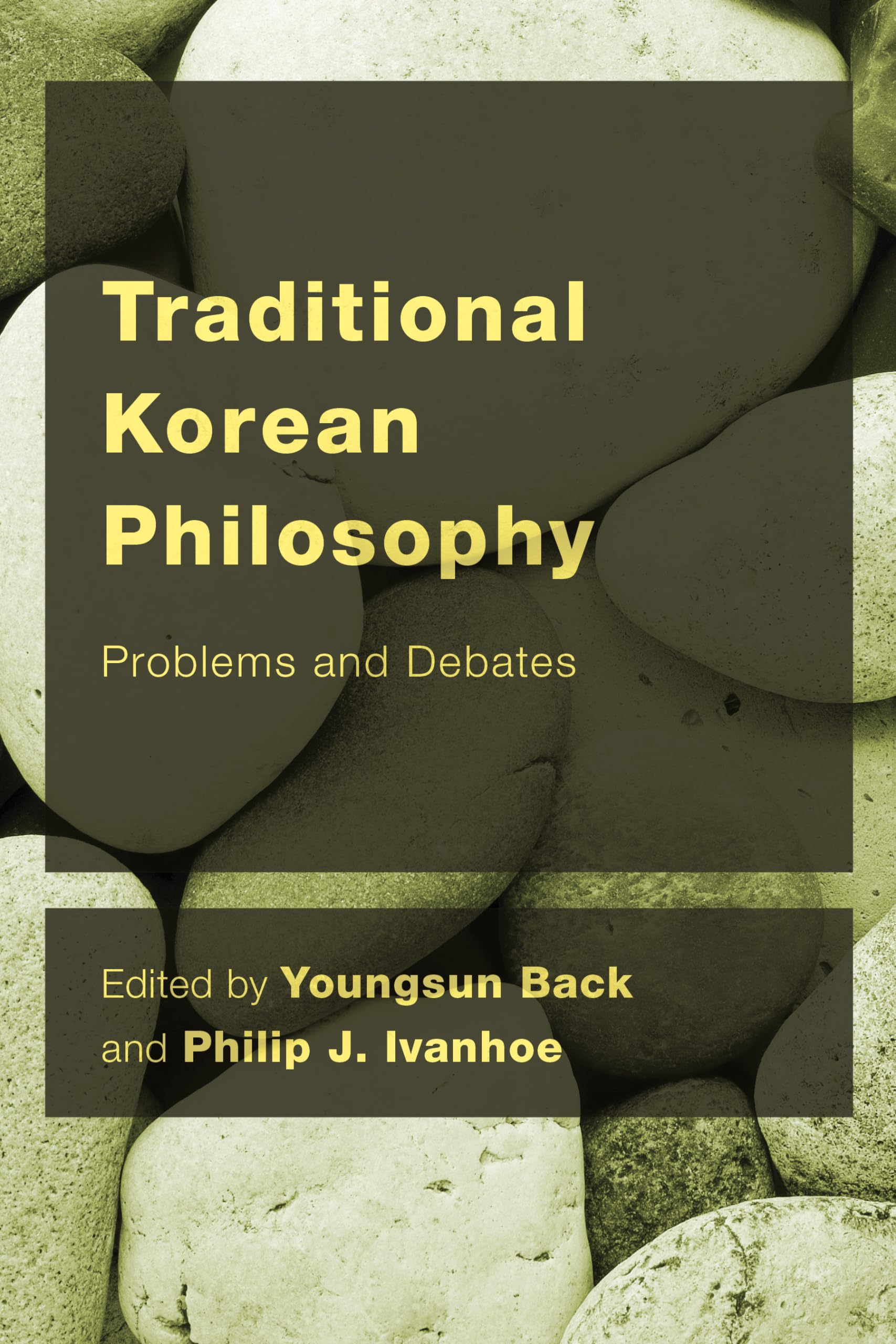
Traditional Korean Philosophy: Problems and Debates (Ceacop East Asian Comparative Ethics, Politics and Philosoph)
$56.00
by Youngsun Back



This unique volume of original essays presents in-depth analyses of representative periods, problems, and debates within the long and rich history of Korean philosophy. It provides the reader with a sense of the problems that motivated thinkers within the tradition and the kinds of arguments that characterize their reflections. With contributions from some of the best and most significant contemporary Korean philosophers, this volume marks an important new stage in the Western-language study and appreciation of Korean philosophy. In order for philosophy to be understood and appreciated as philosophy it must at some point be presented and evaluated as the human effort to understand problems through a process of careful and sustained analysis and argument. This anthology offers Western readers the first opportunity to meet and engage with traditional Korean Buddhist and Confucian philosophy on these terms. “Connoisseurs will also enjoy a number of fresh approaches and topics, such as, notably, Yung Sik Kim’s exploration of the role of “time lags” for religiophilosophical developments in Korean Confucianism.” ― Religious Studies Review “Readers hungry for insights into Korea’s cultural history over the last six centuries need look no farther than this comprehensive survey of traditional Korean philosophy. In these pages they will meet such giants as Toegye, Yulgok and Dasan and will discover that Korean philosophy was both practical and theoretical, reflecting a moral psychology shaped by ethical concerns.” ―Don Baker, University of British Columbia “In Traditional Korean Philosophy: Problems and Debates, Youngsun Back and PJ Ivanhoe have marshaled a cadre of some of our most distinguished contemporary scholars to tell their own story of Korean philosophy by engaging with it philosophically. Abjuring survey or historical vignettes, the authors of this anthology offer tightly argued essays that grapple each in its own way with some of the evolving terminologies, subversive voices, and persistent problems of the tradition that has given this narrative its distinctively Korean character.” ―Roger T. Ames, Peking University Youngsun Back is an Assistant Professor at the College of Confucian Studies & Eastern Philosophy, Sungkyunkwan University, South Korea. Philip J. Ivanhoe is Professor of East Asian and Comparative Philosophy and Religion and Director of the Center for East Asian and Comparative Philosophy at City University of Hong Kong. His many publications include Confucian Reflections (2013), The Reception and Rendition of Freud in China (co-edited with Tao Jiang, 2013), Mortality in Traditional Chinese Thought (co-edited with Amy Olberding, 2011) and Taking Confucian Ethics Seriously (co-edited with Kam-por Yu and Julia Tao, 2011). Traditional Korean Philosophy Problems and Debates By Youngsun Back, Philip J. Ivanhoe Rowman & Littlefield International Ltd. Copyright © 2017 Youngsun Back and Philip J. Ivanhoe All rights reserved. ISBN: 978-1-78660-186-5 Contents Acknowledgments, Conventions, Introduction, 1 From Structure to Action: The Concepts of "Substance" (che [TEXT NOT REPRODUCIBLE IN ASCII]) and "Function" (yong [TEXT NOT REPRODUCIBLE IN ASCII]) in Gwon Geun's Philosophy Halla Kim, 2 Another Look at Yi Hwang's Views about Li and Qi: A Case of Time Lag in the Transmission of Chinese Originals to Korea Yung Sik Kim, 3 The Li-Qi [TEXT NOT REPRODUCIBLE IN ASCII] Structure of the Four Beginnings and the Seven Emotions and the Aim of the Four-Seven Debate Hyoungchan Kim, 4 Yi Yulgok and His Contributions to Korean Confucianism: A Non-dualistic Approach Young-chan Ro, 5 Human Nature and Animal Nature: The Horak Debate and Its Philosophical Significance Richard Kim, 6 Jeong Yakyong's Post Neo-Confucianism So-Yi Chung, 7 The Lord on High (Sangje [TEXT NOT REPRODUCIBLE IN ASCII]) in Jeong Yakyong's Thought Soon-woo Chung, 8 How Do Sages Differ from the Rest of Us? The Views of Zhu Xi and Jeong Yakyong Youngsun Back, 9 The Way to Become a Female Sage: Im Yunjidang's Confucian Feminism Sungmoon Kim, 10 Burdens of Modernity: Baek Seonguk and the Formation of Modern Korean Buddhist Philosophy Jin Y. Park, Works Cited, Index, About the Contributors, CHAPTER 1 From Structure to Action The Concepts of "Substance" (che [TEXT NOT REPRODUCIBLE IN ASCII]) and "Function" (yong [TEXT NOT REPRODUCIBLE IN ASCII]) in Gwon Geun's Philosophy Halla Kim 1. INTRODUCTION The concepts of substance and function are important philosophical categories that have been influential in the history of Korean philosophy. They are found not only in the Buddhist philosophies of Wonhyo [TEXT NOT REPRODUCIBLE IN ASCII] (617–686 CE), Jinul [TEXT NOT REPRODUCIBLE IN ASCII] (1158–1210), and Gihwa [TEXT NOT REPRODUCIBLE IN ASCII] (1376–1433) but also in the school of Neo-Confucianism, which dominated the Korean spirituality from the fourteenth century until the end of the nineteenth century. In t