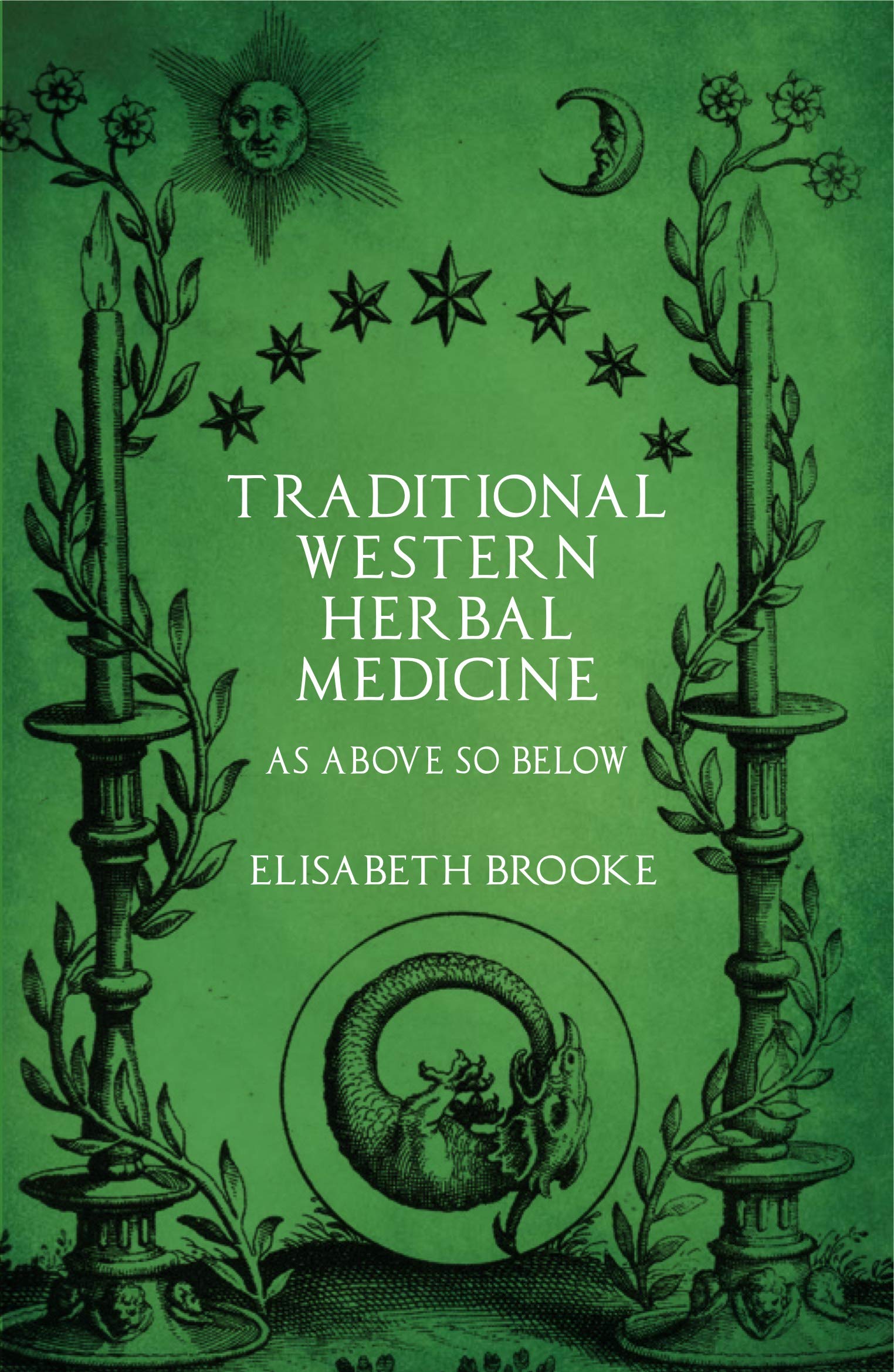



A users manual to guide the interested practitioner through incorporating Western Herbal Tradition into their practice. Complete with charts, diagrams, tables and cross-references, Traditional Western Herbal Medicine synthesises and elaborates on all the extant information on the Western Healing Tradition as recorded by William Lilly and Nicholas Culpeper in the 17th century and from the author's own herbal practice. It shows how using planetary energies and the wheel of the year deepens our understanding of the action of medicinal plants on the body and establishes the practitioner within their environment, allowing them to use planetary energies to determine the peak times to harvest and use herbal remedies and to locate health and sickness within the holistic paradigm of Western Traditional Herbal Medicine. For ease of use, the book is divided into two sections. The first details the philosophical framework within which traditional western herbalists can operate; looking at the four humours, and seven planets and the use of the diagnostic tool of the decumbiture chart. The second part covers the practical application of the philosophy, how to collect, make and administer herbal remedies according to the planetary days and hours and the decumbiture chart. Examples of decumbiture charts will be included to show how the philosophy is used in practice. Lastly, a materia medica of common herbs is included. The work is so organised that the humoral system can be used without astrology, should that be the preference. This fascinating title by the best-selling Elisabeth Brooke will be of interest to anyone involved in the theory or practice of herbal medicine, particularly those who have been inspired by her other classic works including A Woman's Book of Herbs and Herbal Therapy for Women. Elisabeth Brooke qualified as a Medical Herbalist with the National Institute of Medical Herbalists in 1980 and as a counsellor at the Psychosynthesis and Education Trust in 1989. She has an online private practice in both disciplines and teaches and lectures worldwide. Elisabeth also has a degree in Classical Studies and was a tutor at the Company of Astrologers London. Her website is www.elisabethbrooke.com. Traditional Western Herbal Medicine As Above So Below By Elisabeth Brooke Aeon Books Ltd Copyright © 2019 Elisabeth Brooke All rights reserved. ISBN: 978-1-911597-20-9 Contents ACKNOWLEDGEMENTS, INTRODUCTION, PART ONE: THEORY, Fire, Earth, Water, Air, Temporary conditions, The seven natural things, Herbs and the planets, Choosing a remedy, A little bit of philosophy, Astrological medicine: background and history, Decumbiture, Dramatis personae, PART TWO: THE PRACTICE, The decumbiture method, Temperament, AFTERWORD, APPENDIX 1, APPENDIX 2, REFERENCES, INDEX, CHAPTER 1 Fire Fire meditation Imagine you are sitting in front of a candle flame, you feel safe and warm. Allow your gaze to rest on the flame. Watch it as it bends and sways with the breeze. Feel the warmth on your face. Watch the light shimmer around it. Then slowly, gently, allow yourself to merge with the flame. It will not burn you but gently envelop you with warmth and light. Be aware of your physical body. How does it feel to be surrounded by fire? Take a moment to sense the flames as they enclose you and notice any changes in your heart or your skin or other organs of the body. Then allow the fire to pass through your whole body. Feel yourself enveloped by warm, healing fire. How does this make you feel emotionally? Register and remember any feelings it brings up and then let them go. Be aware of any images or memories which come up. Notice them and let them go. Then notice how fire affects your mind and your thoughts. How does your mind react in the presence of fire? Take a moment to let the thoughts run by you without judgement or questions. Slowly separate yourself from the flame and return to watching the candle. Gently come back into the room. The most favoured current theory of how our world began centres around the Big Bang theory. The Big Bang Theory states, using mathematical models, that 13.8 billion years ago a "small singularity" expanded. A second after this expansion the surrounding heat was 5.5 billion Celsius. After this expansion the universe cooled sufficiently to form sub-atomic particles and later atoms. Giant clouds of these primordial elements coalesced through gravity in haloes of dark matter and eventually formed the stars and galaxies. Most of the atoms formed by the Big Bang were hydrogen and helium and some lithium. Whereas simple atomic nuclei formed within three minutes of the big bang, thousands of years passed before the first electrically neutral atoms were formed. The Big Bang was not an explosion in space, but an explosion of space. The Big Bang Theory does not describe the origin of the universe, because energy, time and space existed before the Big Bang. Neithe