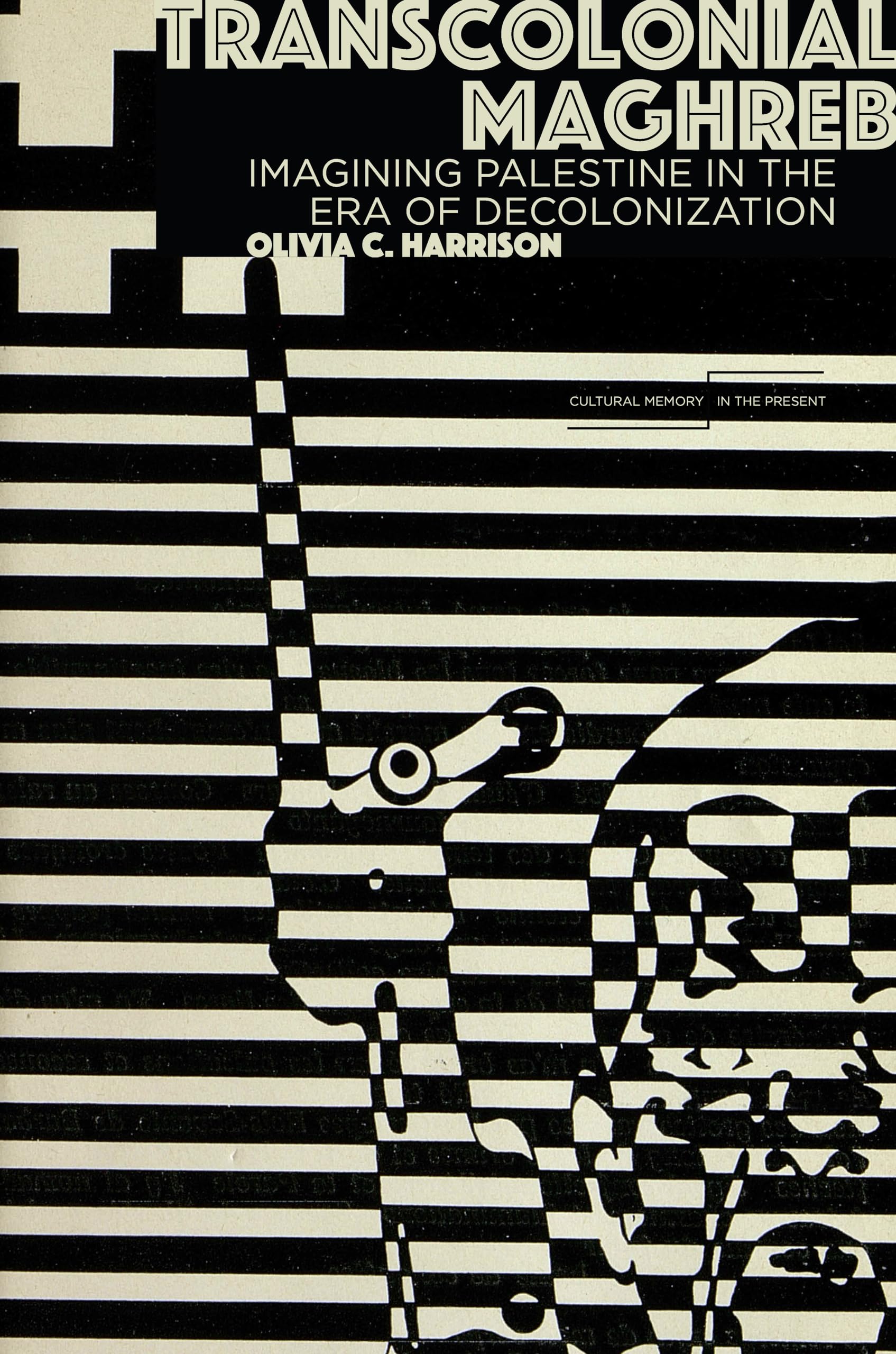
Transcolonial Maghreb: Imagining Palestine in the Era of Decolonization (Cultural Memory in the Present)
$57.94
by Olivia C. Harrison



Transcolonial Maghreb offers the first thorough analysis of the ways in which Moroccan, Algerian, and Tunisian writers have engaged with the Palestinian question and the Palestinian-Israeli conflict for the past fifty years. Arguing that Palestine has become the figure par excellence of the colonial in the purportedly postcolonial present, the book reframes the field of Maghrebi studies to account for transversal political and aesthetic exchanges across North Africa and the Middle East. Olivia C. Harrison examines and contextualizes writings by the likes of Abdellatif Laâbi, Kateb Yacine, Ahlam Mosteghanemi, Albert Memmi, Abdelkebir Khatibi, Jacques Derrida, and Edmond El Maleh, covering a wide range of materials that are, for the most part, unavailable in English translation: popular theater, literary magazines, television series, feminist texts, novels, essays, unpublished manuscripts, letters, and pamphlets written in the three main languages of the Maghreb—Arabic, French, and Berber. The result has wide implications for the study of transcolonial relations across the Global South. "Closely engaged with a vast body of literary texts, Transcolonial Maghreb is timely and greatly informative. It offers an important theoretical contribution to postcolonial studies." -- Gil Hochberg ― University of California, Los Angeles Olivia C. Harrison is Assistant Professor of French and Middle East Studies at the University of Southern California. Transcolonial Maghreb Imagining Palestine in the Era of Decolonization By Olivia C. Harrison STANFORD UNIVERSITY PRESS Copyright © 2016 Board of Trustees of the Leland Stanford Junior University All rights reserved. ISBN: 978-0-8047-9421-3 Contents List of Illustrations, Acknowledgments, Introduction: Palestine as Metaphor, PART I. DECOLONIZING THE MAGHREB, 1. Souffles-Anfas: Palestine and the Decolonization of Culture, 2. Transcolonial Hospitality: Kateb Yacine's Experiments in Popular Theater, 3. The Transcolonial Exotic: Allegories of Palestine in Ahlam Mosteghanemi's Algerian Trilogy, PART II. JEWS, ARABS, AND THE PRINCIPLE OF SEPARATION, 4. Portrait of an Arab Jew: Albert Memmi and the Politics of Indigeneity, 5. Abrahamic Tongues: Abdelkebir Khatibi, Jacques Hassoun, Jacques Derrida, 6. Edmond Amran El Maleh and the Cause of the Other, Epilogue: Palestine and the Syrian Intifada, Notes, Index, CHAPTER 1 Souffles-Anfas Palestine and the Decolonization of Culture The first text explicitly to link Maghrebi culture and politics to the Palestinian question, the Moroccan journal Souffles-Anfas captures and exemplifies what I am calling transcolonial identification with Palestine: transnational forms of solidarity that are based on the understanding that Palestine and the Maghreb are part of an overlapping and unfinished colonial history. More explicitly than any other text in my corpus, Souffles-Anfas compares the plight of the Palestinians to the Maghrebi (post) colonial condition, including not only the experience of French colonization and acculturation but also continued French cultural and economic hegemony and the repressive tactics of the autocratic state. I argue that Palestine was a central interlocutor in the journal's founding mission, "cultural decolonization": the elaboration of cultural forms (literature, theater, orature, the visual arts), political models, and intellectual traditions that would break with both colonial (French) and pre-colonial ("traditional") canons and norms. After June 1967, Palestine became the principal source of inspiration for Souffles-Anfas ' sustained reflection on language and culture, culminating in the launching of an Arabic-language journal, Anfas, and the dissemination of Palestinian poetry in French translation. I begin, in medias res, with a poem that dramatically stages the kinds of political imaginaries I will be calling transcolonial in this book, an impassioned plea for solidarity with Palestine written in the wake of the Arab-Israeli war of June 1967: my memory is long ... Scars and grafts ... weigh down my step but no longer stop my expansion for a long time I dreamed They were nightmares Slow motion races of repetitive executions Whirling eyes Opium-burned demonstrations ... Branded faces Cataclysmic winds The Atlas erupting in a deluge of collective memory memory ... You dictated to me the itinerary of violence .............................................................. I am the Arab man in History set in motion built anew by the vanguard of Palestinian guerrilla fighters Arab Arabs Arab a name to be remembered great voices of my seismic deserts a people marches on through 8,000 kilometers raises tents command bases how many are we yes how many gentlemen statisticians of pain advance a number and the prophetic masses retort with infallible equations today WE ARE ALL PALESTINIAN REFUGEES tomorrow we will create TWO ... THREE ... FIFTEEN PALESTINES Abdell