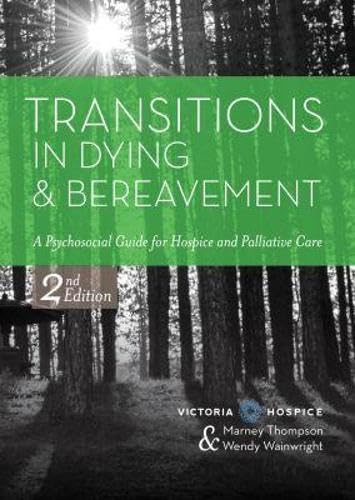
Transitions in Dying and Bereavement: A Psychosocial Guide for Hospice and Palliative Care
$70.00
by Victoria Hospice



Find the words―and the deeds―to meet the psychosocial needs of chronically ill and dying people, their families, and caregivers in this first-ever strengths-based, step-by-step guide through the labyrinthine process from diagnosis to death to bereavement. Transitions in Dying and Bereavement puts a human face on a difficult yet unavoidable topic. This book comprehensively and compassionately covers the key transitions that dying people and their families face and the most effective interventions to facilitate the transitions. Employing their many years of experience in hospice and palliative care, this team of counselors and other health care professionals provides: clear explanations of current theory and research related to hospice, palliative, and bereavement care ways to help alleviate anxiety, fear, fatigue, and feelings of denial and powerlessness ways to improve communication about the experience of dying help in planning for death the Palliative Performance Scale, a functional assessment tool sensitive explanations on navigating the three phases of grief perspectives on difficult issues such as body image, sexuality, and intimacy multicultural and interdenominational perspectives on death and dying ways to support staff and much more! Activities, exercises, case studies, personal essays, poetry, and illustrations are liberally and strategically located throughout the text, forming the perfect in-service, classroom, or professional development tool for nurses, physicians, counselors, social workers, allied health professionals, volunteers, and others who work with people traversing the end-of-life experience. "This wonderfully helpful clinical handbook is an engaging and comprehensive compendium of knowledge for use." (Journal of Religion, Spirituality, & Aging Reviews 2001-01-01) "A must-read for aspiring or practicing hospice counselors." (Midwest Book Review Reviews 2001-01-01) "The clinical wisdom, experience, and practical advice accumulated over the years and organized and compiled for this book is invaluable for those who intend to or are currently working with individuals who are at the end of life." (Canadian Psychology Reviews 2001-01-01) "What a lovely book... intelligent and thoughtfully organized... an impressive collaborative work from the true experts whose talents, dedication and love for their work shines through on every page." (Co-Author of Final Gifts: Understanding the Special Awareness, Needs, and Communications of the Dying Reviews 2001-01-01) "This book is unique in its psychosocial focus. . .this book provides a wealth of resource material for the novice as well as experienced practitioners in end of life care: nurses, physicians, counselors, and social workers." (Seton Medical Center, Doody's Review Service Reviews 2001-01-01) "Clinicians in practice, students and people who are themselves dealing with life-limiting illness will find Transitions to be of inestimable value." (Life's End Institute: Missoula Demonstration Project Reviews 2001-01-01) "The authors have synthesized the 20-year experience of the Victoria Hospice to create a unique work that is both scholarly and wise and compassionate and deeply moving. This book is a gift to anyone who wants to truly serve the dying and those who love them." (Professor of Clinical Medicine, University of California, San Francisco School of Medicine, Founder and Director of the Institute for the Study of Health and Illness at Commonwealth Reviews 2001-01-01) "the considerable experience of the contributors shines through. … The book will be a valuable resource for all who work in hospice and palliative care, enabling and empowering them to further explore the psychosocial dimensions of the care we provide." (Austin Health, Melbourne, Australia Reviews 2001-01-01) Victoria Hospice, 1952 Bay Street, Victoria, British Columbia, CANADA, V8R 1J8. Providing quality end-of-life care, and teaching others how to provide that care, has been a Victoria Hospice (VH) tradition since the organization was founded in 1980 in Victoria, British Columbia. As well as caring for those facing advanced illness, death, and bereavement, Victoria Hospice staff are also involved in provincial and national initiatives dedicated to palliative care training, research, and advocacy. In 1999, the Victoria Hospice Learning Centre for Palliative Care was formally established to work in partnership with other health care and academic organizations to advance excellence in palliative care. The Victoria Hospice program of care includes a 17-bed in-patient unit, a Palliative Response Team that provides 24-hour crisis to support to patients and families at home, a comprehensive bereavement program, and clinical consultation services to patients in other health care facilities. Victoria Hospice palliative care courses and publications, such as the textbook Medical Care of the Dying (1998), are valuable resources to professional care providers throu