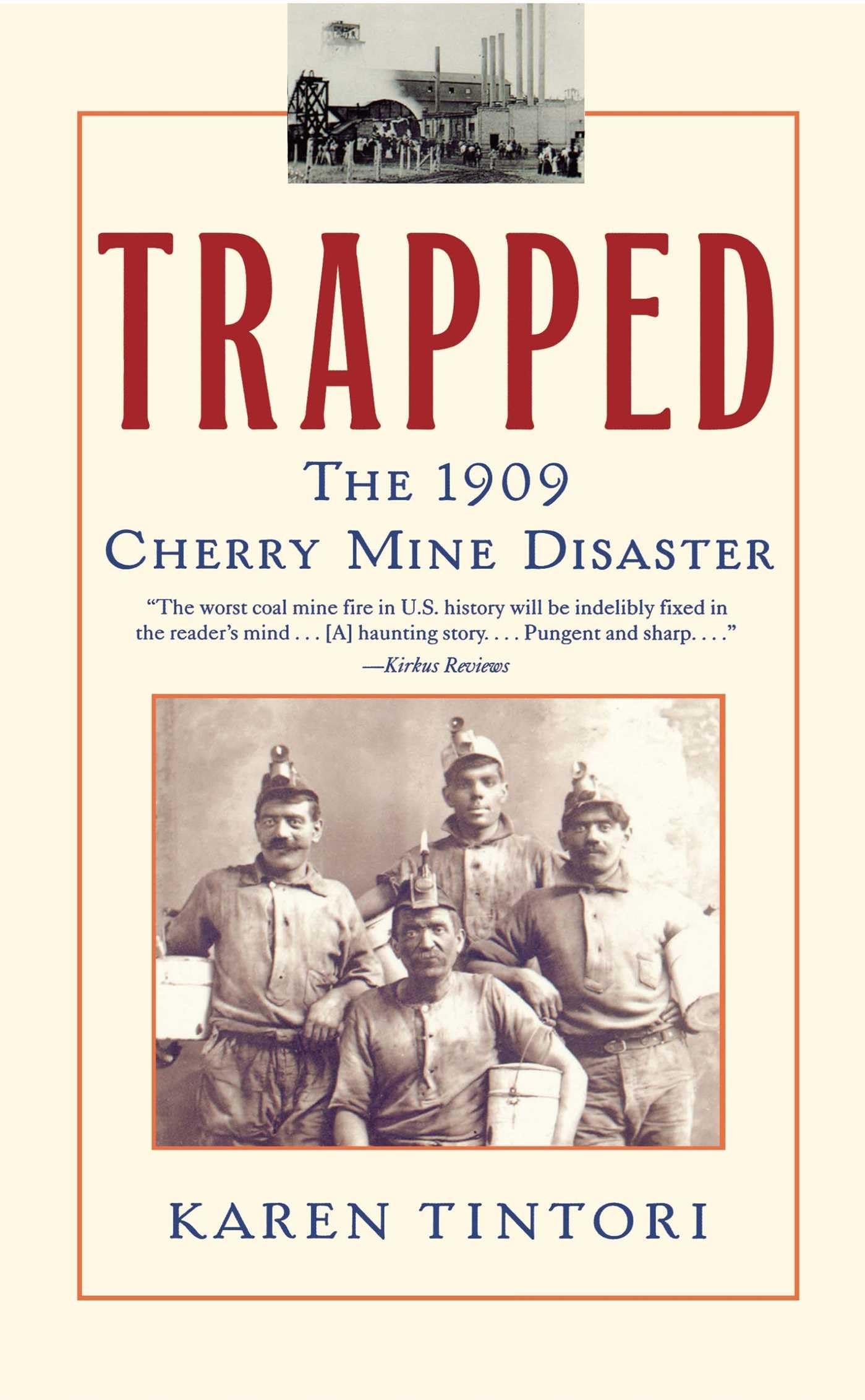



A gripping account of the worst coal mine fire in US history—the 1909 Cherry Mine Disaster that claimed the lives of 259 men. "Drawing on diaries, letters, written accounts of survivors and testimony from the coroner's inquest...Tintori's engaging prose keeps readers on the edge" ( Publishers Weekly ). Inspired by a refrain of her girlhood—"Your grandfather survived the Cherry Mine disaster"—Karen Tintori began a search for her family's role in the harrowing tragedy of 1909. She uncovered the stories of victims, survivors, widows, orphans, townspeople, firefighters, reporters, and mine owners, and wove them together to pen Trapped, a riveting account of the tragic day that would inspire America's first worker's compensation laws and hasten much-needed child labor reform. On a Saturday morning in November of 1909, four hundred and eighty men went down into the mines as they had countless times before. But a fire erupted in the mineshaft that day and soon burned out of control. By nightfall, more than half the men would either be dead or trapped as officials sealed the mine in an attempt to contain the blaze. Miraculously, twenty men would emerge one week later, but not before the Cherry Mine disaster went down in history as the worst ever coal mine fire in the US—and not before all the treachery and heroism of mankind were revealed. John N. Maclean Author of Fire on the Mountain: The True Story of the South Canyon Fire A riveting generational story and a terrific reporting job -- altogether, a worthy memorial to those who have gone down the coal mines never to return. Publishers Weekly Drawing on diaries, letters, written accounts of survivors and testimony from the coroner's inquest...Tintori's engagingprose keeps readers on the edge. Karen Tintori worked in journalism and public relations before becoming a full-time writer. She lives in Michigan with her family. Trapped The 1909 Cherry Mine Disaster By Karen Tintori Atria Books Copyright © 2003 Karen Tintori All right reserved. ISBN: 0743421957 Standing like a twin-peaked hill, a spoils dump lush with vegetation throws shadows across the farmland that buries the St. Paul Mine. Cornfields wave at jutting remnants of the hoisting shaft and other mine buildings, and chunks of coal, shale and rock lie scattered among weeds and wildflowers. Nature and nearly one hundred years have reclaimed what was once the most prosperous coal mine in the Midwest. At the village's southern edge, tiny Holy Trinity Miners Cemetery abuts a curve in Highway 89, barely revealing its towering stone monument to passing motorists. Dedicated to the two hundred and fifty-nine men and boys who perished there in one of the most tragic coal mine disasters in U.S. history, the monument's bowed and weeping woman grieves over the final resting place of many of them. Their little-known story is preserved in the tiny Cherry Library, where mine artifacts and photos line the walls alongside poignant missives penned by entombed miners as they waited for smoke, flames and poisonous gases to overtake them. From a vibrant community of twenty-five hundred in its heyday, Cherry has dwindled to a village whose five hundred residents either farm the land or earn their livelihood in neighboring Ladd, LaSalle, Mendota, Ottawa, Peru and Spring Valley. Many live in the original company houses, most of them renovated or expanded, some with water pumps still standing in the backyard. Cherry was born on rolling prairies roughly one hundred miles southwest of Chicago in 1904. Mining experts called to the heart of Bureau County's rich coal region by the St. Paul Coal Company discovered a vast, inexhaustible vein of bituminous coal almost unequaled in quality. The company, licensed to mine coal in six Illinois counties, instantly began to sink the state's largest coal mine, certain that within two years the black diamonds buried there would make it a principal coal center in the Midwest. Forty years before, 62 percent of the world's energy came from wood. By the 1910s, coal had supplanted wood. It owned that 62 percent pinnacle and accounted for 80 percent of America's fuel right before the dawn of electricity while the Wright brothers were still perfecting the airplane and the world traveled by coal steam-powered rail and ship. Today, coal still generates 25 percent of the world's energy, and nine of every ten tons used in the U.S. go to produce electricity. In 1909, the coal industry was booming. The U.S. mined out four hundred and thirty-one million tons a year, but production was seasonal, tied to winter's heavier heating demands in homes and offices. Families spent about $35 of their average $651 yearly income for fuel, and in 1904, only 3 percent of them used electricity. The first electric range, vacuum cleaner and iron would not appear until later in the decade. Beating and mixing, dishes and laundry were all done by hand. Women cooked on wood- or coal-burning