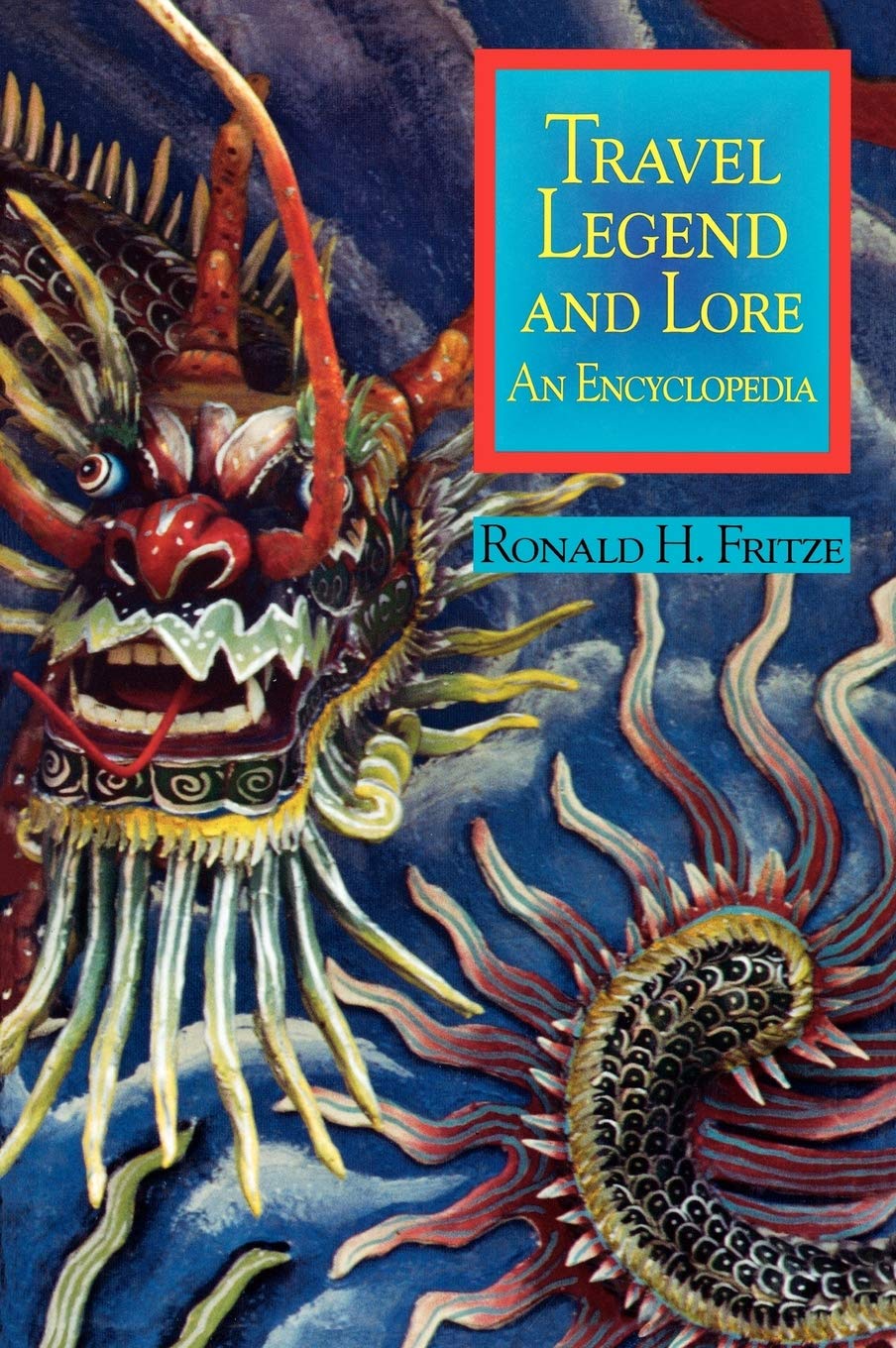



Contains 284 entries providing introductory synopses of both mythical and historical travel and "tourist" sites prior to the 20th century. Listings appear under the names of people, places, things, events, and concepts and focus on the expectations and beliefs of travelers, including their ideas about roads, sea travel, accommodations, foreigners, and strange lands. Includes b&w illustrations. Annotation c. by Book News, Inc., Portland, Or. Grade 8 Up-This compendium of information about people, places, things, and concepts related to travel before the 20th century includes such diverse entries as "Erie Canal," "Elysian Fields," "Magi, Three," and "Mule." Europe, Asia, the Middle East, and Africa are well represented, but the Americas and Oceania are not. The author does a nice job of succinctly explaining complex topics such as the wanderings of Aeneas without oversimplifying. Legends and facts are presented alongside one another in a standard encyclopedic arrangement, and herein lies the problem with this work. While all of the entries relate somehow to travel, a book on it is not necessarily where one would look when conducting research on many of these topics. For example, few people would think to look here for information on the "Star of Bethlehem" or the "Underground Railroad." The black-and-white illustrations add little to the text. This is one of those books that you might need every once in a while, but you'd really have to remember that you have it. Cheri Estes, Detroit Country Day School Middle School, Beverly Hills, MI Copyright 1999 Reed Business Information, Inc. Using travel as a metaphor for discovery, wonder, and delight, this elegant and splendidly written publication is an appreciation of the legends and mythology associated with geographic locations and events. The book emphasizes early tales of travel, people, and locales, e.g., Gilgamesh, Odysseus, and medieval narratives of caravan routes, with much of the information best known to scholars of history and folklore. Arranged alphabetically and ranging widely from Arcadia and the Dark Continent to sea monsters and wagon trains, the 284 main topics are discussed fully in paragraph form. The research is objectively presented and thoroughly documented, and an impressive bibliography rounds out the text. Fritze (history, Lamar Univ.), the author of Legend and Lore of the Americas Before 1492 (1993. o.p.), has created a readable and reliable collection on topics that heretofore have been largely overlooked. Highly recommended for academic and general readers.?Richard K. Burns, MSLS, Hatboro, Copyright 1999 Reed Business Information, Inc. Travel is as old as civilization itself and nearly as fascinating. This volume focuses on the people, places, events, creatures, expectations, beliefs, and occurrences found and described in the tales of travelers. Ancient mythologies are steeped in travel lore, with tales of the Gilgamesh, the Hyperboreans, and Odysseus, all covered here, as are such historical travelers as the Crusaders, Marco Polo, and the Barbary pirates. Legends surrounding the mysterious geographic regions of lost continents and disappearing islands (Atlantis, Avalon, the Flyaway Islands); strange waterways, such as China's Grand Canal and the well-known Seven Seas; and vanished civilizations (Tartarus and Sybaris) are among the nearly 200 topics explained here. Amazons, centaurs, and mermaids are a few of the creatures described. The European explorers of the fifteenth and sixteenth centuries, lured by stories of the East, added still another dimension of legend and lore with their extraordinary accounts of explorations and discoveries in the New World. The Straits of Magellan, the Fountain of Youth, and El Dorado were just a few of the sources of later legends. The Erie Canal, wagon trains, stage coaches, and railroads were among the wellsprings of North American lore. By no means exhaustive, but comprehensive in scope, Travel Legend and Lore serves as a solid introduction to the subject. The entries span all continents and civilizations up to, but not including, the twentieth century. The articles range from just a few lines to five pages, with the average length being one to two pages. Where appropriate, each entry contains cross-references to other articles within the encyclopedia as well as suggested additional readings. A bibliography and index round out the volume. The nonscholarly language makes the text suitable for high-school level and up. Recommended for high-school, public, and academic libraries and anyone with a strong sense of historical imagination and adventure. “Using travel as a metaphor for discovery, wonder, and delight, this elegant and splendidly written publication is an appreciation of the legends and mythology associated with geographic locations and events. The research is objectively presented and thoroughly documented, and an impressive bibliography rounds out the text. Fritze…has created a read