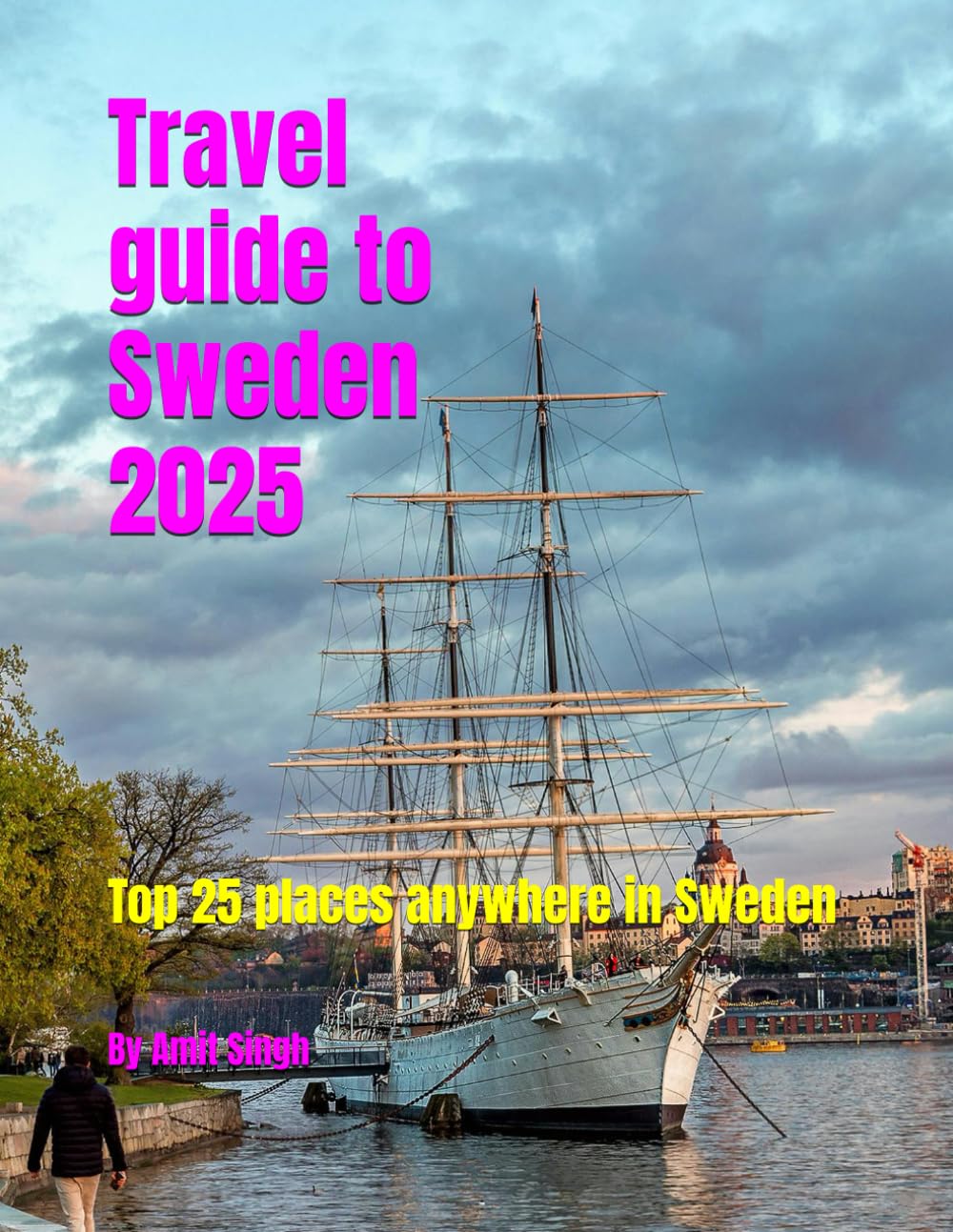
Travel guide to Sweden 2025: Top 25 places anywhere in Sweden (Travel Guide to Europe 2025)
$24.99
by By Amit Singh



Sweden the land of ABBA, innovation, and a 200-year-old obsession with fika, where even the coldest winters are brightened by warmth, design, and eco-consciousness. - From the sleek streets of Stockholm to the windswept beauty of Lapland, Sweden is a country that perfectly balances nature with cutting-edge technology. It's where cutting-edge design meets sustainability—think IKEA and Volvo. Sweden also has a unique knack for making you feel cozy, whether it's in the form of a perfectly crafted cup of coffee during fika or the snug embrace of its winter sports culture. And let's not forget the cultural export that is ABBA, whose music continues to live on through both nostalgia and Eurovision glory. With a rich history of neutrality and innovation, Sweden is like the cool, calm, and collected friend who just happens to have the best furniture. - Despite their reputation for calm, their innovation game is anything but chill—Swedes gave us Spotify, Skype, and Bluetooth, proving that genius can come from anywhere, even from a country where the winters seem to last longer than a Swedish summer. - And don’t forget the lagom philosophy, which perfectly encapsulates Swedish life: not too much, not too little, just the right amount of everything (especially when it comes to meatballs and lingonberries). Sweden is divided into several administrative levels, with the primary divisions being counties (län), municipalities (kommuner), and regions (landsting). Here’s a breakdown of how the country is structured: 1. Counties (Län) Sweden is divided into 21 counties (län). Each county has a government that handles regional responsibilities like healthcare, public transport, and regional development. The counties are further subdivided into municipalities (kommuner). 2. Municipalities (Kommuner) Sweden has 290 municipalities (kommuner), which are the smallest administrative units. Municipalities are responsible for local government functions like schools, social services, and urban planning. The largest municipality in terms of population is Stockholm, the capital city. 3. Regions (Landsting) The term region (landsting) refers to a larger regional government that coordinates healthcare, public transportation, and other services across multiple counties. As of 2019, Sweden has 21 regions that align almost exactly with the counties, except for a few metropolitan areas that have slightly different administrative structures. 4. Provinces (Landskap) Sweden is traditionally divided into 25 provinces (landskap), which have historical and cultural significance, but they do not function as administrative units. The provinces are often used to denote cultural and geographical regions. While provinces are not used for administrative purposes, they still hold a strong place in Swedish identity. Summary: 21 Counties (Län): Main administrative regions. 290 Municipalities (Kommuner): Local government units within counties. 25 Provinces (Landskap): Historical and cultural regions, no administrative function. Exploring Sweden: Your Ultimate Travel Guide Sweden is a country of extraordinary natural beauty, rich history, and vibrant culture. Whether you're exploring the cosmopolitan cities, quaint villages, or majestic landscapes, this book provides a comprehensive guide to 25 key places in Sweden as of November 2024. Each location is handpicked, from major cities to charming towns, and includes the top 25 must-see places based on the size and significance of the area. Inside this guide, you’ll find 100+ essential pieces of information to help you navigate and make the most of your travels. Safe travels, and enjoy every moment in Sweden!